Tracking the rolling 12-month daily rainfall total allows a ‘real-time’ look whether an area is experiencing a drought or a deluge.
This week’s figure represents the 8th highest at this date since 1962. So not unusual. Until you look at the jump since last year. Some 303.6mm the past 12-months just pips the same period in 1976-77.
What is perhaps most noticeable is that this year follows last year’s negative fall which was the largest since 1961.
It’s one rainfall station BUT the results suggest a climate that is swinging more violently from one extreme to the other.
The current site hosting Wanstead’s weather station has been running for 11 years next month; the automatic station uploading data every 10 minutes to the internet.
The 10-year averages from the station are now good enough to be listed on the Climatological Observers Link.
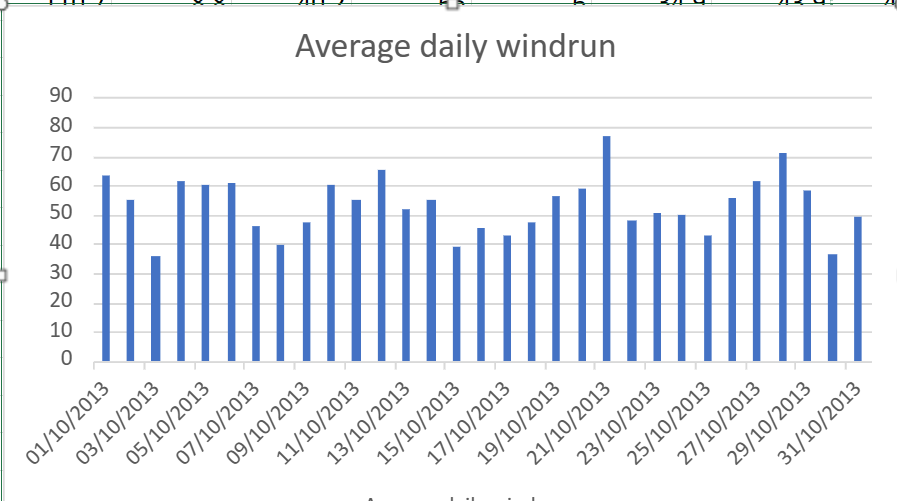
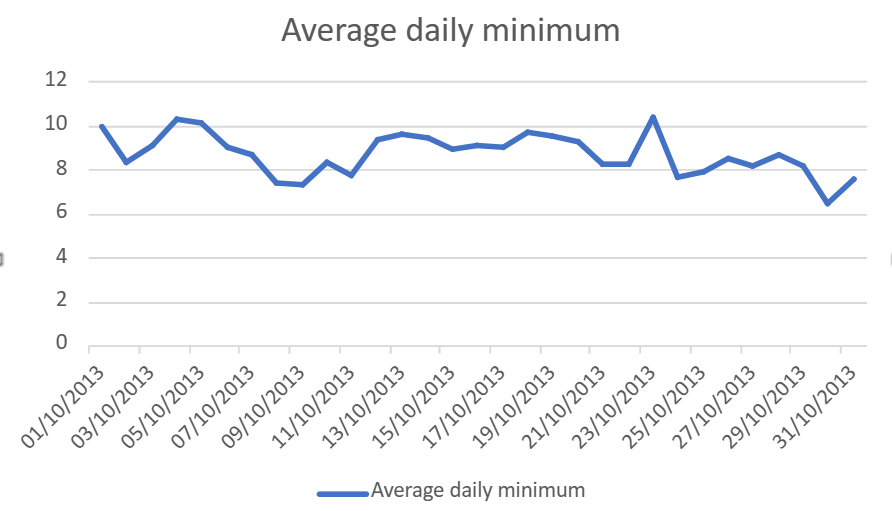
A look at the tenth month shows some interesting trends…
The 9am air pressure readings were not included in previous climate summaries owing to analogue barometers only giving approximate air pressure readings. The advent of AWS has changed that, particularly for independent amateur observers.
A look at the below graphic shows pressure lowest around the 21st, the stormiest weather of the month. Storm Babet in 2023 is proof of that.
Average daily windrun is how much wind there’s been during a 24 hour period. Again the 21st comes out as windiest.
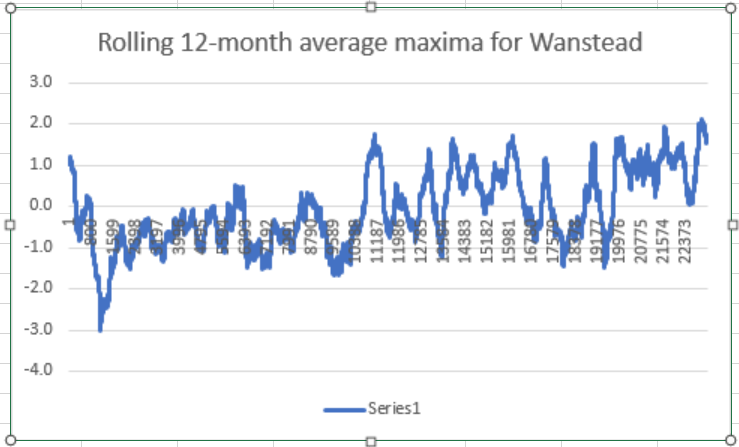
The rolling 12-month average maxima anomaly in Wanstead on June 10th is sitting at 1.6C.
Considering local statistics back to 1959 the figure reached an all-time high of 2.1C last November, a level it stayed until December 11th, when a very remarkable week of snow and frost arrived.
With unremarkable maxima for most of this year the figure has been falling. But with a building El Nino it remains to be seen if the highest anomaly ever of 2.1C will be breached.
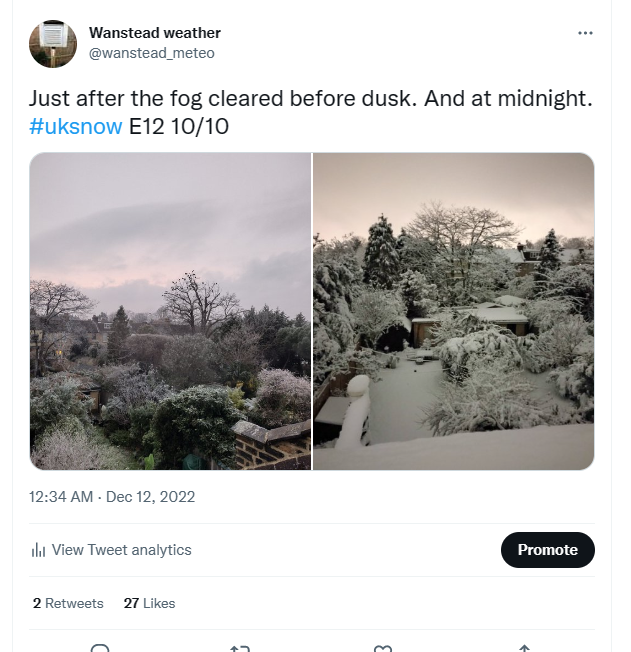
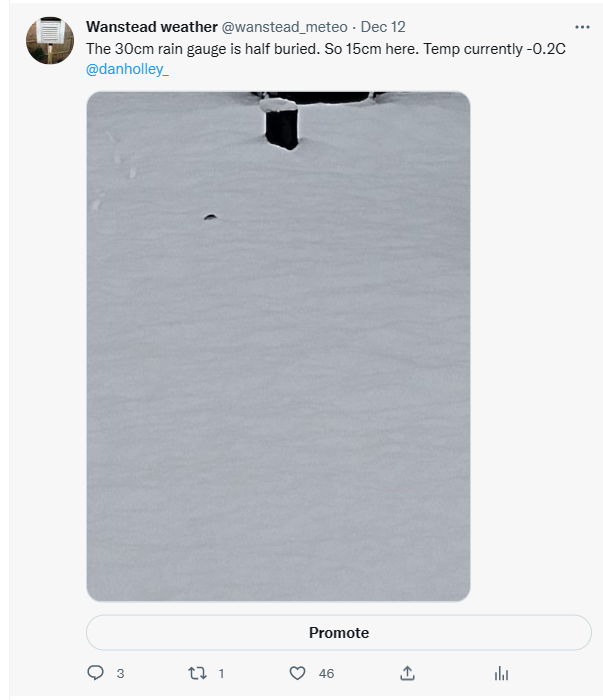
The morning of December 11, 2022, began cold after an overnight frost that saw temperatures fall to -5.3C. Freezing fog lasted through the day, coating everything in rime to set the stage for what was to be one of the most notable snowfalls in years.
Precipitation started just before 7pm with a mix of rain, ice pellets and wet snow, this soon turning to all snow within 10 minutes and settled fast.
By 9pm there was a good 6cm; Wanstead Park was soon transformed.
By midnight the snow had stopped, leaving a good 13cm out the back
Yesterday's snow sequence shows how concentrated this event was and that Wanstead seems to have been the area that benefitted most. It also seems to have died rapidly over the Chilterns @LondonSnowWatchpic.twitter.com/RYO5RijQXw
Anomalies of the past two months throw up some interesting singularities as we head into late summer and autumn – with a hint that we could be heading for a much colder than normal December.
Using stats from the past 60 days revealed the following years. Those most similar to the current ENSO situation are highlighted in bold.
The most negative month on average will be December.
In terms of rainfall those hoping for a deluge look likely to be disappointed, at least in the south-east, with a continuation of synoptic conditions that favour drier than average weather.
The best chance for a wetter than average month appears to be September though, given recent synoptics, this is likely more a result of trough disruption than any sustained period of Atlantic-driven fronts.
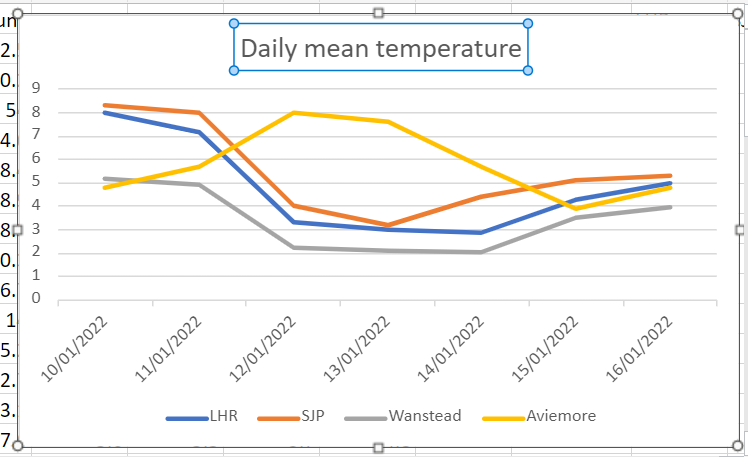
That’s not a statement that applies much, least of all the second week of January. But the current weather pattern has seen this town in the Highlands subject to the warming influence of the Atlantic, to a higher degree than London.
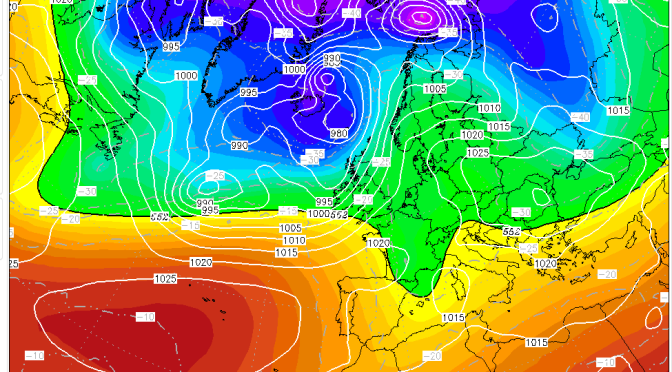
The above 850mb chart, typical of the past week, shows the warmer air aloft and the south of the UK seemingly cut off from outside influence.
Indeed, lack of solar heating at this time of year ensures that any thermal activity is minimal – with very little mixing of the boundary layers by day.
Wanstead Park, being a frost hollow, has seen this phenomena most days during the past week with this part of London markedly colder than elsewhere in the capital.
By the 16th the 7-day running mean at Aviemore was 2.4C higher than Wanstead!
The crux of the article is that certain weather types can repeat at the same time of year with one having a 100 per cent probability!
The Christmas storm singularity occurs in 84 per cent of years.
While 84 per cent certainly doesn’t mean ‘nailed on’, in the current set up of models being evenly spread between settled and stormy it can be safely guessed at this range that there will be unsettled weather around on the 25th. Whether it will affect the whole country remains uncertain.
The last big snorter of a Christmas storm I can remember in London was 2013. The entry for the 23rd into the 24th reads.
“Cloudy and breezy start grew steadily duller with rain just before noon. Rain grew heavier with some really strong gusts into evening culminating at 2am. Cloud at one point was 10kms thick. Three deaths related to weather.”
There was chaos nationwide with flooding and power cuts.
Air pressure is probably the least celebrated meteorological statistic, most probably because unless you’re staring at a barometer all day you can’t ‘see’ it.
High pressure brings mostly fine weather while low pressure usually brings wind and rain – though it is the gradient of the isobars that can measure the impact each system can bring.
Steep falls and rises in pressure bring the most memorable events, in my case the October 1987 storm.
During the next week there will be a notable fall in pressure – but how will it compare with the past recent years? Looking at my own stats, a relatively small but complete set of 9am barometer readings back to May 2013, it does look like it will be notable.
The table below shows the numbers to beat.
As with many of these events the most impactful weather was found in the north of Scotland. The first period coincides with Storm Caroline. The Met Office blog says Caroline brought a max gust of 93mph at Fair Isle and transport disruption and closed schools across the Western Isles.
Of course what goes down also comes up and pressure rises can be even more notable. In February 2016 the pressure rose 50mb in just three days, a week or so after Storm Imogen.
According to the Met Office FAX charts the 9am pressure in London on March 11th will be around 988mb, which would represent a fall of 48.6mb from 9am on March 6th.
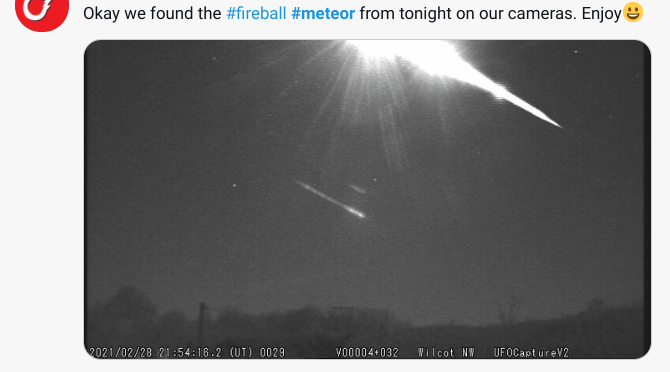
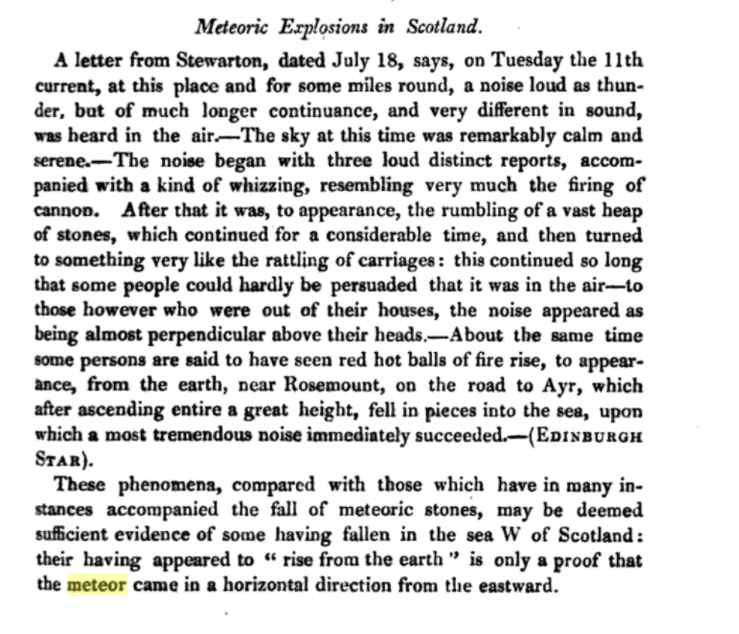
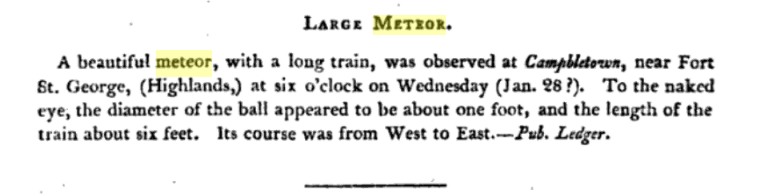
Attention on the bright meteor seen over the UK earlier this week got me thinking about the meteors frequently mentioned in Luke Howard’s Climate of London volumes.
Howard had a keen interest in all things atmospheric, not least this celestial phenomena. Many of his personal accounts are mentioned over a period of a decade or so including accounts of meteors overseas.






















You must be logged in to post a comment.