
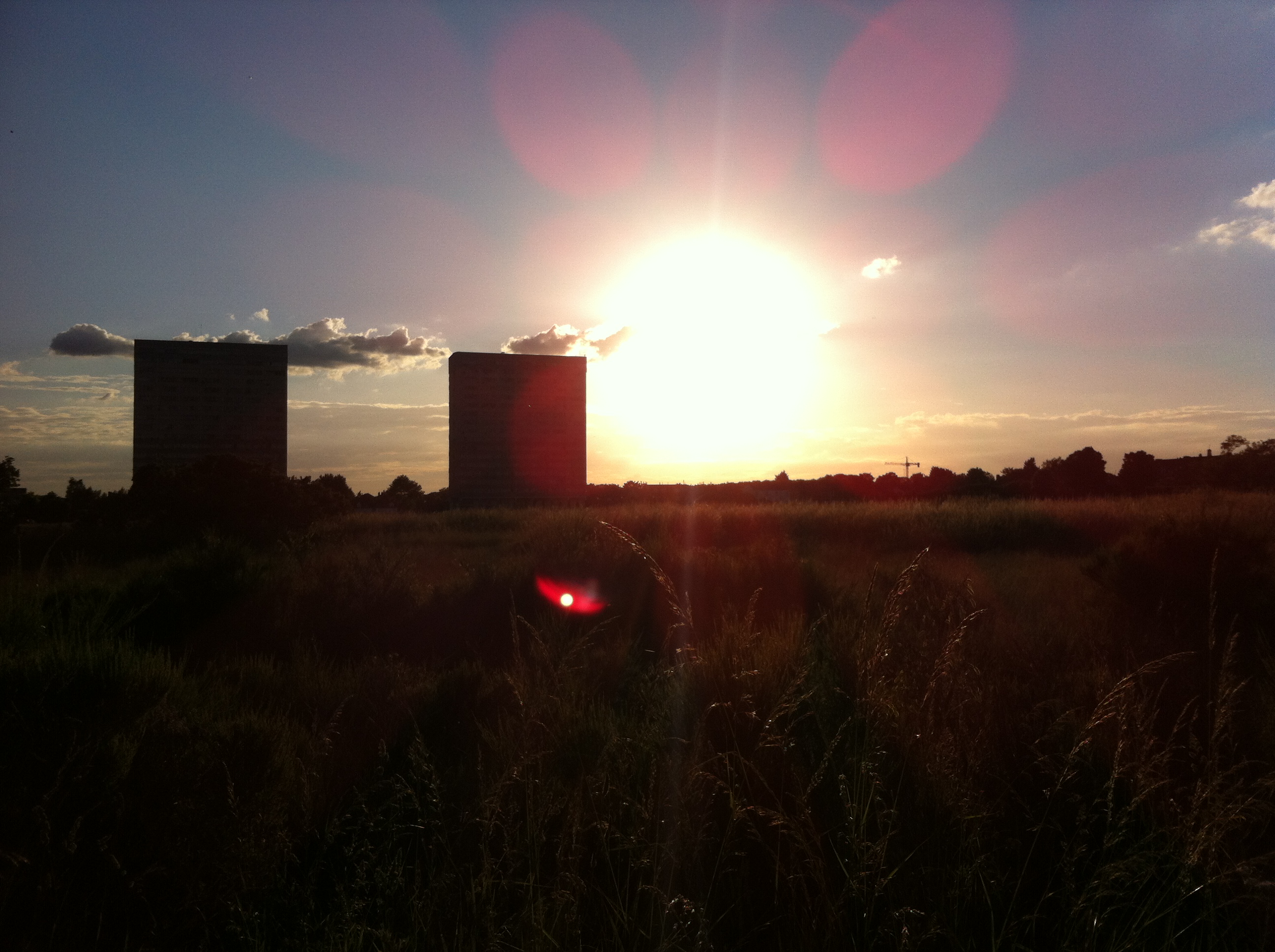
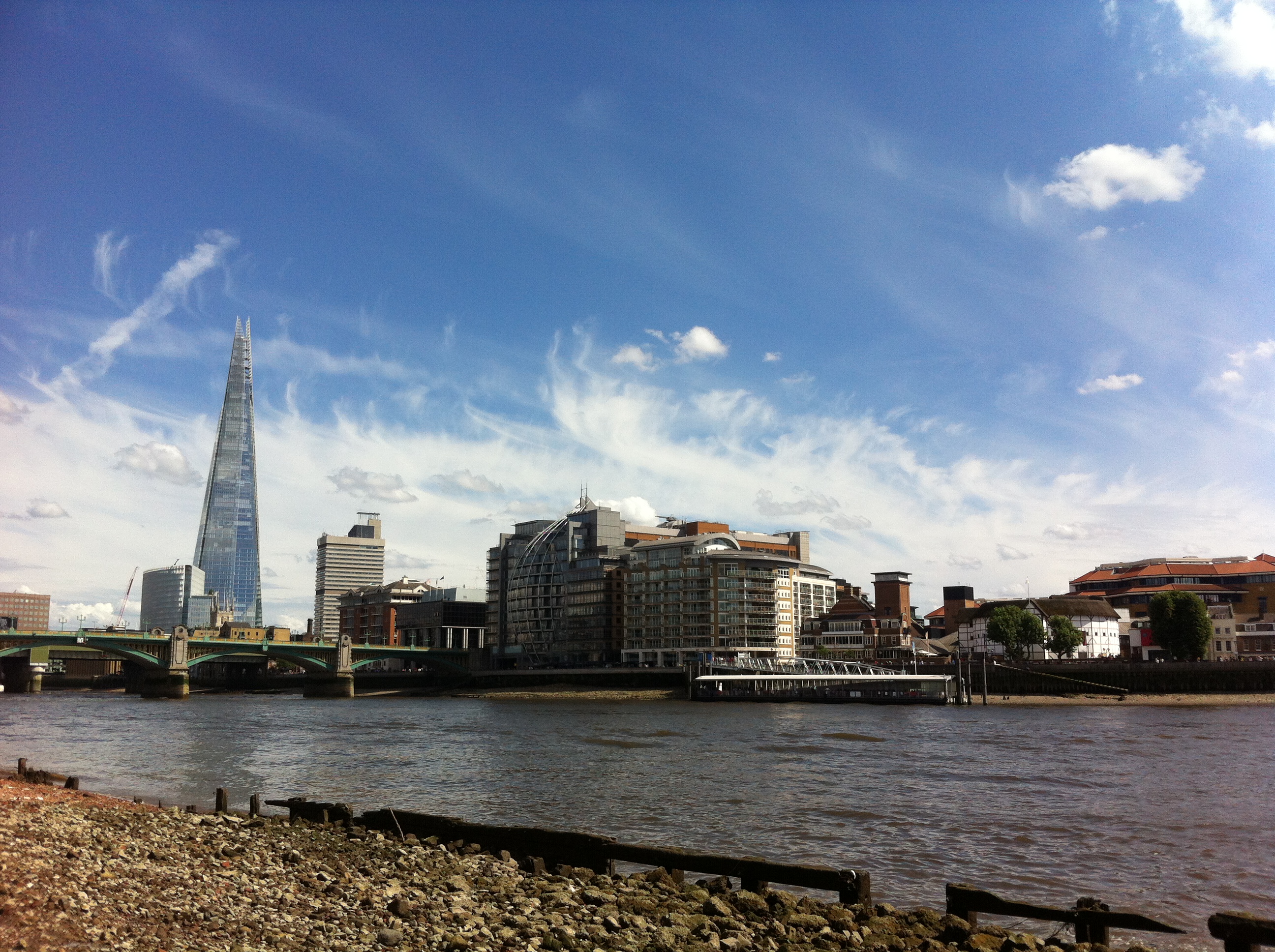
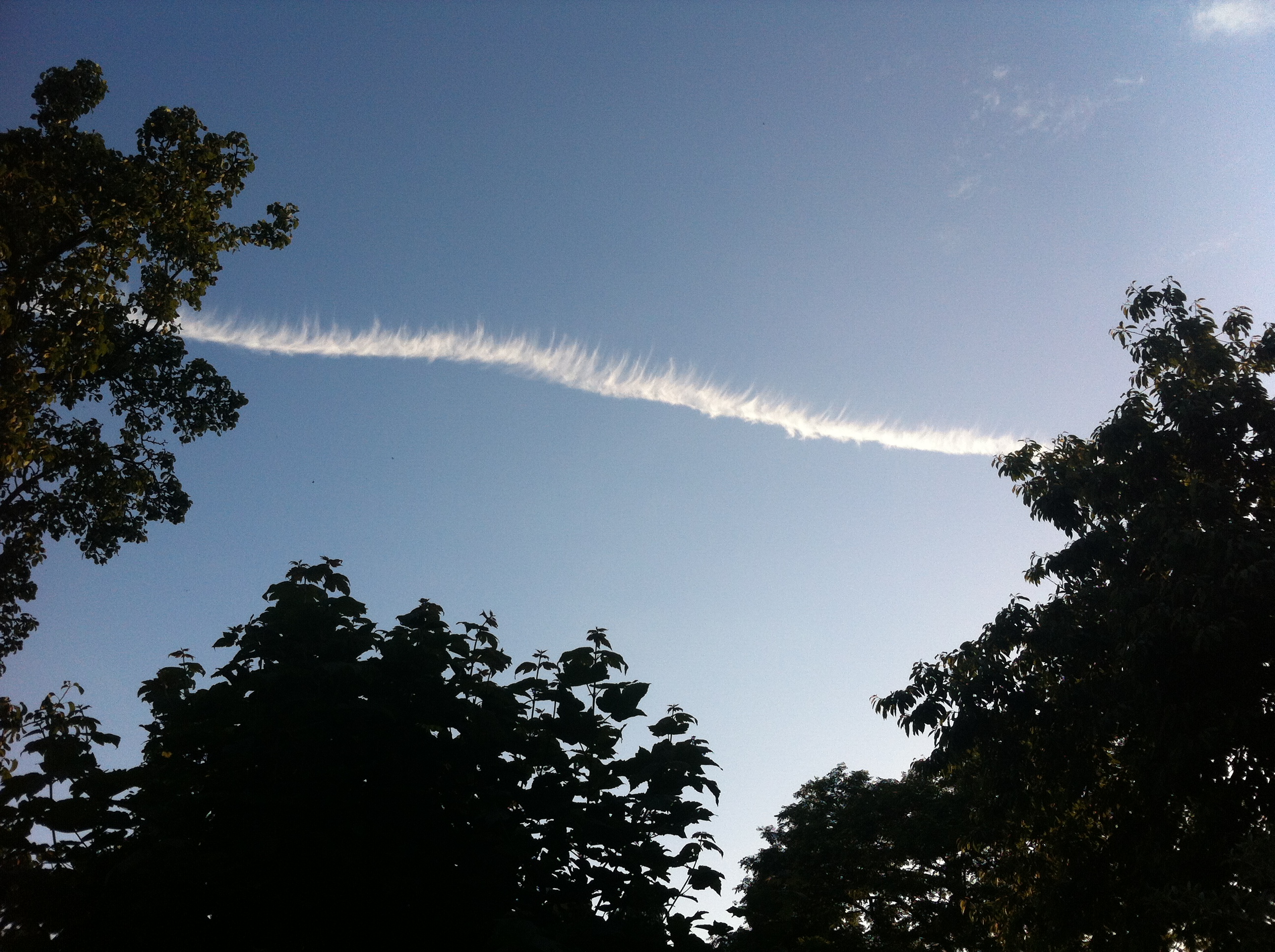
Considering we had no thunder to speak of and the threatened thunderstorms failed to materialise in this region we still saw some amazing skies at the weekend. Testament to the fact that the weather is never boring…




Considering we had no thunder to speak of and the threatened thunderstorms failed to materialise in this region we still saw some amazing skies at the weekend. Testament to the fact that the weather is never boring…
Over the years significant weather events have, at least in my subconscience, at times signalled that something ‘big’ is about to happen – just one example being the Great Storm in October 1987 that was followed days later by the Black Monday stock market crash.
So an event that happened 100 years ago this month, to some, probably also brought a feeling of impending doom as the political situation in Europe became ever more fraught.

A series of severe thunderstorms that broke out just after midday over south-west London on June 14, 1914, left people dead and a trail of destruction across areas south of the Thames. Fierce lightning, torrential rain, severe flooding and hail ‘the size of walnuts’ accompanied the storms. Six people were killed by lightning on Wandsworth Common and four others were injured. As with many thunderstorms the heaviest rain, 94mm in 3 hours at Richmond Park, was focused over a small area. South Kensington, just over 5 miles away, recorded just 6mm! I don’t have the figures for Wanstead but judging by the map published in the 1914 edition of British Rainfall it probable recorded even less than South Kensington.
Some reports by observers.
Dulwich: Violent hailstorms. Many hailstones were like acid tablets about one inch long, half an inch broad and over a quarter of an inch thick. A minute or two after these had fallen, a mist rose to a height of about 4ft above the ground.
Lewisham: A storm began at 12.24pm and came right overhead from the east with terrific flashes of lightning and loud thunder. At 12.31pm, rain fell with extraordinary fury; within 9 minutes 0.5 inches had fallen. The second storm came up just after 1pm, the lightning being even more severe. At 1.30pm, St Mark’s Church, and the Holy Cross were struck. A tree in Hither Green cemetery over 30ft high was splintered and two houses were struck at Catford. Another thunderstorm came up at 2.25pm with torrents of rain and hail as large as haricot beans fell for 5 minutes.

Richmond Park: Very severe storm passed over the house; an oak fence was struck by lightning in two places. Rainfall measurements were as follows: 1.80 inches in 45 minutes, 2.70 inches in 90 minutes, 3.2 inches in 2 hours, 3.60 inches in 2.5 hours, 3.70 inches in 2.75 hours.
Wimbledon Downs: There was a curious scene close to Kingston station, where the water was about 4ft feet deep at five o’clock and motor cars and omnibuses had to make a wide detour. The storm was especially severe in Wimbledon district, where, owing to the bursting of an overtaxed sewer, the District Railway line was submerged. At Tooting Junction station was a foot deep on the platform.
Judging by the 1881-1910 average 1914 was a warm year: the mean temperature of 10.7C was a full degree warmer than average. It was also 15 per cent wetter than average and the sun hours were nearly 108% of average. Of course by today’s standards (the 1981-2010 average) 1914 looks relatively cool as the average annual temperature has risen 1C in the past hundred years.
The weather on this day must have been synonimous with the deteriorating political situation in Europe: two weeks later Franz Ferdinand, Archduke of Austria, and his wife Sophie were assassinated in Sarajevo by a young Serbian nationalist Gavrilo Princip , the casus belli of the First World War.
What is fascinating is that a similar thunderstorm that left seven dead in Valentines Park, Ilford, 75 years ago this August, also happened about two weeks before Prime Minister Neville Chamberlain announced on September 3, 1939, that Britain was at war with Germany.

Ask a dozen people what they think is a heatwave in this country and you’ll probably get 12 different answers.

The UK press is always keen to tell us that a ‘heatwave is on the way’ – even if it is March and the heatwave in question brings temperatures no greater than the high teens Celsius.
Although in the UK there is no official definition of a heatwave the World Meteorological Organization description is “when the daily maximum temperature on more than five consecutive days exceeds the average maximum temperature by 5 °C, the normal period being 1961-1990”. In other words that March heatwave would see the thermometer peak higher than 15.3C five days in a row. Pleasant enough – but no big deal.
The Met Office, working with the Department of Health, provides a ‘Heat-Health Watch System’ for England which is triggered when a threshold temperature in the South East is 31 °C by day and 16 °C overnight for at least two consecutive days.
I have vague memories of the weeks of sunshine in 1976 but the hot spells that stick in my mind the most are August 1990, when the UK temperature record was set in Cheltenham, Gloucestershire, and August 2003 when an 8-day hot spell saw the all-time UK temperature record broken when 38.5C was reached at Brogdale, near Faversham, Kent.
 Last July, when compared with the previous summers, saw some of the best summer weather since 2006. But where does last year compare with the good summers of 2003, 1995, 1990 and 1976? I decided to have a look back at the daily records for this area which stretch back to 1959.
I have drawn up a list of all days back to 1959 that have an average mean daily temperature of 23.5C or higher. This shows that there has been 93 such days. However, to qualify for the Met Office’s Heat-Health Watch System – ie two days like this in a row the list narrows. To make my job easier, I have narrowed the list further to 3 consecutive days where the mean has been 23.5C or higher. Though I loathe really hot weather in my experience I can put up with it for a couple of days. It is only when it gets to the third day of hot, sleepless nights that it starts becoming unbearable.
In terms of intensity and hours of sunshine, 2003 comes out on top. Though many people will argue that 1976 is more impressive -that summer, which comes in second, only produced two spells that satisfy my criteria. The first heatwave saw temperatures soar above 31C for six consecutive days from June 23. The start of the second, on July 3, saw Bjorn Borg win the first of five Wimbledon mens’ titles as he prevailed over Ilie Nastase in 35C heat.
The summer of 1995, which saw my driest-ever August with just 0.7mm of rainfall all month, comes in 3rd, with six days of mean temperatures of 23.5C or higher.

Looking at the data another way, ranking the average total daily mean temperature of each spell, sees 2003 again come out 1st, with August 1990 and July 1983, 2nd and 3rd. Looking back through history it is not really surprising that 2003 comes out on top. While it was hot in London the heatwave across the Channel contributed to the death of over 70,000 people throughout Europe, France being the most affected.
This weekend promises to be very warm and sunny but it will pale into insignificance compared with the hot spells of the past. The mean temperature on Saturday and Sunday is unlikely to exceed 17C. 
April 2014 continued this year’s theme of being milder than normal; the mean temperature of 12C was 2.2C above average, making it the third warmest April since 1797.

April continued the dry theme of March and was indeed dryer on average. Just 19.6mm on rain fell over the 30 days – that’s 46 per cent of average.
The month saw some stunningly sunny days during the second week into the third week, though these were tempered by chilly east to north-easterly winds. The warmest day was the 21st when 21.5C was reached – the first ^70F temperature of the year.
Though it ‘felt’ quite a sunny month the 150 hours recorded was only 94 per cent of average.
Some nights were chilly when the sky cleared but there was no air frost and only two ground frosts, on the 15th and 16th
To view full stats follow this link:http://1drv.ms/1cBRoH3
…then we’ll only see a splash. If the ash before the oak then we’re sure to get a soak.
If this old weather saying carries any weight then this summer should be a corker…

Only I wonder how many of the ash trees I noticed on my ride back from Enfield this afternoon are struggling to survive let alone burst into leaf. The initial onset of chalara fraxinea (ash dieback) over the past couple of years now seems to be taking its toll in a much bigger way on ash specimens around the countryside.
The tell tale dead branches are becoming a lot more common.
Some have blamed the spread of Chalara on cheap imports of ash trees from Holland – the first cases were confirmed in a nursery in Bucks early in 2012. Efforts were made to find and contain affected specimens but, throughout East Anglia and the South East, the disease seems out of control. It could be only a matter of time before the disease scars the landscape with dead trees in the same way that Dutch Elm Disease did in the 1970s.
From one poor management of trees to another – namely the ultra harsh pollarding of the London planes in Wanstead High Street. Whilst this style of management is nothing new and seems to be de rigeur among most London councils it does nothing for the scene of many roads and streets through the capital. What was once a rich canopy of green providing shady relief from the sun during high summer is just a few stumps. It takes a good few years for the canopies to regenerate – by which time it’s time for another visit from the tree surgeons…

To blame, partly, is the spread of another tree pest – Massaria. This unseen pest ‘eats’ away the tops of branches – compromising the strength of the wood eventually to the point where, if unchecked, the whole limb comes crashing to the ground. London plane is very heavy wood – with branches weighing dozens of kilos there’s obviously safety issues with limbs dropping on peoples’ heads.
Though councils would argue otherwise I think the harsh pollarding is a cost saving measure – without this they would have the added cost of constant monitoring.
The fast-growing, non-native London plane was planted on the understanding that growth would be carefully managed and limited in height. But looking at some of the monster specimens around the capital that seems to have gone by the wayside a long time ago.
The City of London Corporation is well aware of the problem and is closely monitoring the capital’s stock.
If you have magnificent London plane near you make the most of it – the buzz of the tree surgeons’ chainsaws are getting closer.
The last time Liverpool won the league in 1990 (by league I mean top tier of English football) the South East enjoyed a mostly dry, warm and sunny summer. A particularly hot spell in August of that year saw the UK high temperature record broken when the mercury reached 37.1C at Cheltenham on August 3rd, a record that stood until 2003.
Since the middle of December last year the weather has been remarkably similar to that football season when the Reds won their 18th league title. Both winters were remarkably mild and stormy with January 1990 seeing the Burns’ Day storm.

The mean temperature this year over the same period, December 13th to April 26th, is just 0.2C cooler than 1989-90, while rainfall is 2.1% greater and sunshine is 2.5% less. A remarkable singularity.
Will history repeat itself come the end of the season and the end of the summer? Up until early Sunday afternoon the stage seemed set. But a slip by Liverpool skipper Steven Gerrard at the end of the first half gifted Demba Ba with a chance that opened the way for Chelsea to complete the double over their title rivals.

It must have been agonising for the Kop to watch, 24 years on from the exact same weekend the Reds lifted the title with two games left. The weather that followed that memorable day was dry, sunny and warm with temperatures reaching the mid 20s on many days.
Fast forward two dozen years and the weather looks decidedly unsettled, with frequent showers or longer spells of rain interspersed with sunshine. Though there’s doubtless many twists and turns left I wonder if Reds fans believe their title hopes are going the same way as the change in the weather?
Football’s a funny old game – just like the weather.
March 2014 will be most remembered for glorious sunny days that brought welcome relief after a run of seemingly endless wet months.

It also continued the mild theme of the winter; the mean temperature of 9.1C was 1.4C above average, making it the 11th warmest March since 1797. Looking at my other series back to 1881 the March mean maximum was second only to March 1938!
Just 25.8mm of rain fell over the 31 days – that’s 63 per cent of average.
The month started on the chilly side but with plenty of sun around it felt pleasant. Though many days were warm clear skies led to frost and fog forming. Hail was observed on three days.
The most notable weather occured on the 26th when the temperature fell from 10C at 1.30pm to 4C by 3pm. Heavy showers accompanied what was an utterly foul day. The cold pool persisted into the 27th with towering thunder clouds surrounding Wanstead, north, east and south – with reports of hail in Berkshire and snow in Folkestone.
The month ended with warm, sunny weather – the southerly flow bringing Saharan dust that deposited on cars. There were 4 air frosts and 14 ground frosts.

To view full stats follow this link: http://1drv.ms/1cBRoH3
‘Worst-ever!’, ‘in living memory’, ‘highest on record!’, ‘unprecedented!’. These phrases, used often by newsreaders on the main networks including Sky and BBC, always set an alarm bell ringing in my head. None more so than weather stories which, with the stormy winter we’ve just had, has been happening almost daily since the middle of December.
 As the winter has progressed the networks have tried to out do one another with the severity-value of a story. What starts with a reporter gingerly standing by the side of a flooded field within days changes to the reporter, donning a pair of fisherman’s waders, trawling waist-deep through a flooded Berkshire housing estate.
The media also seem to delight in rushing out Met Office data to proclaim these armageddon scenarios before the season is over and the statistics can be properly studied, absorbed and commented upon.
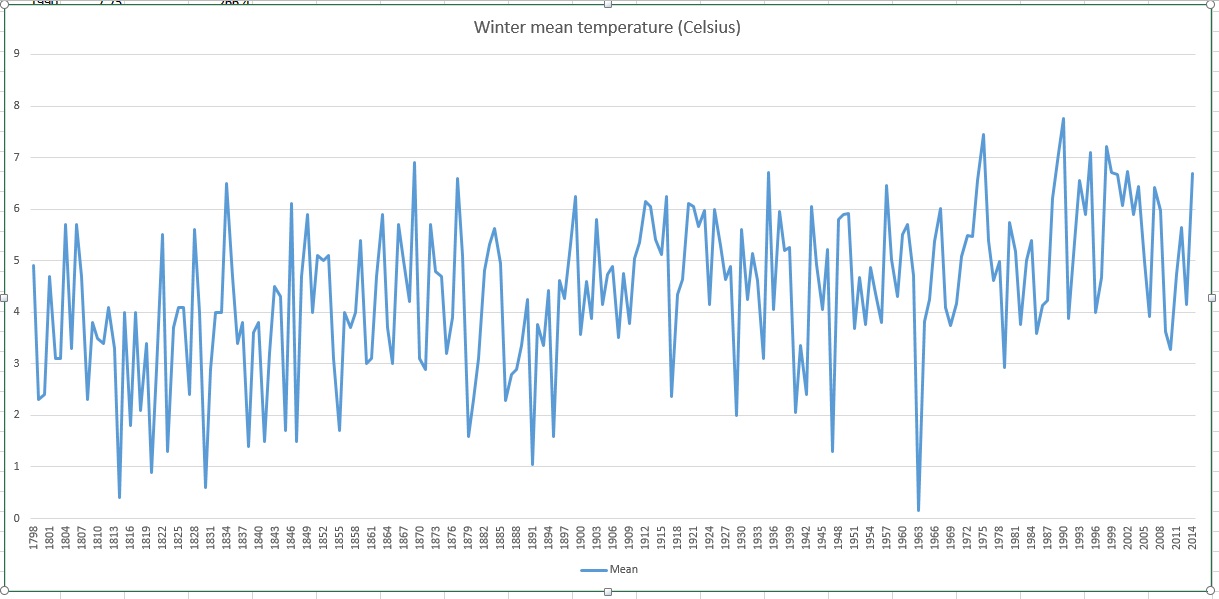
Last summer, I started to build a dataset for my own area – Wanstead. Using local figures from the City of London Cemetery I was able to take the daily series back to 1959. Beyond this I then sourced monthly data for Greenwich, 6 miles away, back to 1881. Using W.A.L Marshall’s A Century of London Weather and Luke Howard’s The Climate of London enabled me to take the series right back to 1797.
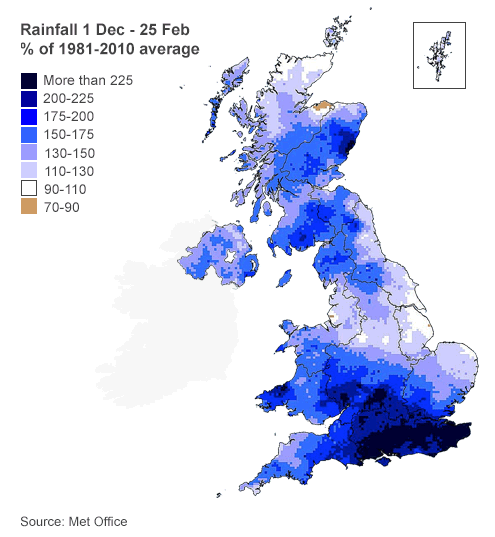
The series makes for interesting reading, putting this winter as 6th wettest since 1797. Scientists would say that because my series is only one dataset it cannot be regarded as a ‘catch-all’ for the country overall. But when statements like “England and Wales has had its heaviest rainfall since 1766” are put out by the media it is blatantly not true for the entire country. Just a quick look at the map shows that while parts of south and southeast England have been very wet – other parts of the country have been much less so.
But in this age of 24-hour rolling news the message to anyone who takes the headlines at face value is that this has been the wettest winter ever. You can view the winter mean temperature and rainfall stats here.


January saw a couple of notable falls of snow, the first of which arrived on the 18th. By the morning of the 21st there was 13cm lying.

An average August and September saw a couple of notable rainfall events with 32.8mm on 24/8 and 32.6mm on 13/9 being the the 27th and 28th highest 24hr totals in a series going back to 1961. In the August event Maldon in Essex saw in excess of 100mm leading to flooding. What made it more noticeable is that these events occurred during dry spells.

Rainfall (mm):

December was warmer than average with a mean temperature of 6.5C (0.9C above the 30-year average) – ranking it 33rd in the series since 1881. Rainfall of 81.9mm was 154% of average – ranking it 22nd in the series.
The month was 1C warmer than last December – with 84% of the rain that fell in December 2012.
Despite it ‘feeling’ like it has been the stormiest December for some years this month was not as windy as December 2012. To illustrate this the ‘wind run’ for this month (the number of revolutions of the anemometer) was 2408.7 miles. Last December was 2654.5 miles, in other words last December was 10% more windy.
Air frosts: 4
Ground frosts: 11
Thunder: 1
Small hail: 1


 Wanstead Meteo
You must be logged in to post a comment.