I don’t usually bother trying to forecast autumn or spring given that there is far less interest in them than winter and summer. However, given the heightened interest in this year’s hurricane season and emboldened, perhaps foolishly, by my reasonably correct summer forecast I decided to have a look at the stats and see if I can find any signs where autumn in east London may be headed.
Using the method for my seasonal forecasts resulted in a shortlist of 26 summers that were similar to 2016.
Because the NOAA ENSO index only goes back to the 1950 I decided to disregard all years prior to this date to try to make any results more reliable. This narrowed down the list to 11 years.
With these considered I then searched for years that had a similar ENSO index to June (0.1 – neutral) with a tendency to turn negative (La Nina). This narrowed the field further to three years: 1999, 1992 and 1964. However, the only year that is showing signs of being similar with regard to where the ENSO index is forecast to be heading is 1964.
Although, so far, there has been an uptick in hurricane activity similar to 1964 there is, of course, the added consideration that Saharan dust is playing a part in impeding the formation of these tropical storms in the Gulf of Mexico – something the weather models seem to struggle to get a grip on.
With this in mind perhaps there will also be lower than usual instances of these storms crossing the Atlantic to affect the UK: hence a quiet autumn though, on a national scale, interpersed with the odd interest from the Atlantic. In London, perhaps we can expect something very similar to what is listed on the excellent website: http://www.london-weather.eu/article.103.html
Summer 2016 turned out to be a very decent season overall, the mean temperature of 18.7C (1.1C above average) made it the sixth warmest summer since 1797.
While it wasn’t quite up there with the hot summers of 1976 and 2003 it still produced some notable records. The stormy beginning to June effectively ended with the Brexit vote, a period of 24 hours that coincided with the highest daily rainfall this area has seen since at least 1959.
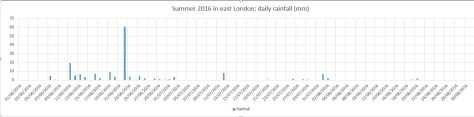
The multi-cell thunderstorm in the early hours of June 23rd produced 60.8mm of rainfall, nearly half of the month’s total which became the third wettest June in a record going back to 1797. The high rainfall was in complete contrast to July and August and helped skew the overall figure: 168.6mm is 114 per cent over average summer rainfall.
With so much rainfall overall sunshine was affected with only 451 hours recorded, just 80 per cent of what can be expected in an average summer.
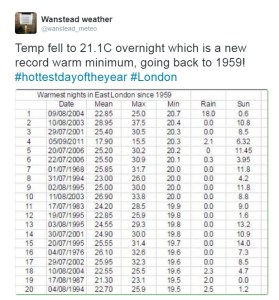
July produced another record, this time the highest overnight minimum recorded since 1959. The minimum of 21.1C was recorded during the early hours of the 20th – coming hours after the hottest day of the year: 33.5C – the 14th hottest day on record.
The warm and very dry theme continued into the final month of summer with the warmest August for 12 years, the 10th warmest and 12th driest since 1797.
My summer forecast, when the monthly probabilities are considered, was broadly correct though I didn’t estimate correctly just how warm it would be.
Though there were no records broken August 2016 goes down as a mighty fine summer month, the warmest for 12 years. The mean of 19.5C was 1.3C warmer than average and only 0.1C cooler than 2004.
Grasslands around Wanstead Park have gradually turned brown because of the lack of rainfall
The month ended a three-year run of poor or so-so Augusts: in terms of mean temperature the month was the 10th warmest in a local series going back to 1797.
It was another very dry month: just 11.9mm fell, 24 per cent of average, the driest August since 2003 and the 12th driest in the local record.
The month only falls down in terms of impressiveness when sunshine hours are considered. Some 192 hours were recorded, the 59th sunniest since 1797 – 1995 had 80hrs more sun.
Air frosts: 0, Ground frosts: 0
So what has September got in store weatherwise? The models on the 1st suggest the month will start mixed, though any precipitation will be below average. Temperatures remaining on the warm side.
Beyond the grasp of the models my long range outlook method is again hampered by a very dry August. However, the data I do have suggests an average month at 100 per cent probability.
A wetter than average month looks most likely at 75% probability.
The rainfall probability makes me wonder whether we are in for a very unsettled second half of September, the Atlantic cranking into life with the remnants of tropical storms and hurricanes having an ever-increasing influence as the month progresses.
So to sum up: mean 15.3C (average), rainfall 162mm (300%), sunshine 140 hours (100%).
My August outlook for temperature was good. I predicted a mean of 19C (outcome: 19.5C). It was drier than I thought: 30.3mm (outcome: 11.9mm). Sunshine was poor: 239 hours (outcome: 192 hours).
Here follows the full weather diary for August…Full stats for the month here:http://1drv.ms/1rSfT7Y
1st: Cloudy start to 1pm. Rain started at 5pm through to 10pm. A brief interlude before more light to moderate rain through the night 4.30am, then drizzle
2nd: Damp, miserable start – the rain became light to moderate in the early afternoon before drying up – very high dew points through the day.
3rd: Bright and breezy with variable cloud.
4th: Bright start with variable cloud and sunny spells.
5th: Good sunny spells all day – perfect summer’s day, not too much humidity – though an isolated shower passed over at 8pm.
6th: Sunny, clear start. Lots of sunny spells during the day.
7th: Bright start though very breezy. Cloud decreased through the day to leave a gorgeous late afternoon and evening.
8th: Sunny, clear start with lots of fair weather cumulus throughout the day. Cloudier spells mid afternoon.
9th: Sunny with fair weather cumulus up until noon then cloudy afternoon.
10th: Sunny with fair weather cumulus, variable throughout the day. Breezy.
11th: Cloudy start with very brief light rain, barely enough to damp ground. Some sunny intervals later and bright and warm.
12th: Sunny start with a few clouds. Turned gin clear at 11am and stayed clear all day. Feeling hot.
13th: Bright start but turning cloudier. Sunny intervals PM.
14th: Cloudy start breaking to some long sunny spells. Feeling very warm in the sun.
15th: Bright start soon turned sunny with a clearance at 1pm.
16th: Bright start though a lot of haze around. Sunnier later though still hazy.
17th: Sunny with patchy cloud to start, this clearing late morning to leave a clear if rather hazy afternoon.
18th: Sunny if a bit hazy to start, this tending to decrease to leave warm sunshine.
19th: Cloudy with rain threatening. Low cloud at Stansted. Brief rain in afternoon then cloudy.
20th: Dull and overcast at 9am. Burst of heavy rain at 10.15am clearing to sunny spells at noon 30. Rain between 7pm and 8pm and 3am and 4am.
21st: Bright start. Sunny intervals till 3pm then sunny spells.
22nd: Bright after earlier rain at 0719 then sunny spells.
23rd: Clear and sunny start with a few cirrus clouds through the day. Hot.
24th: Sunny, gin clear start. Patchy cirrus through the day. Hot.
25th: Lots of altocumulus and sunny spells but felt sultry due to high dew points.
26th: Cloudy start but gradually decreased to leave clear pm.
27th: Overcast but bright start. Brightness through the day but hazy. Some heavy storms further north.
28th: Overcast until early afternoon, 5 minute shower at 2pm then sunny intervals..
29th: Bright start then sunny spells and cirro cumulus gradually clearing to leave a sunny evening and clear night.
30th: Clear and sunny start.
31st: Bright start though cloud filling in by 3pm, clearing again at 8.30pm
There was plenty of interest in the weather last month even though the overall stats suggest July 2016 wasn’t that remarkable.
The sunset on July 9th was spectacular
Most notable was temperature: the warmest minimum on record for this area (21.1C) was recorded during the early hours of the 20th – coming hours after the hottest day of the year: 33.5C – the 14th hottest day on record. The mean temperature of 19.5C was a degree warmer than average, the 18th warmest July since 1797.
Rainfall was very sparse. A total of 17.3mm fell during the month, that’s 40 per cent of average, the driest for six years and the 19th driest in the series going back to 1797.
After a very dull start to the month sunshine was always going to struggle: just under 172 hours were recorded – that’s 89 per cent of average and marginally down on last July.
Air frosts: 0, Ground frosts: 0
The temperature didn’t fall below 21.1C on the night of 19th July, making it the warmest minimum on record in this area back to 1959
So what has August in store weatherwise? The models on the 1st suggest the month will start with a mixture of sunshine and showers. At the end of this week there are indications of a change to warm and later very warm weather.
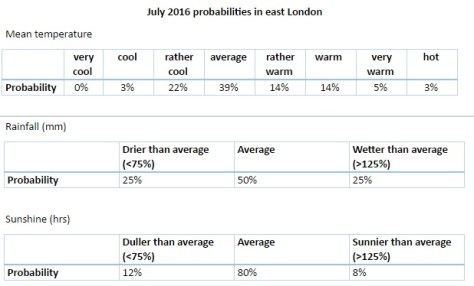
Beyond the grasp of the models my long range outlook method is hampered this month because of the very dry July. However, the data I do have suggests a rather warm month at 50 per cent probability. The ‘worst case’ scenario suggests something average, a contrast to the past couple of Augusts which have been poor. Perhaps we can look forward to another reasonable summer month, defined by plenty of fine, at times hot, weather – though anyone looking for unending days of 30C and higher will be disappointed.
A dryer than average month (possibly very dry) looks most likely at 50% probability. A very sunny month looks most probable.
So to sum up: mean 19C (0.8C above average), rainfall 30.3mm (60%), sunshine 239 hours (123%).
My July outlook for temperature was good. I predicted a mean of 18.8C (outcome: 19.5C). Rainfall was very poor: 50mm (outcome: 17.3mm). Sunshine not badr: 171.9 hours (outcome: 190 hours).
Here follows the full weather diary for July…Full stats for the month here:http://1drv.ms/1rSfT7Y
1st: Cloudy with sunny intervals. Some sharp showers.
2nd: Bright start though breezy. Very heavy shower at 1740.
3rd: Sunny though with lots of cumulus.
4th: Sunny, gin clear start though cumulus rolled in at 1.30pm.
5th: Cloudy start with very brief, very light drizzle though with sunny breaks developing.
6th: Hazy mix of cirrus and cumulus gradually decreased to a clear sky by 1pm. More cumulus bubbled up later but still mostly sunny and low humidity.
7th: Sunny start with lots of cumulus, cirrus and stratus around. Sunny spells through the day.
8th: Cloudy and breezy start.
9th: Bright start with sunny spells but also lots of cloud. Amazing sunset with fronts coming in.
1oth: Cloudy start with light rain spreading in but only lasting for 40 minutes. Some sunshine in the afternoon though was breezy.
11th: Cloudy start with heavy showers early afternoon.
12th: Sunny start though with plenty of cloud which bubbled up and gave heavy showers from 11.30am. More showers in the afternoon – miserable.
13th: Bright and sunny to start that cloud gradually built before heavy showers hit at 2pm, these lighter over Aldersbrook.
14th: Sunny, bright start with sunny spells, tending to turn cloudier.
15th: Bright start but cloud piled in and breeze picked up.
16th: Sunny start with lots of cirro-cumulus. Cloud tended to build at times and a front passed over at 4pm. Warm evening and night.
17th: Bright start though with lots of heavy cumulus around. This tended to break up at intervals during the day, making it feel hot in the sun because of the high humidity.
18th: Sunny start with patchy cirrus and cumulus. This decreased as day wore on leaving a hot day. Felt almost airless with variable cloud.
19th: Sunny with decreasing cirrus to start to leave a gin clear day. Breeze picked up at noon meaning it wasn’t as warm as it could have been.
20th: Sunny but hazy start but with more of a breeze than yesterday. Cloud tended to fill in but then burnt off to leave another hot day.
21st: Sunny but cooler start than yesterday with lots of milky cumulus around.
22nd: Cloudy start after overnight rain. Sun breaking through at 12.30pm.
23rd: Cloudy start with spots of drizzle at 11am then slowy getting brighter with evening sunshine.
24th: Cloudy start with early showers breaking to sunny spells.
25th: Sunny start with variable amounts of cloud through the day. Feeling cooler.
26th: Sunny start though with cloud bubbling up through the morning. Overcast by 2pm.
27th: Cloudy and damp with light rain before and after obs time.
28th: Sunny periods with variable cumulus
29th: Cloudy start with brief rain showers in Chigwell. Sky broke to allow long sunny spells before it clouded over again. Rain shower at 9pm.
30th: Cloudy and overcast start. Long sunny spells into the afternoon.
31st: Sunny start though more cloud tending to bubble up in the afternoon.
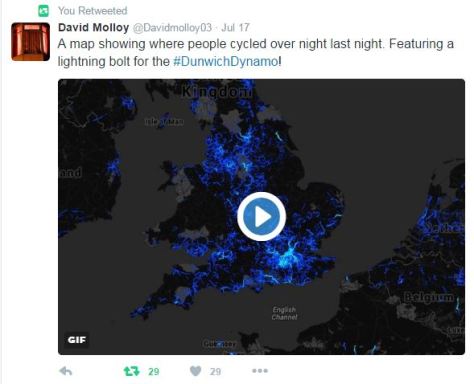
Hypnotised by a long line of red lights and a sudden feeling of being totally alone in the darkness were surreal sensations I experienced as I took on the challenge of the Dunwich Dynamo last weekend.
I’d read a few personal accounts of this 120-mile blast through the Essex and Suffolk countryside but nothing really prepares you for the ride that starts in the fading light of East London.
A sea of cyclists greeted you as you arrive in London Fields – a mix of serious lycra together with quite a few souls in regular clothes who look as if they were popping down the shops for a pint of milk rather than an overnight ride to the coast. The park was also still busy with people out enjoying the warm weather with the thermometer still hovering around 25C. Though the event has been running for 24 years a couple of bemused onlookers asked me “what the hell is going on”.
“This is NOT a race”, screams the first line of a sheet of A4 directions handed to me by one of the organisers. And without any fanfare, at 8pm, legions got on their bikes by the Pub on the Park. My intentions of grabbing a big bowl of pasta before the start were soon forgotten as I joined the throng making its way through the narrow confines of Martello Street bike path.
The procession through Hackney was not everyone’s idea of fun though the sheer number of cycles was enough to stave off even the most impatient motorists.
East London quickly turned into suburban Essex and the scrum of cyclists had already turned into a single file. The sun was already set by the time we reached the Wake Arms roundabout though I assured my two cycling buddies that there would be plenty of options for pasta and coffee in Epping – noble intentions that ended up as pork pies and cans of Coke from Londis…
I’d never cycled beyond Epping – unknown roads even harder to navigate in the darkness. Familiar names started to flash past: Moreton, Fyfield, Leaden Roding and the 32-mile point Great Dunmow. Pockets of villagers screamed encouragement at cyclists including a four-person handbuilt contraption, tandems and one brave cyclist who’d brought his child along in a trailer.
We stopped for a pint in Great Bardfield at 43 miles; locals joining in the party atmosphere as cyclists either stopped or pedalled on. Although just gone midnight conversations seemed to hover over the fast pace of the tour, probably helped by the fine weather and almost constant light westerly breeze. Finchingfield, Wethersfield, Sible and Castle Hedingham then passed in quick succession before we reached the halfway point at Sudbury about 1am where huge queues had formed for coffee and a barbeque put on by the local fire crews.
Though the temperature never fell below 16C over the entire event tiredness was now starting to set in but before we got too ensconced in our chairs we decided to push on.
It was this part of the event where groups of cyclists started to spread out though, because most were cycling at roughly the same speed, you started to notice the same people: the guy in the Heinz baked beans top, the group cycling for Alzheimers, the guy with the kiddie trailer (again) comes into view, the child still awake and appearing to be transfixed by a tablet. I exchanged pleasantries with a guy in a top with the dragon of Wales emblazoned on the back – inane conversations though most seem happy to just get their heads down and eat up a few more miles.
Sizewell B is getting closer
It was around Bildeston that the roads suddenly seemed to turn really dark. Pedalling on I focus on the line of red lights in the distance – almost hynotised by the rhythm of the whole thing – but then suddenly realised that I was cycling downhill at roughly the same speed as I would in daylight. I turned my head to find that my two cycling buddies were nowhere to be seen, and neither were any other riders. An overwhelming feeling of being alone suddenly dawned on me and I eased back on the pedals though it was a good 10 minutes before my companions catch up – one asked just what exactly was in the muesli bars that I had been munching away on for six hours.
At 3am the delirium started to set in: the University Challenge theme tune was going on a loop in my head – a couple of cyclists that have brought along loud speakers failed to distract me. Our charge to the coast was eventually interrupted by a puncture, my cycling buddy exclaiming in the darkness: “This wheel doesn’t feel right!”.
By 4am the sky had long begun to lighten and the fading batteries of many riders’ headlamps was no longer such a pressing issue. I think it was around Sibton Lake that pop-up cafes started to emerge at the side of the road. Alas, the long queues prevented us from stopping, so terrified were we that if we stopped for too long our bodies would cease up. No matter. Many other cyclists by now were beginning to stop and rest on verges; a few oblivious that the sun was beginning to rise as quick as they were falling into a slumber.
The last 10 miles from Framlingham, once the sun had risen, seemed to be the hardest. I’m not sure if it was my brain being unable to cope with the additional distraction of having to deal with looking at beautiful countryside. And a couple more inclines seemed to be the last straw for a few cyclists who got off and walked.
The pine scrub of Minsmere spread out after passing through Darsham before our ultimate destination Dunwich, the Lost City, ended our odyssey. After 10-and-a-half hours we’d done it.
I’ve managed to raise over £1,000 for Sarcoma, the soft tissue and bone cancer charity
This month marks the 60th anniversary of the Clean Air Act, a piece of government legislation prompted in part by the Great Smog of December 1952 that caused between 4,000 and 12,000 premature deaths.
Air quality in the capital has vastly improved since those days of ‘pea souper’ fogs. A study of sunshine in Greenwich and other sites around east London reveals that winter months are, on average, around 18 per cent sunnier today than they were in the same period before the act was implemented in 1956. Though the cause of this is possibly partly because of a decline in winter anticyclones – weather systems that can give weeks of dull, murky conditions – further environmental legislation has helped.
Though the sky is clearer conditions at street level have grown steadily worse in recent years. During the first week of 2016 it was revealed that parts of the capital had already breached annual EU hourly limits for nitrogen dioxide – a pollutant that causes thousands of premature deaths through respiratory problems each year. A study last year showed that nearly 9,500 people die early each year in London because of long-term exposure to air pollution, more than twice as many as previously thought, according to the research.
Although action is being taken to reduce pollution from diesel buses, taxis and lorries the figures reveal that we are once again getting to the level of deaths caused by the Great Smog. The new mayor of London, Sadiq Khan, seems to be taking pollution a lot more seriously than his predecessor with a number of initiatives announced – making London compliant with EU legal limits well before the government’s target of 2025.
However, the mayor has also sent out conflicting messages by saying he backs the expansion of City Airport – you can’t have it both ways. And, if we do leave the EU, what will replace these EU legal limits?
With the current political situation lurching from one disaster to another I fear that the environment will get pushed well down the agenda. The current list of candidates vying to take over from David Cameron as prime minister include ‘dark horse’ Andrea Leadsom, the energy and climate change minister, who has been an ardent supporter of fracking. And on coal she recently sparked controversy in February where she assured the industry the pledged 2025 coal phase-out was just a consultation and encouraged it to suggest what ‘unabated coal’ means.
The many benefits of EU membership got lost in the debate over the last few weeks – improvement in the environment being one of them. It is why, without the beady eye of Brussels keeping watch over us, that we must ensure that the next government stick to their promise of continual improvement to the capital’s air quality.
Winter sunshine totals were falling before we joined the EU. Since 1973 a general upswing is observed. On average there is 18% more sunshine during winter months since we joined the EU compared with the same period before joining the Common Market
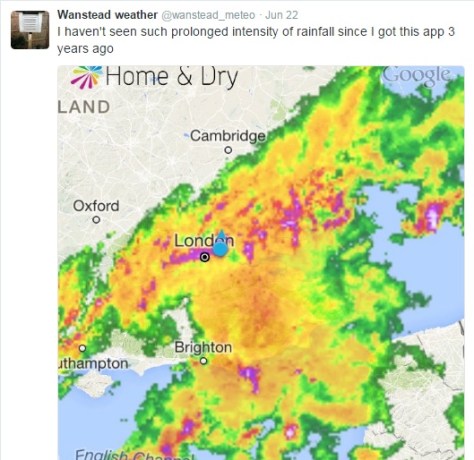
The past week has produced the highest 24-hour rainfall total recorded in Wanstead since at least 1960. The multi-cell thunderstorm on Wednesday night saw 60.8mm fall, most of it in two hours, bringing flash floods to the surrounding area. The spectacular lightning and thunder that accompanied it was almost a side show such was the intensity of the rainfall.
An image from the Home & Dry app revealed a succession of dark red echoes passing over our area. The heaviest rain seemed to run on a line from Battersea to Romford
I was unfortunate enough to be riding home right in the middle of the event: the entire length of the Mile End Road bore a resemblance to a shallow river, the heavy rainfall bouncing back off the Tarmac high enough to create what felt like a powerful drench shower.
The legacy of the downpours caused chaos in the morning and evening rush-hours. Many commuters were stranded at London terminals including Waterloo station because of flooded tracks, possibly robbing many of the chance of voting in the EU referendum. It will never be known if this would have had a bearing on the final result.
Many people think of June as a warm, summery month. The term Flaming June is regarded in most peoples’ subconscious as a reference to past weather. That it is a actually the name of a painting is often missed. Looking back through our local history there has been many notable events of thunderstorms and prolonged rainfall. In 1903 a record-breaking 59-hour deluge left vast swaths of the borough inundated.
The offical UK weather station totals all recorded less than Wanstead
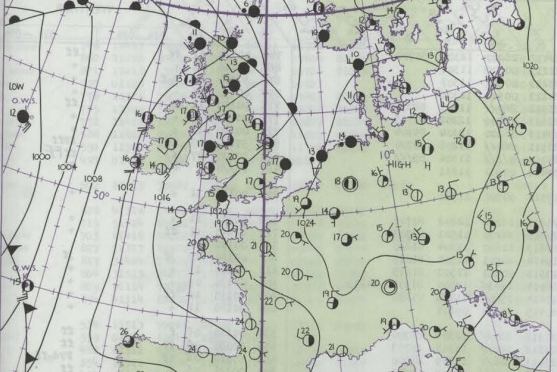
This weekend 200 years ago, during the Year Without a Summer, a powerful tornado, strong enough to carry away objects weighing 60lbs, tore through the Edgware Road area in west London. Luke Howard recorded the event in the Climate of London.
At two o’clock being a still sultry day a whirlwind passed over the nursery ground of Mr Henderson in the Edgware Road which lifted seven lights from the greenhouses and carried them to the height of the highest elm trees, each of the lights weighs 50 or 60lbs at least. At the same time two garden mats were carried to an immense height so that the eye could not distinguish them.
The following day “extremely heavy and prolonged rain from 9am (26th) to 9am on 27th gave 2.95 inches”. This total of over 52mm is notably high though not a record.
This weather was a continuation of what had been an awful May and June – cold with more than twice the average rainfall in June.
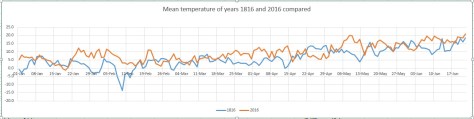
The weather then was not unlike what we have experienced this month. Indeed, a look at the weather throughout this year was similar as this graph shows.
Though the mean temperature at times bears a close resemblance this year is no comparison to 1816: The mean then was running at 6.2C, over 3 degrees colder than today.
Mean pressure was also lower being 992.1mb; the 2016 mean 9am pressure is 1010.6mb.
Perhaps not surprisingly this year’s rainfall actually trumps 200 years ago; the running total for rainfall here is 390.1mm, higher than the 309.6mm recorded in 1816.
The dreary summer and frequent thunderstorms of 1816 inspired Mary Shelley to write Frankenstein. A summer vacation in Switzerland led her to spend much of the time indoors. She, along with Lord Byron and John William Polidori entertained each other with a contest to write the scariest story of all. The unseasonal conditions, along with this dare, led to the creation of Shelley’s Frankenstein: The Modern Prometheus— as well as Polidori’s novella The Vampyre and Byron’s long-form poem, The Darkness.
It will be interesting to see if this June’s weather, along with momentous political changes here and in Europe, produce more fine fiction from the this and the next generation of writers.
Wind speed during the event from 2300 to 1000Temperature during the event from 2300 to 1000Pressure during the event from 2300 to 1000Rainfall from 2300 to 1000Rainfall rate from 2300 to 1000
I’m joking. But with the lies and half-truths spouted by both sides of the EU referendum debate it is a statement I wouldn’t be surprised to hear uttered in this last full week of campaigning before June 23.
This preposterous statement, however, got me thinking that perhaps there may be some truth that summers really were better before Britain joined the then European Economic Community with Denmark and Ireland in 1973.
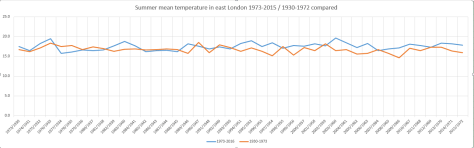
But comparing the past 43 London summers with the period of summers from 1930-1972 shows that this is not the case in terms of temperature and rainfall.
Summers during the period 1973-2015 are on average 0.8C warmer than summers 1930-1972A look at rainfall shows the average since 1973 is 84% that of the period 1930-1972Average sun since 1973 is broadly the same as period 1930-1972 though has recently dipped
Perhaps it is just our minds playing tricks on us when we think back to summers being better than what they are today, and before EU membership?
Voter turnout and the weather
Over the years it has been argued that weather can affect voter turnout and therefore the result of an election. One Dutch study states: “We find that the weather parameters indeed affect voter turnout. Election-day rainfall of roughly 25 mm (1 inch) reduces turnout by a rate of one per cent, whereas a 10-degree-Celsius increase in temperature correlates with an increase of almost one percent in overall turnout. One hundred percent sunshine corresponds to a one and a half percent greater voter turnout compared to zero sunshine.”
Weather for the referendum on June 5, 1975, was mostly fine nationwide. A temperature of 21.3C was recorded at Greenwich after an overnight low of 7C. It was the start of a settled period of summer weather that had followed a cool and miserable late May and early June. Sound familiar?
In June 1975 the electorate expressed significant support for EEC membership, with 67 per cent in favour on a 65 per cent turnout. Though the turnout looks low you certainly couldn’t blame the weather.
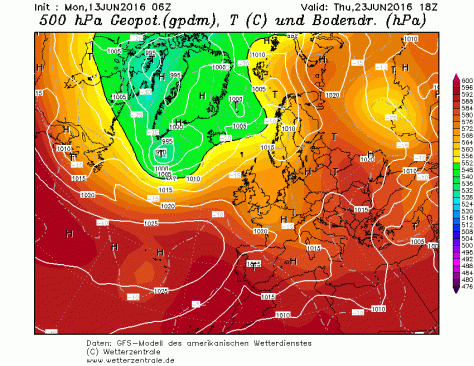
In terms of this year, with ten days to go, it is too early to say for sure what the weather will be like on June 23rd though the GFS model suggests, like 1975, it could be the start of a more settled spell of weather?
There are signs that the Azores high may ridge north-eastwards around June 23rd, possibly bringing fine weather for referendum day
Weather forecasting and the European Union
Weather forecasts have improved immensely since the 1970s. A three-day forecast is now much more accurate than a 24-hour forecast was in the 1980s, partly thanks to the collaboration between national met agencies throughout Europe and beyond.
The European Centre for Medium-Range Weather Forecasting (ECMWF), formed in 1975 as an intergovernmental organisation located in Reading, UK, will maintain its independence in the event of Brexit.
A spokesperson for ECMWF said: “While most of ECMWF’s member states are also members of the EU, ECMWF is structurally independent of the EU. The location of ECMWF in the UK, as well as the UK financial contributions to ECMWF and the tax arrangements between ECMWF and the UK are regulated by agreements between the ECMWF, its member states and the UK. These arrangements are entirely separate from the UK’s EU membership.”
There’s a huge amount riding on this referendum. The EU has flaws but there’s far more good comes out of it than bad. And even if the EU has too many technocrats and bureaucrats I’d rather entrust funding to them than the short-term policy making that plagues modern Westminster on both sides of the political spectrum. And that’s why I’ll be voting Remain.
The cold start to June may soon be a distant memory once summer proper gets going in east London. But rather than a succession of prolonged hot, dry spells it’s looking like the season overall will be broadly average – you will hear the old saying: ‘an English summer consists of three fine days and a thunderstorm’ more than once this year.
Three fine days and a thunderstorm – the typical English summer
Looking at summers back to 1799 I’ve tried to find a pattern linked with a declining El Nino. And failed to find anything conclusive. With ENSO forecast to be approaching neutral by August I decided to discount it completely, instead relying on pattern matching of meteorological data from this area for March, April and May stretching back to 1799.
The mean for the spring season was 10C with 156.4mm of rain and 455 hours of sunshine.
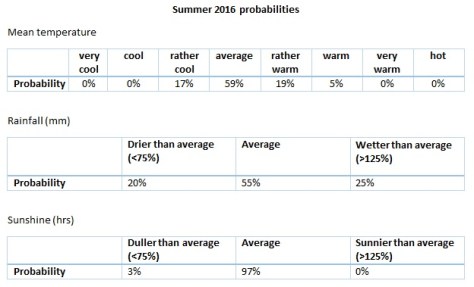
If you take into account all years that were within +/- 10 per cent of these figures, for rainfall and then mean temperature, some 36 ‘best fit’ years emerged, far more than my previous two attempts to forecast summer. The years, ranging from 1805 through to 2007, saw all manner of summers – only one was a real corker, 1825, but most were fairly nondescript average affairs. As an average this summer could be expressed as: Mean: 16.7C (just above average) Rainfall: 166mm (exactly average) Sunshine: 546hrs (about average)
Or, expressed in probabilities, I concluded the following:
From the above you could deduce that the next three months will be slightly warmer than average, with average rainfall and sunshine.
Last year I tried to decipher, with fair success, when hot spells would occur. However, looking at the data of these 36 summers very warm, dry spells happened through the three months – it was impossible to find any exact pattern to when it would be warm and dry.
Instead I’ve broken down the summer into June, July and August probabilities.
Looking at June, considering this cool and cloudy start, I would guess that we can look forward to a few very warm, thundery spells – a repeat of the Spanish plumes of the past couple of years.
Considering the above data perhaps there is a greater than evens chance of some thundery activity – and the nature of thunderstorms mean you can get a deluge or stay relatively dry / average. Sunshine average.
On to July. After a ‘rather warm’ June I wonder if the ‘return of the westerlies’ will happen just in time to affect this month?
The above chart would suggest that July will be classically average overall. Fine, not too hot spells, with occasional depressions bringing cooler weather and showers.
On to August. This month has been a real disappointment the past couple of years. However, I think this year August may offer a bit more in the way of sunny weather.
Looking at the above probabilities there seems a fair chance of something average to rather warm overall. With rainfall below average and average sunshine I wonder if there will be two or three fine spells throughout August – perhaps more?
So, all-in-all, summer looks a mixed bag. How this summer will fair obviously only time will tell. One could argue that what I’m forecasting is just climatology which has a good chance of being correct should no external influences, such as a huge eruption on Mount Etna, have a bearing on the end result.
* Taking into account the fact that temperatures in London are up to 0.66C warmer than they were 100 years ago I have added 0.66C to mean temperatures before 1915.
** Obviously, in the event of a series of direct hits from thunderstorms, my rainfall estimate could be hopelessly short – a symptom of abundant solar energy at this time of year which creates a ‘noisy’ atmosphere compared with winter.
*** The 1981-2010 average mean for summer in this region is 17.6C, with 144.9mm of rain and 564 hours of sunshine
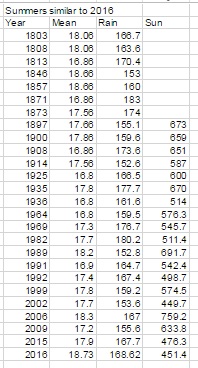 od for my seasonal forecasts resulted in a shortlist of 26 summers that were similar to 2016.
 In London, perhaps we can expect something very similar to what is listed on the excellent website: http://www.london-weather.eu/article.103.html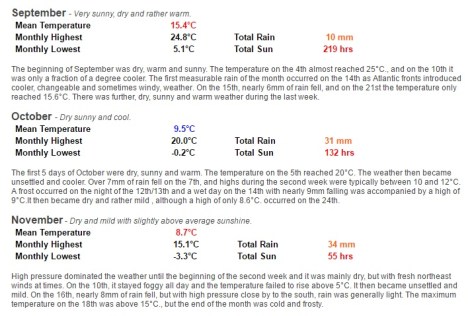


 With so much rainfall overall sunshine was affected with only 451 hours recorded, just 80 per cent of what can be expected in an average summer.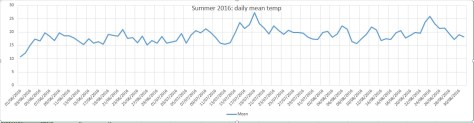


 Beyond the grasp of the models my long range outlook method is again hampered by a very dry August. However, the data I do have suggests an average month at 100 per cent probability.
 My August outlook for temperature was good. I predicted a mean of 19C (outcome: 19.5C). It was drier than I thought: 30.3mm (outcome: 11.9mm). Sunshine was poor: 239 hours (outcome: 192 hours).

 My July outlook for temperature was good. I predicted a mean of 18.8C (outcome: 19.5C). Rainfall was very poor: 50mm (outcome: 17.3mm). Sunshine not badr: 171.9 hours (outcome: 190 hours).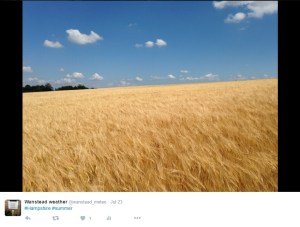


 East London quickly turned into suburban Essex and the scrum of cyclists had already turned into a single file. The sun was already set by the time we reached the Wake Arms roundabout though I assured my two cycling buddies that there would be plenty of options for pasta and coffee in Epping – noble intentions that ended up as pork pies and cans of Coke from Londis…
 We stopped for a pint in Great Bardfield at 43 miles; locals joining in the party atmosphere as cyclists either stopped or pedalled on. Although just gone midnight conversations seemed to hover over the fast pace of the tour, probably helped by the fine weather and almost constant light westerly breeze. Finchingfield, Wethersfield, Sible and Castle Hedingham then passed in quick succession before we reached the halfway point at Sudbury about 1am where huge queues had formed for coffee and a barbeque put on by the local fire crews.
 It was this part of the event where groups of cyclists started to spread out though, because most were cycling at roughly the same speed, you started to notice the same people: the guy in the Heinz baked beans top, the group cycling for Alzheimers, the guy with the kiddie trailer (again) comes into view, the child still awake and appearing to be transfixed by a tablet. I exchanged pleasantries with a guy in a top with the dragon of Wales emblazoned on the back – inane conversations though most seem happy to just get their heads down and eat up a few more miles.
 By 4am the sky had long begun to lighten and the fading batteries of many riders’ headlamps was no longer such a pressing issue. I think it was around Sibton Lake that pop-up cafes started to emerge at the side of the road. Alas, the long queues prevented us from stopping, so terrified were we that if we stopped for too long our bodies would cease up. No matter. Many other cyclists by now were beginning to stop and rest on verges; a few oblivious that the sun was beginning to rise as quick as they were falling into a slumber.
 The last 10 miles from Framlingham, once the sun had risen, seemed to be the hardest. I’m not sure if it was my brain being unable to cope with the additional distraction of having to deal with looking at beautiful countryside. And a couple more inclines seemed to be the last straw for a few cyclists who got off and walked.





 actually trumps 200 years ago; the running total for rainfall here is 390.1mm, higher than the 309.6mm recorded in 1816.








 Wanstead Meteo
You must be logged in to post a comment.