
The unearthing of an ancient Egyptian statue, initially thought to be of the pharaoh Ramses II, in a Cairo suburb earlier this month reminded me of the mysterious stone that was discovered in Wanstead Park in 2014.
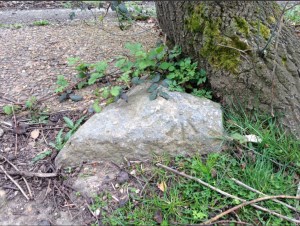
The granite object, discovered partly buried in undergrowth on the banks of Heronry Pond, was initially thought to be part of the long-lost pyramidion (or capstone) of Tia, overseer of the treasury in the time of Ramses II, from his tomb at Saqqara in the Aswan region.
Though tests made last year at Reading University suggested otherwise the fate of the stone that once had pride of place in the American garden of Wanstead House remains a mystery.
The capstone was placed in the park as part of a landscaping project in 1784. Humphry Repton, the landscape gardener who devised plans in 1813-18, described Wanstead Park as “one of the most magnificent places in this country”.
Unfortunately, owner William Wellesley Pole’s debts caught up with him and the estate’s riches were sold off at auction, including the intriguing stone which was labelled Lot 279.

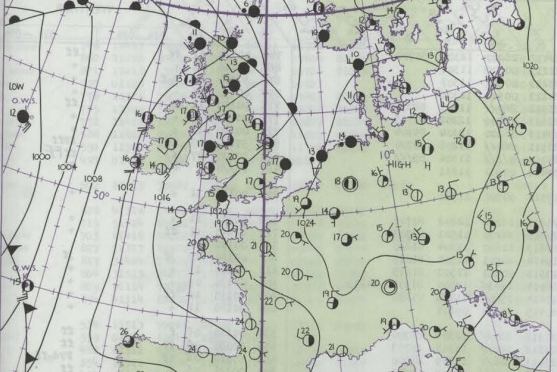
The auction on June 10th coincided with the hottest day of 1822 with the temperature peaking at 92°F. Evening thunderstorms brought some relief but the capstone remained unsold.
A catalogue of the 30-day event showed that Lot 279 was the last item to be sold, being bought by the auctioneer himself who immediately gave it to his son-in-law to display in his garden at Tamworth Castle. There is no evidence, however, that the stone ever reached Tamworth.
Though rainfall during the summer of 1822 was average much of it fell in cloudbursts. Luke Howard’s records in nearby Stratford for June and July reveal many days with maxima well into the 80s and destructive thunderstorms with deadly lightning and hail, some of which measured three inches in diameter.

It is possible that faced with transporting a very heavy lump of granite some 135 miles on a horse drawn cart on unmade, waterlogged roads those charged with the task instead quietly slid the stone into one of Wanstead Park’s lakes.
Ralph Potter, a member of Friends of Wanstead Parklands, has been following the story of the stone since it was discovered. He explained the reason behind why he thinks the stone’s origin is inconclusive: “Probably the world’s most eminent authority on stone from the Aswan quarries has declared, based on photos alone, that the stone does not originate from Aswan. On the other hand we have an eminent petrologist who within minutes of seeing the stone declared it almost certainly came from the quarry complex at Aswan.”
*A full history of the mystery of Lot 279, written by Chris Elliott, can be found here
**A chronicle of Wanstead Park, written by Alan Cornish, can be found here.
***The statue pulled from the mud in a Cairo suburb is thought to be most likely the first king of the 26th Dynasty of Egypt — Psamtek I .


 East London quickly turned into suburban Essex and the scrum of cyclists had already turned into a single file. The sun was already set by the time we reached the Wake Arms roundabout though I assured my two cycling buddies that there would be plenty of options for pasta and coffee in Epping – noble intentions that ended up as pork pies and cans of Coke from Londis…
 We stopped for a pint in Great Bardfield at 43 miles; locals joining in the party atmosphere as cyclists either stopped or pedalled on. Although just gone midnight conversations seemed to hover over the fast pace of the tour, probably helped by the fine weather and almost constant light westerly breeze. Finchingfield, Wethersfield, Sible and Castle Hedingham then passed in quick succession before we reached the halfway point at Sudbury about 1am where huge queues had formed for coffee and a barbeque put on by the local fire crews.
 It was this part of the event where groups of cyclists started to spread out though, because most were cycling at roughly the same speed, you started to notice the same people: the guy in the Heinz baked beans top, the group cycling for Alzheimers, the guy with the kiddie trailer (again) comes into view, the child still awake and appearing to be transfixed by a tablet. I exchanged pleasantries with a guy in a top with the dragon of Wales emblazoned on the back – inane conversations though most seem happy to just get their heads down and eat up a few more miles.
 By 4am the sky had long begun to lighten and the fading batteries of many riders’ headlamps was no longer such a pressing issue. I think it was around Sibton Lake that pop-up cafes started to emerge at the side of the road. Alas, the long queues prevented us from stopping, so terrified were we that if we stopped for too long our bodies would cease up. No matter. Many other cyclists by now were beginning to stop and rest on verges; a few oblivious that the sun was beginning to rise as quick as they were falling into a slumber.
 The last 10 miles from Framlingham, once the sun had risen, seemed to be the hardest. I’m not sure if it was my brain being unable to cope with the additional distraction of having to deal with looking at beautiful countryside. And a couple more inclines seemed to be the last straw for a few cyclists who got off and walked.
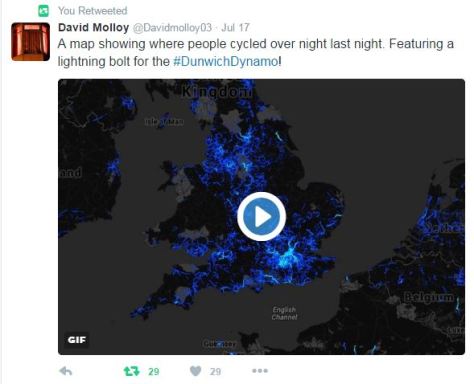


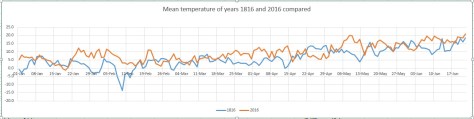
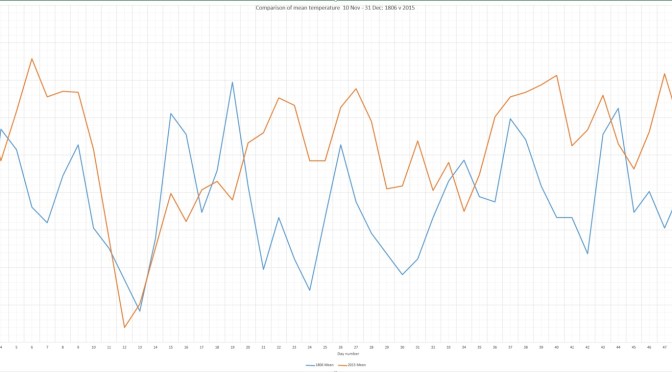
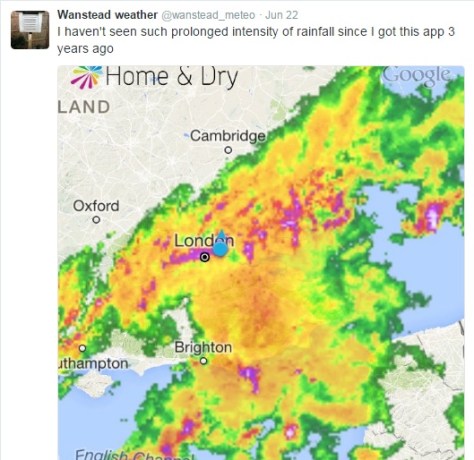 actually trumps 200 years ago; the running total for rainfall here is 390.1mm, higher than the 309.6mm recorded in 1816.







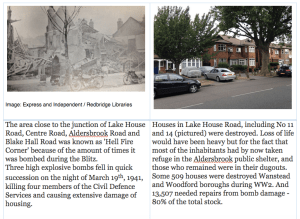 At 9.20pm this first incident appeared closed, and services were awaiting the result of a final search and check-up before being dismissed. Then a parachute mine landed. It exploded a few yards from Aldersbrook corner on the Leytonstone side. A house in Lake House Road, already badly damaged, tottered to destruction. Number 11 caught fire and was destroyed. Loss of life would have been heavy but for the fact that most of the inhabitants had by now taken refuge in the Aldersbrook public shelter, and those who remained were in their dugouts.

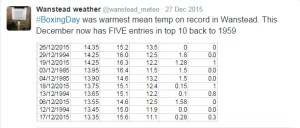
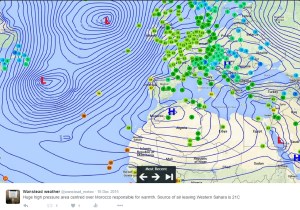
 Other daily records were broken including for daily mean temperature: 14.3C on Boxing Day smashed the previous record set on December 4th 1985 by 0.4C. This day also saw the highest daily minimum for December recorded: 13.5C.
  The lowest temperature occurred on the 8th when the mercury fell to 2.4C.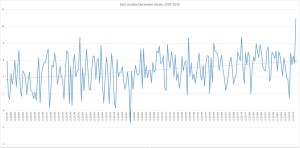






 Wanstead Meteo
You must be logged in to post a comment.