What kind of summer is in store this year? According to Richard Kirwan’s weatherlore we’re odds on for a dryer than average season.
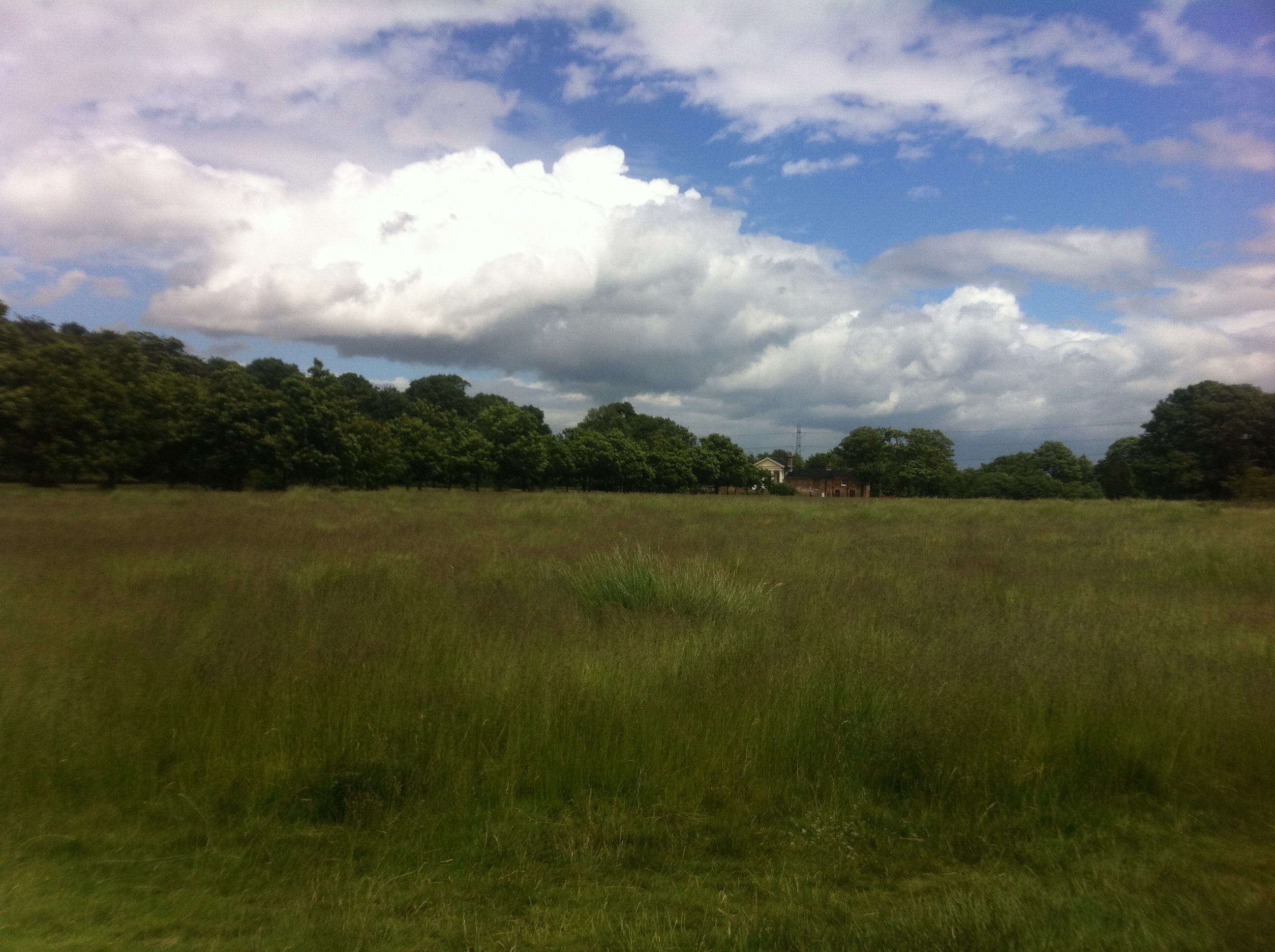
Summer overlooking The Temple in Wanstead Park
Kirwan, a Dublin-based chemist with a keen interest in the weather, deduced from observations made from 1677 to 1789 that the weather around the spring equinox provided a very good pointer to what was in store in the months ahead.
The lore, noted in Luke Howard‘s Climate of London, suggests that the probability is five to one in favour of a dry summer.
The detail, however, hinges around key dates.
1/ When there has been no storm before or after the vernal equinox the ensuing summer is generally dry, at least five times in six.
2/ When a storm happens from an easterly point on the 19th, 20th, or 21st of March the succeeding summer is dry, four times in five.
3/ When a storm arises on the 25th, 26th, or 27th of March, and not before, in any point, the succeeding summer is generally dry, four times in five.
4/ If there should be a storm at SW, or WSW, on the 19th, 20th, or 22nd of March, the succeeding summer is generally wet, five times in six.
Howard goes on to say: “Dry summers (this philosopher states) are the consequence of uniform winds, from whatever quarter they may blow; as wet summers are of their variation, particular if in opposite directions.”
Again, “Southerly winds are most frequently accompanied with rain in most parts of Europe at least, and probably in most parts of our hemisphere; but northerly and easterly, with clear dry and serene weather.”
And it seems reasonable to suppose that the wind which is to prevail during the summer, may most frequently set in with the vernal equinox.”
I’ve had a look back through my own records and this theory falls down, when you consider the absolute detail, on notable summers including 1995. But then, just like weather forecasting at short range, it is all about ‘chance’ – five times in six is still only an 83 per cent certainty.
There is also the matter of how Kirwan and Howard defined a “storm”. What we would call a storm now would be very rare in the second half of March anywhere around London, possibly less rare in the Dublin area. I am also assuming that Kirwan remembered to take into account the switch from the Julian to the Gregorian calendar in 1752.
What is notable, however, is how far ahead of their time Kirwan, Howard and other scientists were in having the thought to notice these patterns – something that continues to fascinate amateur and professional meteorologists alike today.
The saying March: in like a lion, out like a lamb and vice versa is frequently wrong. This March saw it windy at the beginning, end and middle of the month.
This graph shows the ‘wind run’ of every day in March. Notice how the peaks are at the beginning, middle and end of the month
Mean temperature for the month was 7.6C, 0.1C below the 1981-2010 mean, over 1C cooler than March last year. Rainfall of 17.9mm was 44% of average – four of the last five Marches have been notably dry.
There were 131.5 hours of sunshine recorded in this area which is precisely 121% of what we can expect to see during an average March. The wettest day occurred on the 29th with 4.2mm. Hail fell on 1 day. Air frosts: 5 Ground frosts: 13
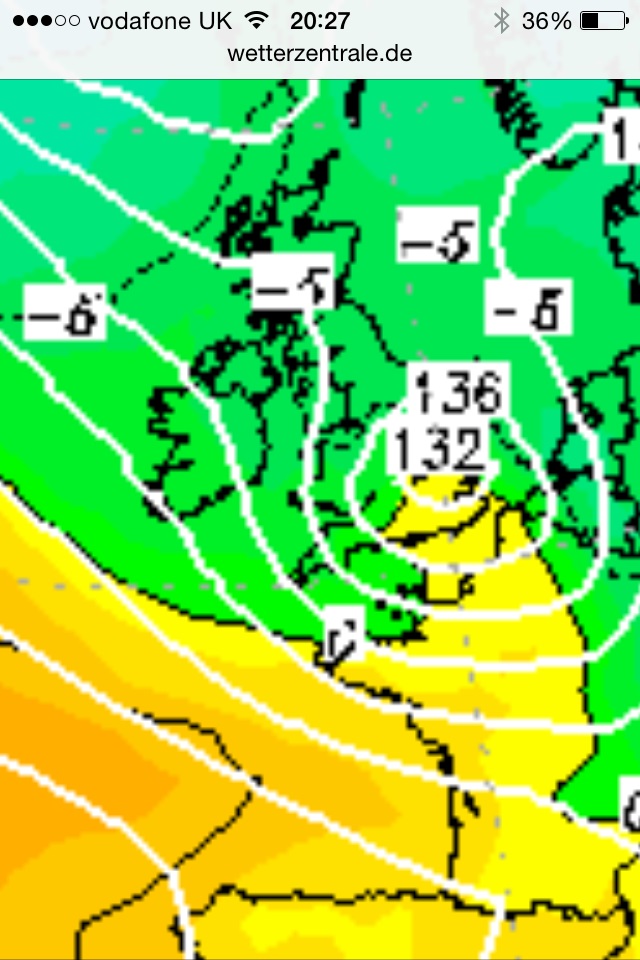
So what has april got in store weatherwise? The models this morning (April 1st) suggest a dominance of high pressure though there’s lots of uncertainty as to where this will drift once it has formed over the Easter weekend. If it moves north there is a risk of chilly easterly winds at times that will take the edge off temperatures.
Rainfall amounts will be small after the next couple of days though sunshine amounts will be reduced if we get the cold easterly feed off the continent. Beyond that the outlook, as ever, is uncertain.
My long range method suggests the month will be average in terms of temperature: 43% probability. The next highest chance is for rather mild at 29% probability. Rainfall is looking greater than average, though at 57% probability.
My March outlook was good in that it ruled out any chance of a very mild month. Though the signal was for a cold month overall I think the fact that Scandinavia and Russia had a relatively mild winter meant that the resulting overall temperature was far milder than it normally would have been, given the air flow.
1st: Sunny start with more cloud afternoon and a rain squall sweeping through at 5.30pm. Cold wind.
2nd: Sunny start though cold wind. Odd shower.
3rd: Sunny start but with cloudier periods and odd spot of rain up to 2pm. Skies turned really dark to the north but no reports of heavy rain. Cold overnight but no air frost due to the wind.
4th: Sunny spells with cloudier intervals.
5th: Sunny, frosty start. Cloud bubbling up with sun becoming scarcer.
6th: Sunny and clear with just a few cirrus.
7th: Sunny start, just a few cirrus though more breeze
8th: Sunny start though more clouds bubbling up than yesterday.
9th: Sunny start was quickly replaced by overcast conditions. Spots of rain on way into work – signs of something heavier when left work at midnight. Clear again by morning.
10th Sunny start with some cirrus type haze. Cloud bubbled up but sunnier than yesterday.
11th: Sunny start, cloud growing thicker through the day before a pink sunset. Some light rain before a clear night.
12th Sunny start and just a few clouds around. Cloud thicker in afternoon.
13th Hazy bright start though cloud thickened.
14th: Sunny start quickly turned cloudy and dull. More brightness in afternoon though cold wind. Early shower at 6.30am.
15th: Dull start into the morning. Some light rain late morning and during the afternoon. More rain after midnight and just beofre dawn.
16th: Cloudy start though with bright intervals in the afternoon. Area of light rain around 4am.
17th: Cloudy start with light rain spreading in. Brighter by 1pm though very misty on ride in to work. Misty again overnight.
18th: Cloudy, misty start though much more sunshine than yesterday on ride to Lea Valley. Cloudier overnight.
19th: Cloudy and dull all day, feeling cold – the cloud persisting into the evening.
20th; Cloudy start for the eclipse. The sky cleared about 12.30pm to leave bright sunshine and a pleasant, springlike afternoon. Early ground frost before sky clouded over.
21st: Cloudy but some spots of drizzle mid-morning. Dry and cloudy afternoon.
22nd: Sunny start though cloud increased through the day. Felt cold in the wind.
23rd: Bright start with lots of sunshine through the morning. Gradually filling in though feeling much milder than of late. Some light rain in the evening, heaviest between 3.30am and 5am.
24th: Cloudy start though with some bright spells. A short shower at 3ish.
25th: Sunny, cloudy start though with lots of high cloud filling in. Brief ground frost moved in just before midnight before rain moved in just before 4.30am.
26th: Drizzly light rain to start – felt cold. Not a nice day.
27th: Bright start with lots of watery sunshine through the day. Spits and spots of rain later as walked home from Wanstead.
28th: Cloudy start and mild with some brightness. Feeling mild. Some rain overnnight.
29th: Drizzly start with heavier bursts of rain, these fell through the day, drying up in the evening.
30th: Bright start with some sunny spells. Wind increased in strength through the day and was very strong overnight.
31st: Bright start after a stormy overnight that prompted a tug rescue that overturned in the Solent. Dartford Bridge was also closed. Showers surrounding Wanstead but only trace here – hail seen in City. Cold and windy overnight.
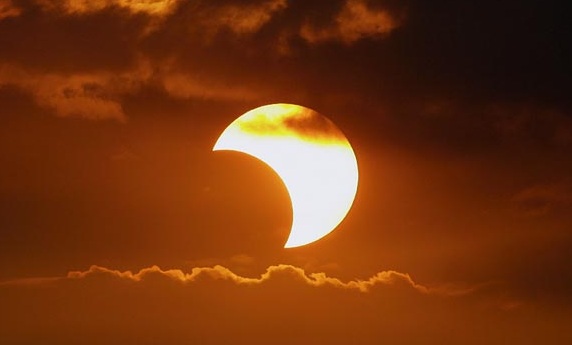
While heavy low cloud obscured the partial eclipse in this area there were a couple of interesting factors that I observed.
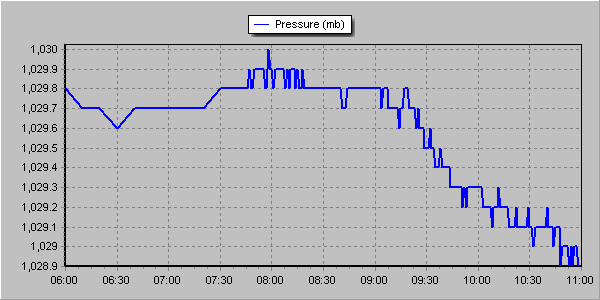
At 9.45am, shortly after the maximum obscuration of the solar disc the air pressure suddenly dropped. This coincided with sudden relief to my blocked nasal passages, symptoms of which appeared last night. Eighteen minutes later the fall in air pressure became less steep and the nasal symptoms returned.
The pressure dropped from 1029.8mb at 9.15am to 1029mb at 10.15am. I’m not sure if it was an effect of the eclipse or just a change in the synoptic situation that would have happened anyway
As the light began to fade it seemed to turn colder though, on looking at the actual figures, the effect of the partial eclipse through heavy cloud was a depression in temperature of 0.3C. I worked this out by comparing today with yesterday which had almost identical weather conditions. People remarked that it turned noticeably colder though perhaps this was more caused by standing out in temperatures of 4.9C for a long period.
Like the eclipse in 1999 I noticed that the birdsong quietened somewhat though there was not the same crescendo of noise that you normally get at dusk when birds roost.
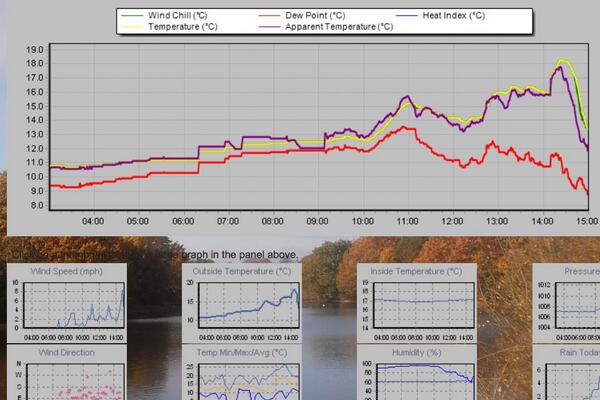
Here is the temperature trace from the 19th. Even with the heavy cloud yesterday there was more warming from the sun, albeit by a very small 0.3CThis graph shows the temperature from 6am until 11am. Though the depression during the eclipse was just 0.1C comparison with the previous day, which saw near identical weather conditions, shows just how much solar heating was depressed
This winter was the second sunniest on record in this region. Sunshine hours totalled 238 hours during December, January and February – that’s 142% of average and second only to 2007/08.
Winter 2014/15 was the second sunniest on record with 238 hours of sunshine
The first lying snow for two years is also a notable observation of winter 2014/15. That it lasted just a few hours emphasises how little snow there was at sea-level for the second winter in succession.
The mean temperature of 5.2C was just 0.3C below the 1981-2010 average. Some 152mm of rain fell – that’s just 7mm over the winter average.
Winter began with the sunniest December on record in my series going back to 1877. Over 90 hours of sunshine was recorded in this area which is 224% of what we can expect to see during an average December.
January saw the first falling snow in nearly two years with the last three days of the month seeing the first flakes of winter – nothing much to write home about by average winter standards.
February produced the first lying snow in nearly two years. The 1cm depth at 9am on 3rd, however, is nothing much to write home about by average winter standards.
The wettest day during the three months was January 12th when 13.1mm fell.
Snow fell on 6 days. Air frosts: 27 Ground frosts: 48
Full stats for winter can be found here: http://1drv.ms/1rSfT7Y
At the end of November I published my annual winter forecast. I said the season would *probably* be colder with a better chance of snow than last winter. If I’m honest I thought we’d see more incidents of snowfall though, with my predicted mean temperature of 4.2C being exceeded by 1C, the air around the UK just wasn’t cold enough for snow at sea level. My predicted rainfall was more impressive – I forecast 156mm and was out by just 4mm!
Obviously when the season is average long-range forecasts like this have a much higher chance of being correct. One could argue that basic climatology has made my forecast look a reasonable one. But I stick to what the stats suggest and try to steer clear of the endless hyperbole published almost daily by certain tabloids.
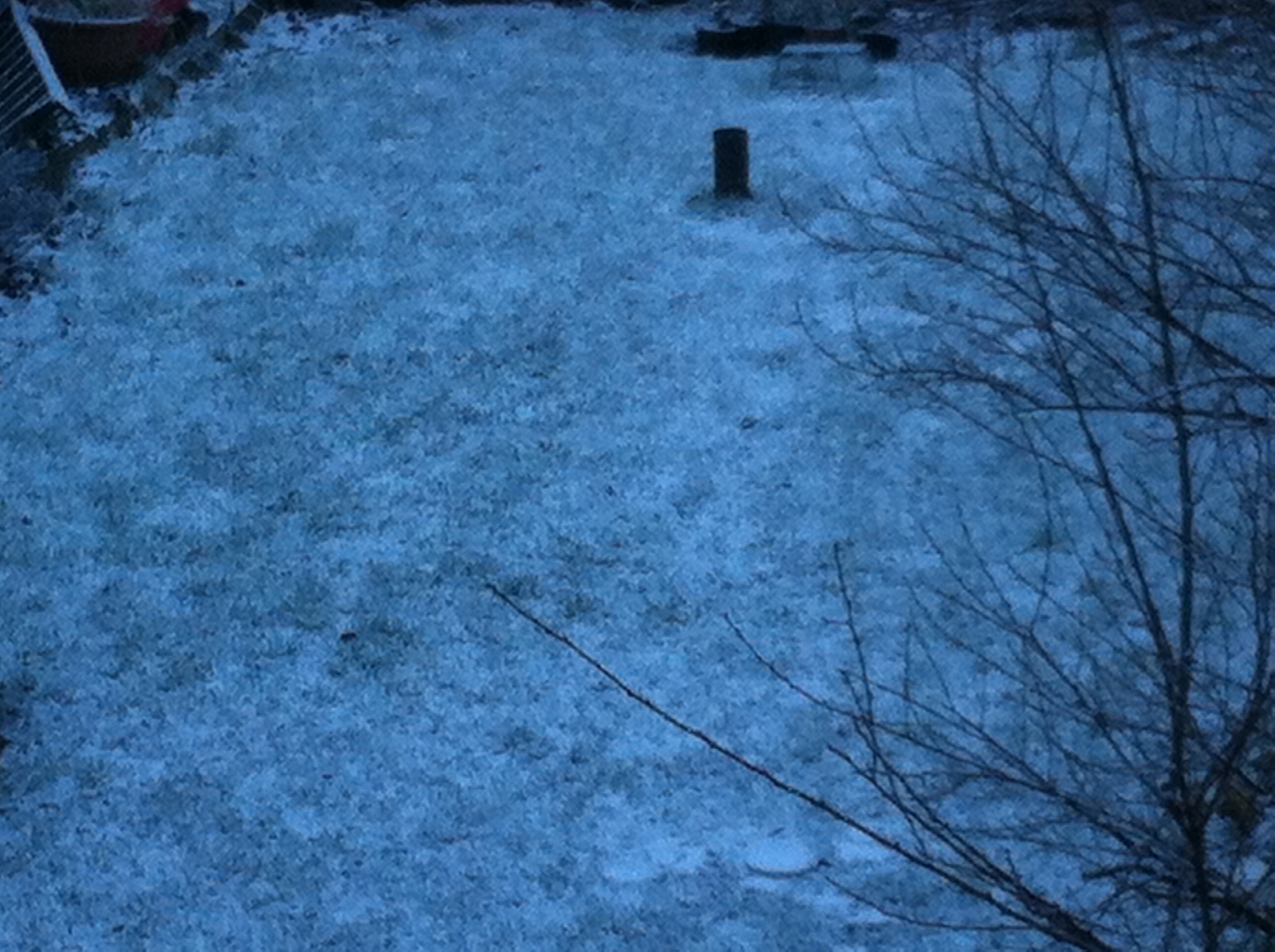
A snowfall on the 3rd just about covered the ground for a few hours, though was barely enough to make a snowball
Though it only lasted a couple of hours this February saw the first lying snow in nearly two years. The 1cm depth at 9am on 3rd, however, is nothing much to write home about by average winter standards.
Mean temperature for the month was 4.9C, 0.4C below the 1981-2010 mean, 2.5C cooler than the mild and stormy February of last year. Rainfall of 43.6mm was 111% of average.
There were 73.6 hours of sunshine recorded in this area which is precisely 100% of what we can expect to see during an average February. The wettest day occurred on the 19th with 8.7mm. Snow fell on 3 days, hail on 2. Air frosts: 4 Ground frosts: 19
So what has March got in store weatherwise? The models this morning (March 1st) suggest a taste of spring – the recent cold and showery regime being replaced by quiet, anticyclonic weather. Output suggests variable cloud cover with a mild SW wind. Obviously sunny days will see quite respectable temperatures though any clear nights will see frost and mist developing.
View from top of Ditchling Beacon in Sussex during a half-term walk
Beyond that the outlook is uncertain. Using a similar method to my Christmas forecast, which was correct at 25 days ahead and my January and February outlooks, I’ve had a look back in the archives to see if there is any precedent in the pattern we’ve had this February.
There appears no chance of a very mild March. The strongest signal (67%) is for a cold March. The strongest signal for precipitation is for average to slightly below (83%). Sunshine, no overall signal, so my guess is average.
Though we are now out of the meteorological winter there is still a risk of snow. Any falls, however, would be thin and transitory because of the strength of the sun now.
1st Bright start with sunny spells thoughout the day
2nd Sunny start but soon clouded over. Cleared again in evening though with lunar halo. Showers moved in after midnight and into early hours to leave thin coating of snow by 8am.
3rd 1cm at 9am. A bright start though with lots of cloud around. Sunnier in afternoon, the snow had melted by 1pm. Variable clear spells through the night but too cloudy for frost.
4th Cloudy start but some brightness. The sunshine felt warm at times. Variiable cloud overnight. Woke up to see snow falling but too warm to settle – the air being 1.2C, dew point 0.5C
5th Some spots of sleet to start and during the day. Colder air digging in from 3pm. Feeling bitter.
6th Bright start, cloud decreasing through the day to give long sunny spells. Cold wind
7th Cloudy and cold start
8th A sunny start with long sunny spells all day
9th Mostly cloudy to start though bright and breaking to sunny spells and then unbroken sunshine.
10th Cloudy and cold all day
11th Dull and cloudy all day
12th Dull start and stayed dull all day. Cold. Warming up after 2am with some very light rain with warm front.
13th Bright spells through the morning with a brief clearance around 1pm. Rain soon arrived though and fell through the afternoon and into the evening. Rain again from midnight until 2am
14th Bright intervals to start though mostly cloudy through the day. Some very light rain showers through the day and into the night
15th Cloudy start though with bright intervals becoming more frequent. Clear by dusk allowing temp to fall quickly
16th Cloudy start with rain spreading in after 1pm, moderate at times
17th Unbroken sunshine until 1pm then a few clouds. Cold overnight on boat
18th Sunny most of the day with only a few high clouds
19th Sunny until mid morning then clouding over quickly. Rain pushed in late lunchtime and lingered all day and into evening. Stayed dry on walk until 2.30pm but very stong wind ahead of rain band
20th Cloudy start though bright through haze at times. Feeling cold. Cloudy into evening with area of rain at 7am
21st Sunny start after rain at 7am. Very cloudy at times with light hail <5mm – the sky suggested the hail was heavy elsewhere. Reports of snow in Oxford. Frosty overnight
22nd Sunny start but cloud quickly filled in before rain arrived at 3pm. Temp then rose to a high of 9.5C at 11pm before falling at midnight
23rd Sunny start but with cloud bubbled up and some light hail mixed in with showers. Feeling cold
24th Sunny start with some cloud bubbling up. Heavy hail shower at 3.30pm. Temp built through the night with rain 5.30am – 7.30am
25th Drizzly start broke to sunny spells. Much milder. Drizzle overnight after 3.30am
26th Cloudy start with rain late morning. Cold front blew through around 2pm. Clear and frosty overnight
27th Sunny, cold start. Cloud gradually increased through the day. Temperature lifted a little – spits and spots of rain felt on way home
The partial solar eclipse taking place on March 20th left me wondering if there is any record of past events for this area.
Luke Howard‘s The Climate of London describes a similar such event that took place on September 7th, 1820. Howard describes how the thermometer fell from 68.5°F to 62.5°F. After making observations at his home in Tottenham at 10.30am Howard made his way to Stoke Newington to visit fellow scientist and Quaker, William Allen, to observe and record the eclipse.
From his account it appears that, though the weather was settled, there was a fair bit of cirrocumulus drifting across the sun during the eclipse.
As well as the fall in temperature Howard’s account describes the strange light: “The sunshine against the house was so dim as to be quite striking; and the view before us to south, which included the nearer parts of London, showed much the same as afterwards at six In the evening – dusky but not dark.”
Howard noted that the lowest temperature was observed about seven minutes after the greatest obscuration. He also mentions that his son noticed that spots of light falling through the shade of trees were in the shape of crescents, mirroring the lunar disc across the sun, rather than globular. He also states that Venus was very easily visible during the eclipse.
Though Howard’s account is by no means groundbreaking, it would be another hundred years before another eclipse proved Einstein’s theory of general relativity, it is fascinating how we are still just as fascinated by the sun as our forbears were.
I was in southern Turkey for the last solar eclipse which I believe was overcast in the London area. I had some data from my then AWS but I’ve misplaced it. That Oregon unit didn’t have the means of recording every minute.
Though I was outside the area of totality I still experienced the classic eclipse effects: the birds singing before going silent, reduced warmth of the sun and a very strange and eerie ‘blue’ light that is cast over everything. I’ve not experienced anything like it since and only hope that the sky on March 20th is a bit clearer than it was 16 years ago.
It is impossible to know what the weather will be like on the day at this range though a look back through my records to 1981 reveals that weather conditions on March 20th, the Vernal equinox this year, can vary greatly. In 2003 a high of 17.5C was recorded with 6.9 hrs of sunshine. However, two years earlier, the temperature reached just 4C as 8.2mm of rain fell.
It seems the media is working itself up into a frenzy over the eclipse, talking up the possibility that the event will cause a power surge that could interrupt supplies across Europe. However, the fact that solar accounts for just 10% of Europe’s renewable energy would suggest that such hyperbole is similar to the hysteria over the Y2K ‘Millennium Bug’ that failed to materialise?
* I will be revisiting this blog after the eclipse has happened to post results from my AWS readings.
** There’s a full account of Luke Howard’s eclipse here
This January saw the first falling snow in nearly two years with the last three days of the month seeing the first flakes of winter – nothing much to write home about by average winter standards.
Cold front clearance over Wanstead Flats on 28th. The day saw three potent cold fronts with steep temperature falls.
Mean temperature for the month was 5C, 0.2C below the 1981-2010 mean – the first below average month since August and 1.6C cooler than the mild and stormy January of last year.
Rainfall of 69.2mm was 130% of average – though over 60mm less than last year’s record-breaking wet January.
It was the 6th sunniest January on record in my series going back to 1877. Over 73 hours of sunshine was recorded in this area which is 147% of what we can expect to see during an average January.
The wettest day occurred on the 12th with 13.1mm.
Air frosts: 11
Ground frosts: 14
So what has February got in store weatherwise? The general consensus of the models suggest the first half of the month is going to be on the cold side and relatively dry though there is a chance of some precipitation from troughs forming in an unstable airflow off the North Sea. Pressure looks like it will build from Wednesday, blocking any advance of Atlantic weather systems. It is the location of the high which will be crucial to the weather we can expect. At this time of year anticyclonic gloom can be a problem during the day and where clouds clear at night fog and frost may form.
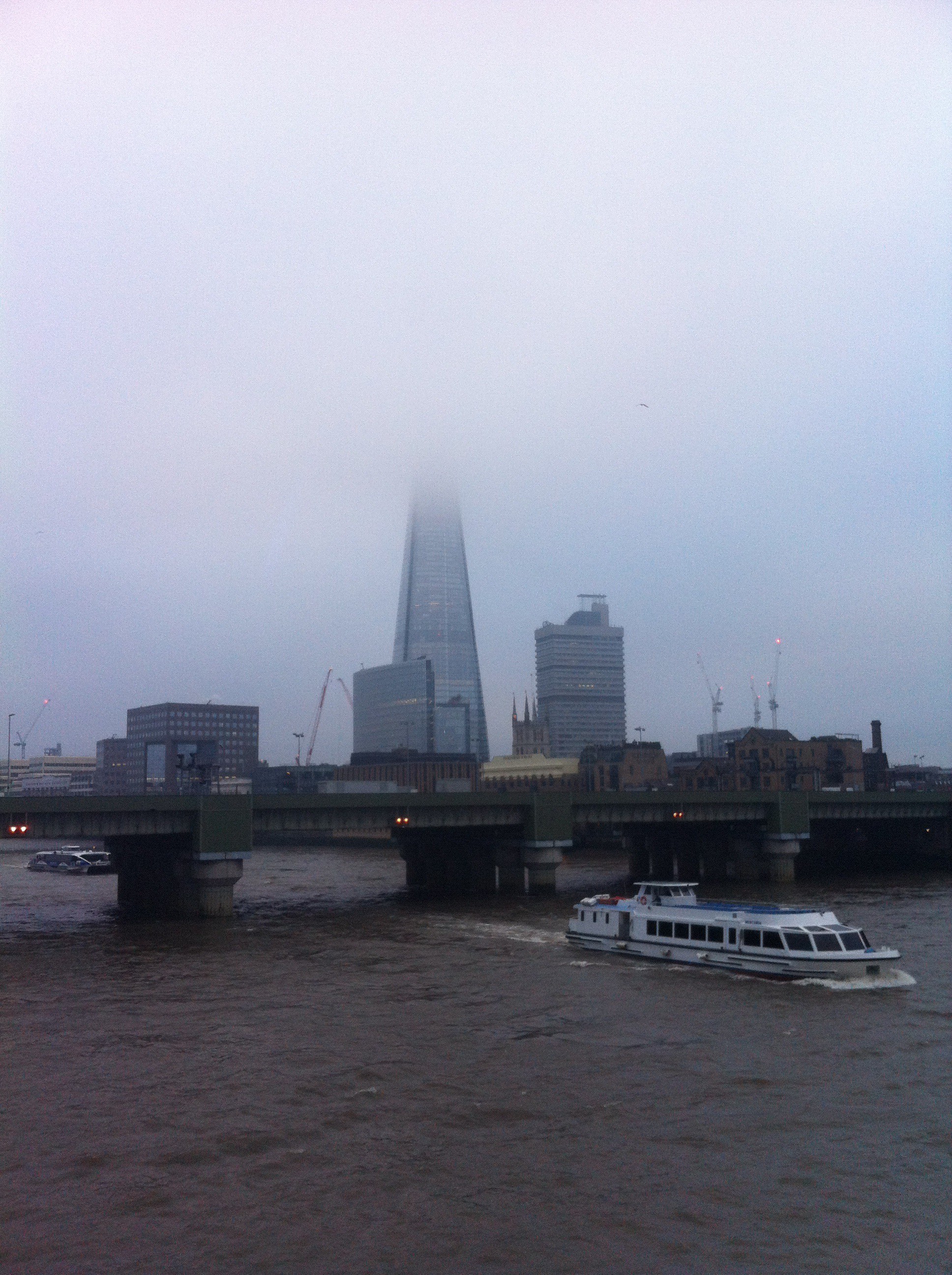
The Shard in fog from Southwark Bridge on January 4th
Beyond that, for anyone seeking any snowy weather, the outlook, as ever, is uncertain. Using a similar method to my Christmas forecast, which was correct at 25 days ahead and my January outlook, I’ve had a look back in the archives to see if there is any precedent in the pattern we’ve had this January.
There appears no chance of a very mild February. The strongest signal (72%) is for an average to rather cold February. The strongest signal for precipitation is for very dry (50% of average) at 43%. After the disappointment of the last week here regarding snow I am not about to guess if there will be any snowfall for us this coming month. If we do see any though I would imagine any cover will be thin and lasting only a day or two…
2nd Sunny most of the day before cloud spread in in the evening and rain fell just before 4am.
3rd Mostly wet with moderate bursts of rain on what was a cold and miserable day – the fields between Grays and Basildon were flooded.
4th Skies cleared early morning with fog and mist forming to give a cold, grey day and a maximum of only 3C – some parts of East Anglia recorded an ‘ice day’. The temperature started to lift at midnight on 5th meaning that day 5s ‘high’ temperature was at 8.32am on 6th.
5th Cloudy and very calm up to midday.
6th rain at midday as cold front passed through, bright and sunny spells and brief frost at 1am. Cloud moved in.
7th a sunny start though chilly, cloud built through the morning. Light rain around 7pm and through the evening. This turned heavier at 4.30am and really got going at 7.30am.
8th Heavy rain to start, this easing at 11.30am before the sun came out at 1pm to give afternoon of sunny spells. Brief rain again around midnight.
9th Bright start, wind building through the day as storms struck off north Scotland. Very mild in the warm sector: +15.2C at 8pm. Shetland badly affected by cloud head in early hours. Windy through the night.
10th Bright start though cloud built quickly with cold front passing through around 10am. Dew point dropped from 11C to 3C in matter of hours. Felt very cold in the wind.
A storm passed over Shetland on January 10th
11th Sunny start, clouded over by 2pm with temp building through day and odd drizzle.
12th Cloudy start with spits and spots of rain up until 2pm.
13th Sunny until lunchtime . Clouded over though with some light rain. Thunderstorm reported in Bracknell and snow reported above 125m in Wales Lampeter.
14th Sunny start but lots of cloud from embedded instability in the airflow. Temperature rose all day with drizzle at 6pm. Pressure bottomed out at 985.3mb at 0345z. Peak gust 21.3mph at 0320z. Rain heaviest at 0412z 12.1mm/hr
15th Sunny start with lots of cloud around, feeling cold in the wind
16th Cloudy and much calmer
17th Cloudy start with threat of snow showers at 11am, remained as rain though snow reported at Berkhampsted and Watford. Pleasant day with sunshine.
18th Mostly cloudy in morning but with weak sunshine. Temperature plunged after dark but cloud prevented further cooling at midnight.
A warm sector saw the temperature rise to 12.7C in the early hours of New Year’s Day
19th Sunny , cold start with a few clouds. Frost returned at 6.40pm with coldest night since Jan 2013.
20th Sunny start but took till 11am to rise above freezing with some frost lingering well into the afternoon. Snowflakes reported at Laindon and dusting in parts of Kent. More general snow PM from Chilterns northwards – too warm here.
21st Cloudy, dull and cold all day with some drizzle. Snow reported in Laindon. Dull and cold in Reading.
22nd Hazy sun to start, sunny spells all day. Very cold overnight
23rd Sunny start with high alto-cumulus. Gradually becoming more cloudy though staying bright. Temperature started rising after dark with approach of warm front. Temp peaked at 2am as cold front whistled through with brief heavy rain. Sunny again by dawn.
24th Sunny with occasional cloudier spells. Feeling cold in the wind.
25th Sunny start but gradually clouding over. Temperature climbed through the day and night. Drizzle in the wind.
26th Cloudy with bright periods. Temp and dew point started falling after 10am with passing of warm sector.
27th Hazy sun to start then wintry sunny spells all day.
28th Cloudy start quickly gave wave to at least three potent cold fronts with steep temperature falls. <5mm hail in the last and thunder heard in Woodford Green. Clearer spells overnight and possibly spots of rain.
29th Sunny, cold start . Clouding over with potent shower at 4.30pm that gave a brief covering of snow pellets. Snow and sleet at 9.30pm but no accumulation here. Snow falling.
30th Cloudy, cold and damp day with some drizzle pm. Lots of snow in Derbyshire – one report of 41cm. Reports of snow falling in the early hours at Hollow Ponds. Snow falling.
31st Cloudy with intermittent light rain through day. Reports of snow in north Essex and Southend. Some sleet in the early hours
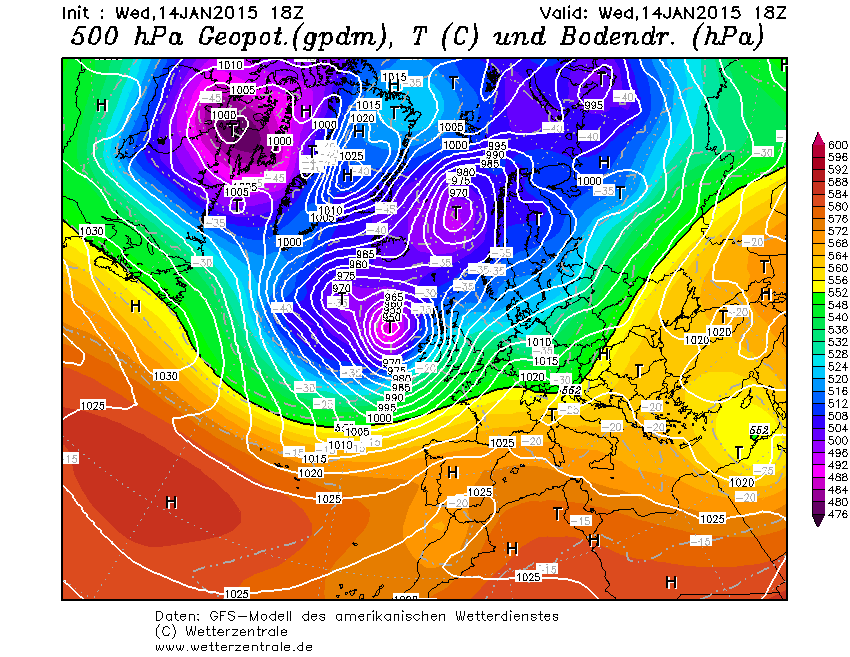
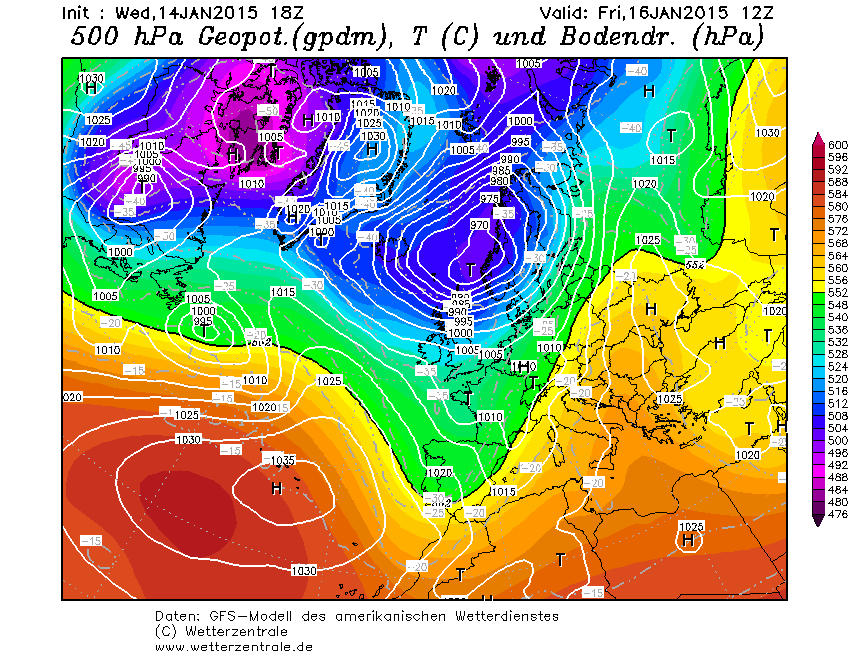
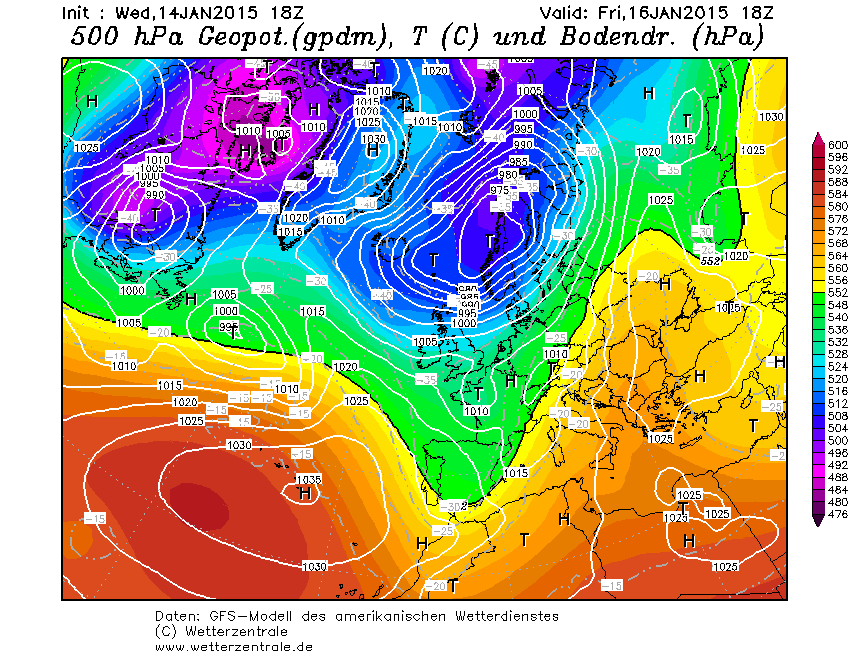
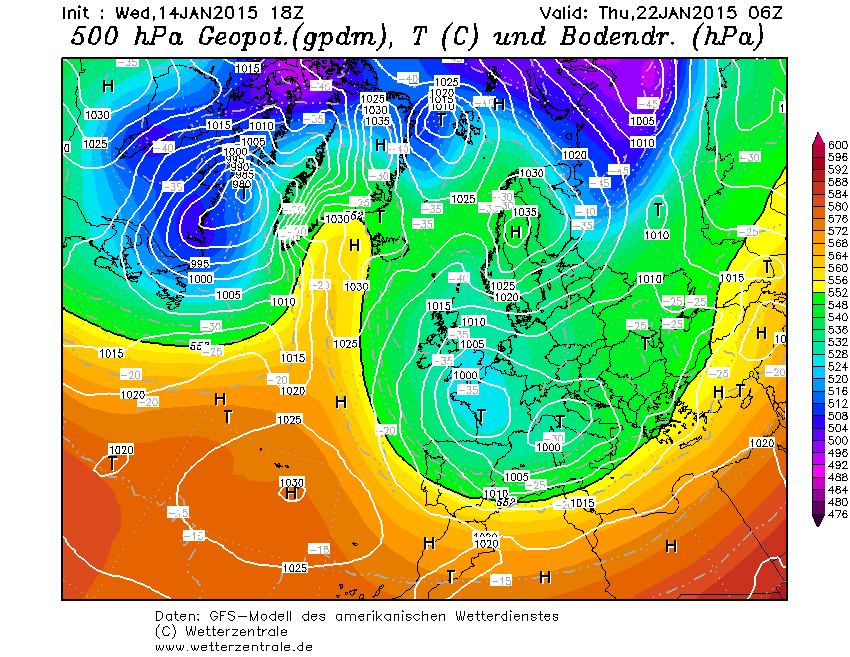
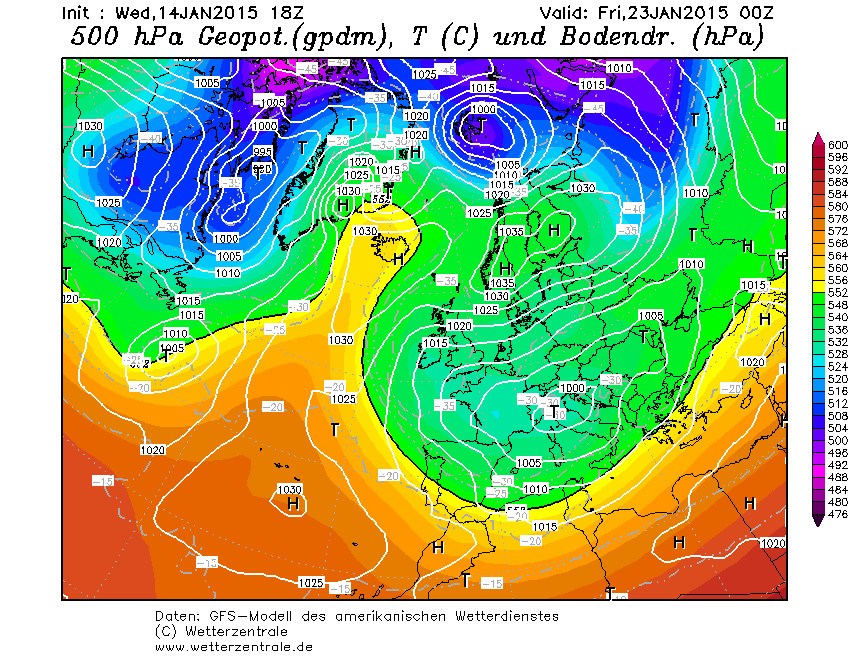
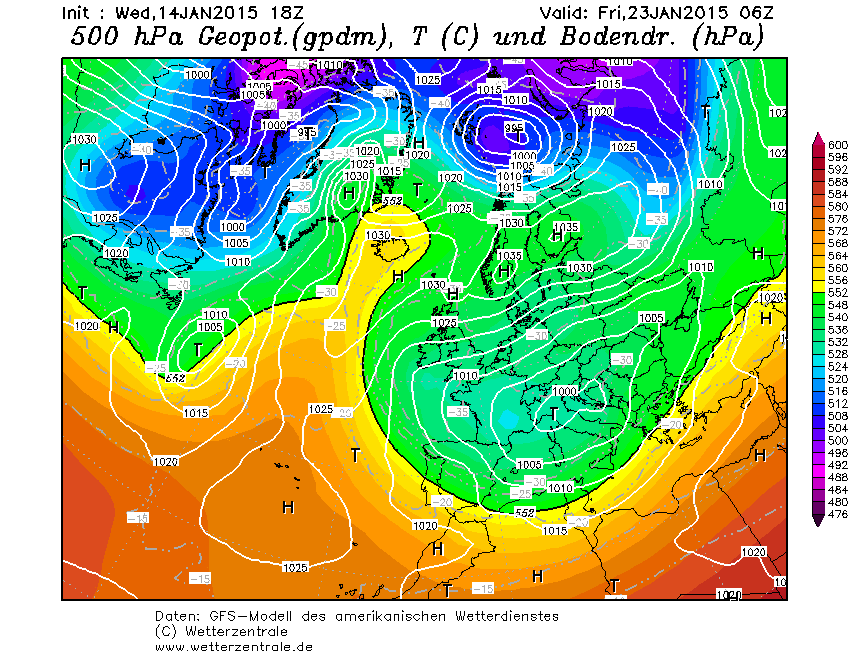
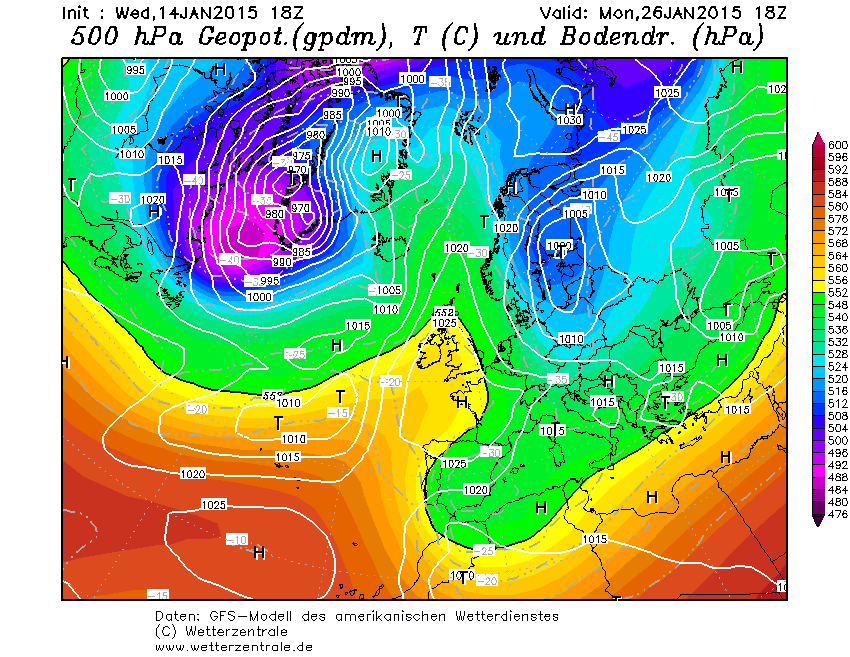
The weather model GFS (Global Forecasting System) has, for years, teased weather anoraks with mouthwatering possibilities of what the weather could be like 5 to 10 days away. Many ‘coldies’, that unexplained breed of weather anorak whom lust after extreme cold and snow every winter, often look at the end of the run, out to 384 hours, and cherry pick these charts, taking as gospel that the synoptics will come to pass, especially if there is high pressure plonked over Scandinavia.
But 16 days is an eternity in weather forecasting and what happens on the day is, more often than not, a world away from what was modelled a fortnight before. But it doesn’t stop the blizzard of toys and dummies being thrown out of prams, often by grown men who really should know better that the weather they really want is always 10 days away.
Is this about to change? Probably not but the improved resolution, from 27km to 13km, will massively improve accuracy at short-range.
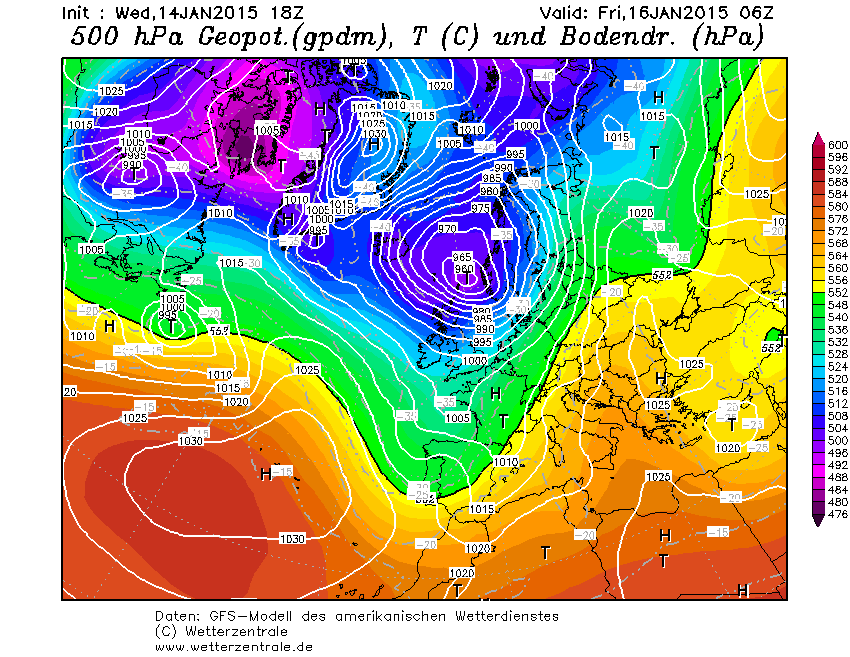
In the meantime it is perhaps ironic that the final 18z operational run of the GFS 27km resolution model had some of the most mouthwatering solutions for classic cold and snowy winter weather for nearly two years. But, just for a change, the operational is backed up by the ensemble.
Here are most of the 500hPa charts from that last run
This December was the sunniest on record in my series going back to 1877. Over 90 hours of sunshine was recorded in this area which is 224% of what we can expect to see during an average December.
It was the sunniest December on record in the series going back to 1979. Some 11 mornings were completely clear at the 9am observation time
Mean temperature for the month was precisely average at 5.6C. Rainfall of 39.9mm was 75% of average – the driest since 2010.
The month was 0.7C cooler than last December – with just under half the rain that fell in that wet and stormy month.
The first day of December was cloudy, dull and dreary with drizzle in a keen east wind. The following days alternated between rain and sun and some night frost. On the 6th the day started sunny with just a few cirrus clouds – overnight frost persisted all day in my garden with a grass min at -2C. The 9th began sunny after a hard frost but then the temperature climbed for 19 hours with cloud building and brief rain at 2am before the cold front passed.
The wettest day occurred on the 11th. The day started sunny but blustery showers blown in on strong WSW winds coupled together with 6 hours of rain overnight produced 11.5mm.
Things turned much milder in the 3rd week with frequent, chiefly light rain, abundant sunshine and an absence of frost. On the 18th the temperature reached 14C.
Christmas Eve saw the weather begin to cool down again with progressively colder nights. Boxing Day was a cloudy, cold day with rain spreading in during the evening and a notable warm sector raising the temperature to nearly 9C at midnight. The first lowland snow of the winter was reported up north. The month ended with long sunny days and sharp frosts, a couple persisting through the day.
Air frosts: 12
Ground frosts: 15
This satellite picture taken on December 27th, 2014, shows the LP clearing through to leave us in clear, deep cold air
From this month, using a similar method for predicting winter, I am going to finish these monthly reviews with a look ahead to see what next month has in store.
The general consensus of the models suggest the first half of the month is going to be mostly unsettled with a mixture of wind and rain off the Atlantic and transient ridges from the south bringing mild, sunny days.
Looking at the 10-day ahead forecast on Netweather suggests the temperature will be just above average with rainfall also slightly higher than normal.
Beyond that, for anyone seeking any snowy weather, the outlook is uncertain. Using a similar method to my Christmas forecast, which was correct at 25 days ahead, I’ve had a look back in the archives to see if there is any precedent in the pattern we’ve had this December.
The simple answer is there is no over-riding signal for any weather type, save that there appears no chance of a repeat of the very mild January of last year. Taking all the probabilities together gives an 88% chance that January will be average to cold – so perhaps there will be some snow in the second half of the month.
This year finished as the second warmest year on record after 2011.
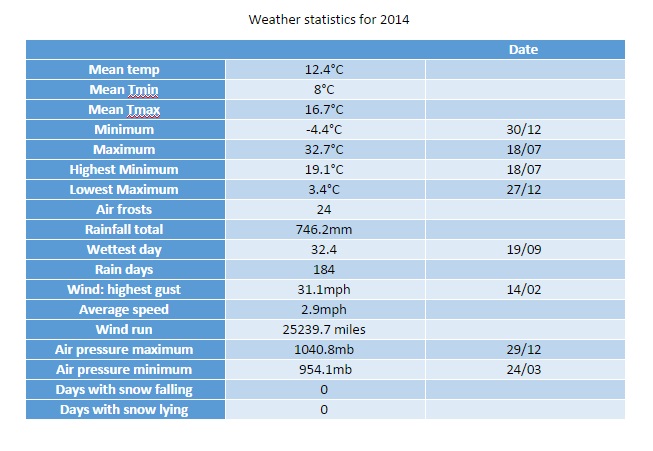
Every month of 2014, apart from August and December, was warmer than average – the means being over 1C warmer every month, bringing the mean temperature to 12.4C, just 0.4C short of the warmest year in 2011 and 1.2C warmer than the 1981-2010 average.
The number of days with thunder was also high. Thunder has been heard in Wanstead on 19 days. In an average year we can expect thunder on only 12 days.
Rainfall is less remarkable although the year has certainly been wetter than average. The total of 746mm puts it in the top 20 per cent of years for rainfall since 1797.
There was occasional respite from the persistent rain
The year began where 2013 left of: wet. Depressions whistling in off the Atlantic brought incessant rain and the wettest January for 130 years. The total, 131mm, which was 2.5 times the average for January, beat the previous record set in 1988 by just 2.8mm. Unlike 1988, January followed a December that was 1.5 times wetter than average – a wet spell that impacted the river Roding where levels ran high.
The most notable day was probably Saturday 25th when what started as a bright, fine day quickly changed around 4pm as a strong squall with heavy rain blew through with associated thunder and lightning and 6C fall in temperature in an hour.
The warm January was followed by an even warmer February with a complete absence of air frost – very unusual for what is commonly the coldest winter month. The conveyor belt of storms off the Atlantic also calmed though not before a storm on the evening of Valentine’s Day saw yet more damage, resulting in two deaths, including a man killed by a wave on a cruise ship in the Channel and a woman killed when a block of falling masonry crushed her car outside Holborn Tube station. The sheer quantity of rain also brought flooding problems around the area. It was also the first winter ever where no snow falling or lying was observed.
The water table appeared to come to the surface on Wanstead Flats in February
The warmest March for 74 years brought lots of gloriously sunny days, a welcome relief from the run of seemingly endless wet months. Just 25.8mm of rain fell over the 31 days – that’s 63 per cent of average. The most notable weather occurred on the 26th when the temperature fell from 10C at 1.30pm to 4C by 3pm. Heavy showers accompanied what was an utterly foul day. The cold pool persisted into the 27th with towering thunder clouds surrounding Wanstead, north, east and south.
The month ended with warm, sunny weather – the southerly flow bringing Saharan dust that deposited on cars.
April continued this year’s theme of being milder than normal; the mean temperature of 12C was 2.2C above average, making it the third warmest April since 1797.
April continued the dry theme of March. Just 19.6mm on rain fell over the 30 days – that’s 46 per cent of average.
The month saw some stunningly sunny days during the second week into the third week, though these were tempered by chilly east to north-easterly winds. The warmest day was the 21st when 21.5C was reached – the first ^70F temperature of the year.
May was also mild though the rain returned with 71mm falling – 139 per cent of average – this hindered sunshine totals to 157 hours, the dullest for 10 years. Most notable was the number of thunderstorms with four incidents of daily thunder.
This screen grab shows the thunderstorm at 4pm on May 24th that saw the temperature fall nearly 6C in a matter of minutes
Though it began unsettled June became warm and dry. Just 15.2mm of rain made it the driest since 2000. The month also brought some spectacular cloudscapes thanks to the high level of thundery activity elsewhere. Though Wanstead did not hear thunder there was plenty of activity close by. It is a typical feature of summer that rainfall can vary a great deal across a small area. The nearest official station to Wanstead, St James’s Park 8.4 miles to our south-west, recorded 33.8mm – more than double what fell here.
June was marked by some spectacular cloudscapes and sunsets. This was the view across Wanstead Flats from Centre Road looking toward Ilford on the 21st
Yet another occasion of impressive cloud formation during June included this example of late evening cirrus. The formation, seen at ground level, seemed similar to a display of the Aurora.
July brought perhaps the most spectacular of our weather. A heatwave brought much thundery activity in what was the 9th warmest July since 1797.
The month was marked with spectacular thunderstorms and torrential downpours, contributing to what was a much wetter than average month – some 73mm fell which is 168% of the monthly average. While on paper the month looks very wet it should be noted that 52% of the July total fell in two episodes: a stalling warm front on the 10th and a cloudburst on 25th. I was away for the thunderstorm though a friend remarked that the roads close to Redbridge Roundabout were like torrents, the rain was so intense for a short period.
The hottest day in July and the year was the 18th with 32.7C recorded. There were 12 occasions where the mercury reached or exceeded 80F.
Perhaps the most impressive thunderstorm was the development of the MCS that moved up from France during the evening of July 18th. There were numerous superb pictures but my favourite is probably this shot taken by Richard Dixon.
This shot was taken by Richard Dixon in Whitstable, Kent. It shows, perfectly, the contrast betweeen the bright orange sunset and the impending doom of the approaching MCS from the continent
What had been a superb summer abruptly ended in August which ended cool, wet and dull. The month, the only one this year that was cooler than average, was characterised by frequent rain and the coldest August night for over 20 years.
More thunderstorms also made it a wetter than average month – some 76mm fell which is 152% of the monthly average and the wettest for 4 years. A couple of nights were notably cool for August: 5C was recorded during the early hours of the 23rd – the coldest August night since 1993.
It was yet another month where rainfall totals could vary greatly in the space of just a few miles. On the 9th a station in Woodford Green recorded 24.4mm, double what fell in Wanstead. The legacy of TS Bertha coincided with the end of our extended hot spell
On 25th a perfect curl could be seen on a depression centred off the west coast of Ireland. The rain associated with this low pressure brought the month’s highest daily rainfall total: 23.4mm (the system bringing 27.5mm) – a thoroughly miserable Bank Holiday Monday where it rained ALL day, from 6am until 9.30pm. It was yet another example of how much even frontal rainfall can vary over a small area with St James Park recording 38.2mm.
Sunset overlooking Wanstead Flats 2nd August
In terms of weather events September was a warm and relatively quiet month save for the two thunderstorms that seemed to mark the Scottish Referendum as the results became apparent in the early hours of Friday 19th. The most notable storm happened around 3pm which brought 24.5mm of rain with a peak rate of 76.5mm/hr at 15.47. The storm ended a run of 16 dry days. Explosive convection brought hail and rain and flooding to Hackney, Hackney Wick and Leytonstone. This storm was the result of a convergence line over London between light southerlies to the south and easterlies to the north – the heavy rain was very localised.
The month was marked with lots of dry, sunny days, the two thunderstorms on the 19th contributing 89 per cent of the rainfall for the month. It was dryer than average – the 44.8mm that fell is 86 per cent of what we would expect in a normal September. Despite this it was only the driest September here since 2011.
Save for the warmest Hallowe’en on record and a notable depression on the 21st October was a relatively quiet month.
The dry and sunny start was replaced with a very unsettled regime at the end of the first week which lasted until the end of the second week – with 39.5mm of rain falling over the 12th and 13th, a notable total for this region. It was wetter than average: 82.4mm represents 123 per cent of what we’d expect to fall in a normal October. The warmest day occurred on the 31st with 21.5C recorded. Many nights were warm with date records matched or broken. Cold nights, relative to the time of year were few.
The final month of autumn was most notable for its rainfall with 19 consecutive days of measurable precipitation and just four completely dry days .
November 22nd by Perch Pond. Drizzle early morning couple with damp air left mist floating above the surface
November was warmer than average; the mean temperature of 8.9C was 0.9C above average, making it the 19th warmest November since 1797: 2.2C warmer than last November, though only the warmest since 2011.
The sunny and warm start on the 1st was quickly replaced with an unsettled, cooler regime week which lasted for nearly three weeks. A brief respite on the 20th was followed by more rain – with 12mm and 15.2mm on the 22nd and 23rd. It was wetter than average: 97.5mm represents 165 per cent of what we’d expect to fall in a normal November.
Despite it being wet it was only the 40th wettest November in the series back to 1797.
The warmest day occurred on the 1st with 17.2C recorded. The first frosts of autumn were recorded. The lowest temperature occurred on 24th when the mercury fell to -1.5C.
Sunshine was average with 60.5 hours recorded – that’s 103 per cent of mean. The sunniest day was on the 4th when 6 hours of sunshine were recorded.
It was the sunniest December on record in the series going back to 1979. Some 11 mornings were completely clear at the 9am observation time
This December was the sunniest on record in my series going back to 1877. Over 90 hours of sunshine were recorded in this area which is 224% of what we can expect to see during an average December.
Mean temperature for the month was average at 5.8C (0.2C above the 30-year average). Rainfall of 39.9mm was 75% of average – the driest since 2010.
The month was 0.7C cooler than last December – with just under half the rain that fell in that wet and stormy month.
December was warmer than average with a mean temperature of 6.5C (0.9C above the 30-year average) – ranking it 33rd in the series since 1881. Rainfall of 81.9mm was 154% of average – ranking it 22nd in the series.
The month was 1C warmer than last December – with 84% of the rain that fell in December 2012.
The first day of December was cloudy, dull and dreary with drizzle in a keen east wind. The following days alternated between rain and sun and some night frost. On the 6th the day started sunny with just a few cirrus clouds – overnight frost persisted all day in garden with a grass min at -2C. The 9th began sunny after a hard frost but then the temperature climbed for 19 hours with cloud building and brief rain at 2am before the cold front passed.
Boxing Day was cloudy and cold before rain, with snow in the north, spread in in the evening. A cold front whistled through about 12.40am on the 27th but not before the warm sector raised the temperature to 8.9C
The wettest day occurred on the 11th. The day started sunny but blustery showers blown in on strong WSW winds coupled together with 6 hours of rain overnight produced 11.5mm.
Things turned much milder in the 3rd week with frequent, chiefly light rain, abundant sunshine and an absence of frost. On the 18th the temperature reached 14C.
Christmas Eve saw the weather begin to cool down again with progressively colder nights. Boxing Day was a cloudy, cold day with rain spreading in during the evening and a notable warm sector raising the temperature to nearly 9C at midnight. The first lowland snow of the winter was reported up north. The month ended with long sunny days and sharp frosts, a couple persisting through the day.























 Wanstead Meteo

You must be logged in to post a comment.