This winter since the turn of the year has been remarkably snowy for locations above 500m. Which, in the UK, means few of us would have noticed.
A pattern of predominant SE’ly winds feels like it has been locked in for weeks and has brought endless rain to many parts of the country. And much snowfall, particularly above 500m.
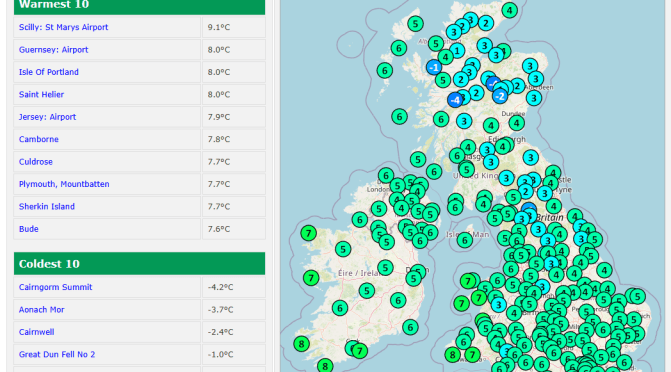
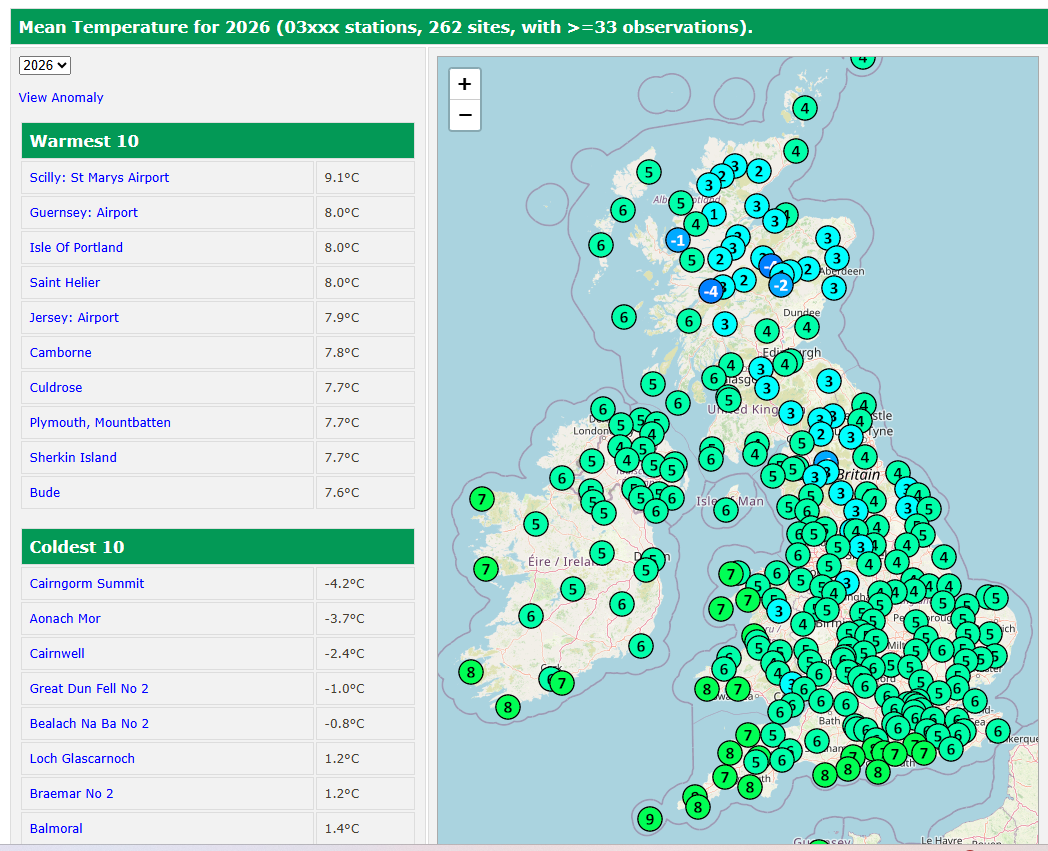
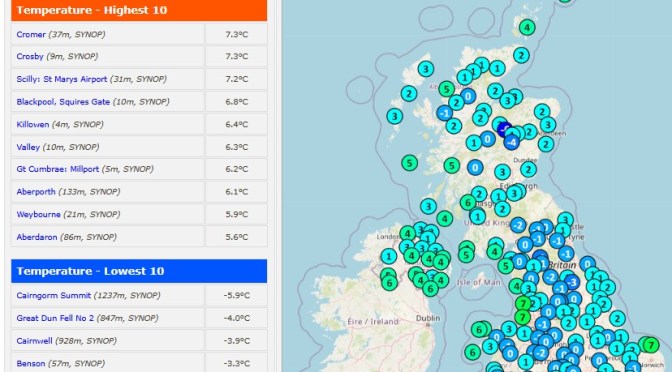
The Scottish Highlands have been the main beneficiary. And, looking at data on the RoostWeather site, there has been quite a sharp gradient in the decrease of mean temperature. Epic snow drifts on NW facing slopes have resulted in large avalanches. One frequent visitor to the Cairngorms said it is the deepest snow he has seen in 60 years.
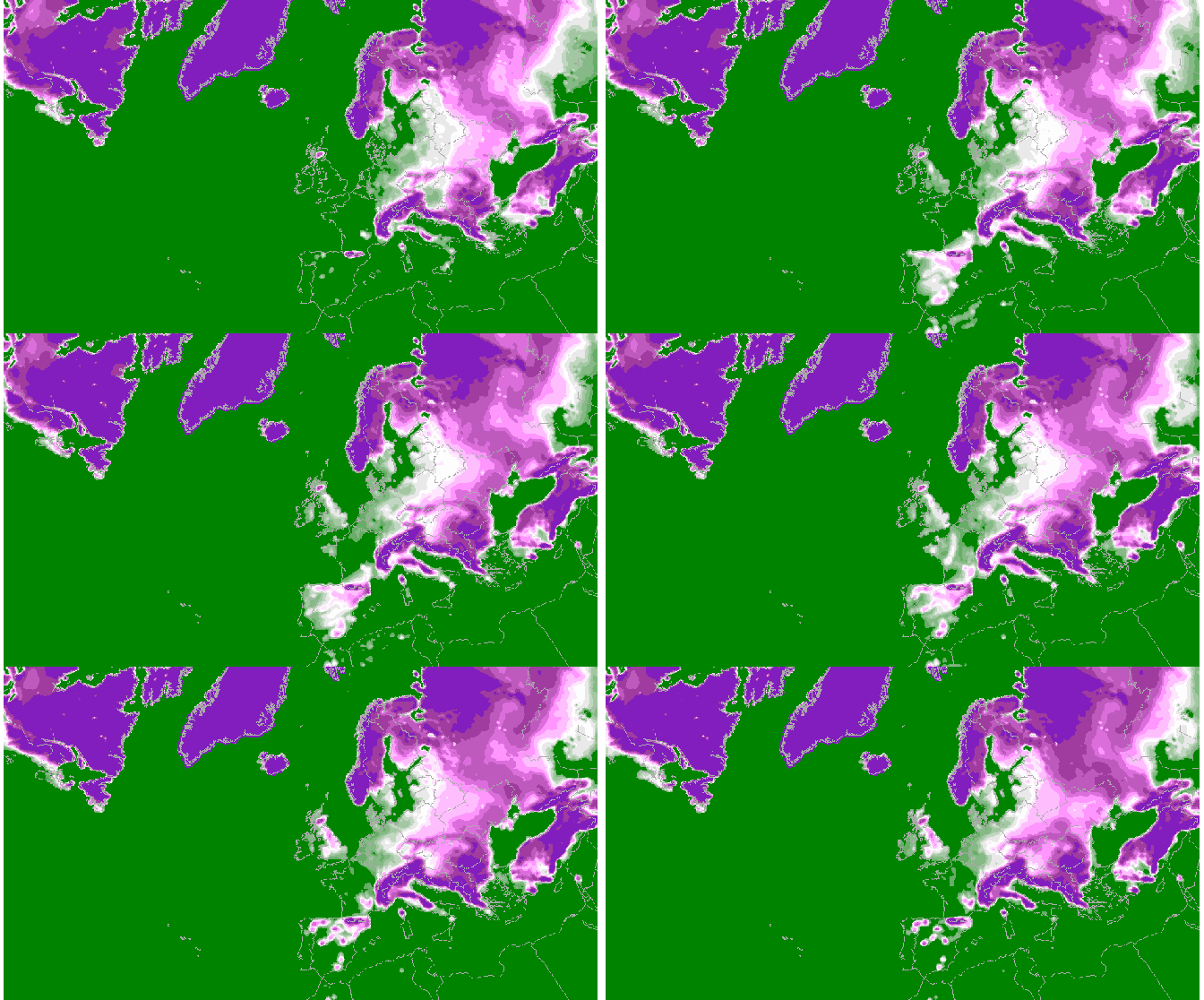
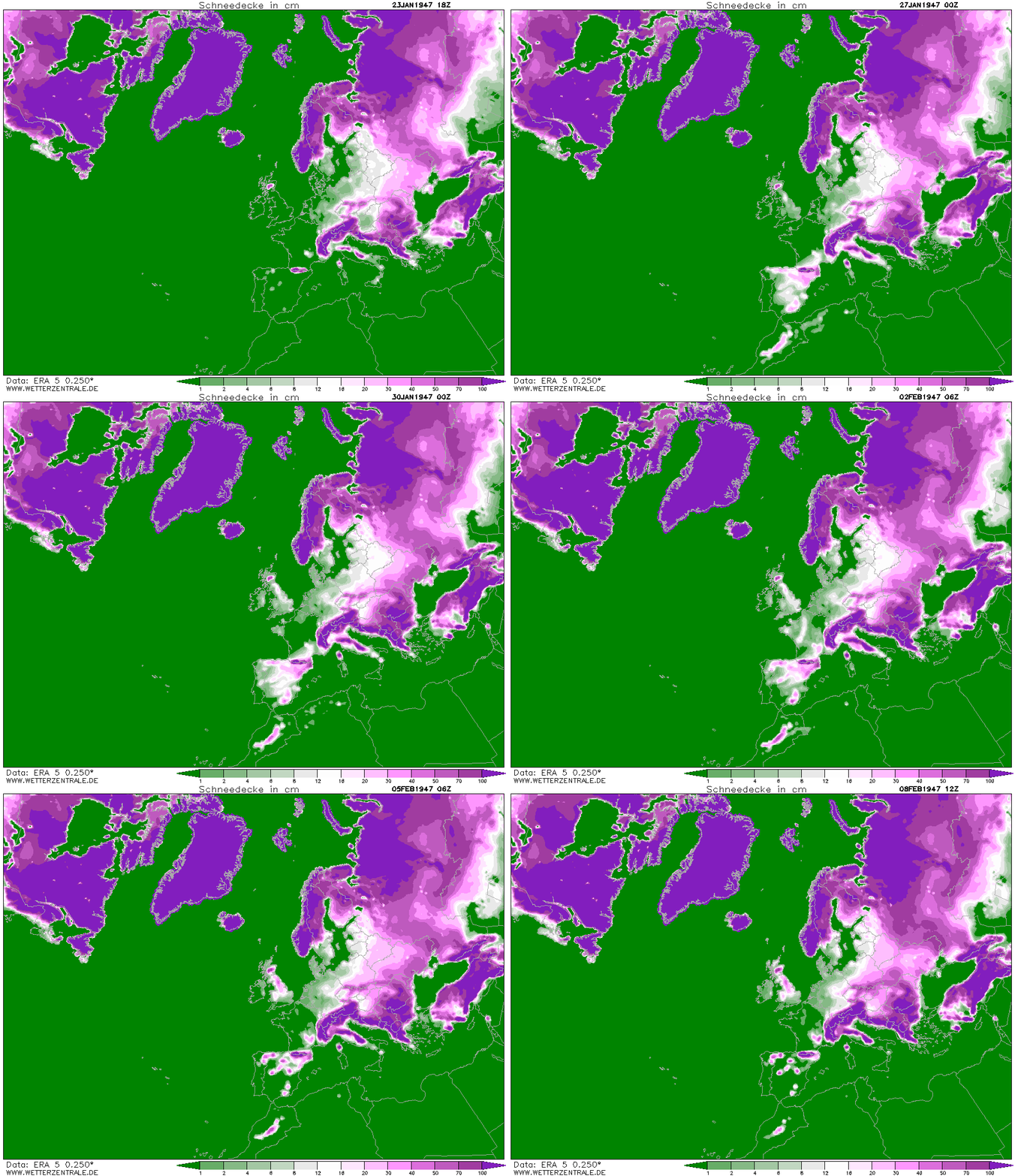
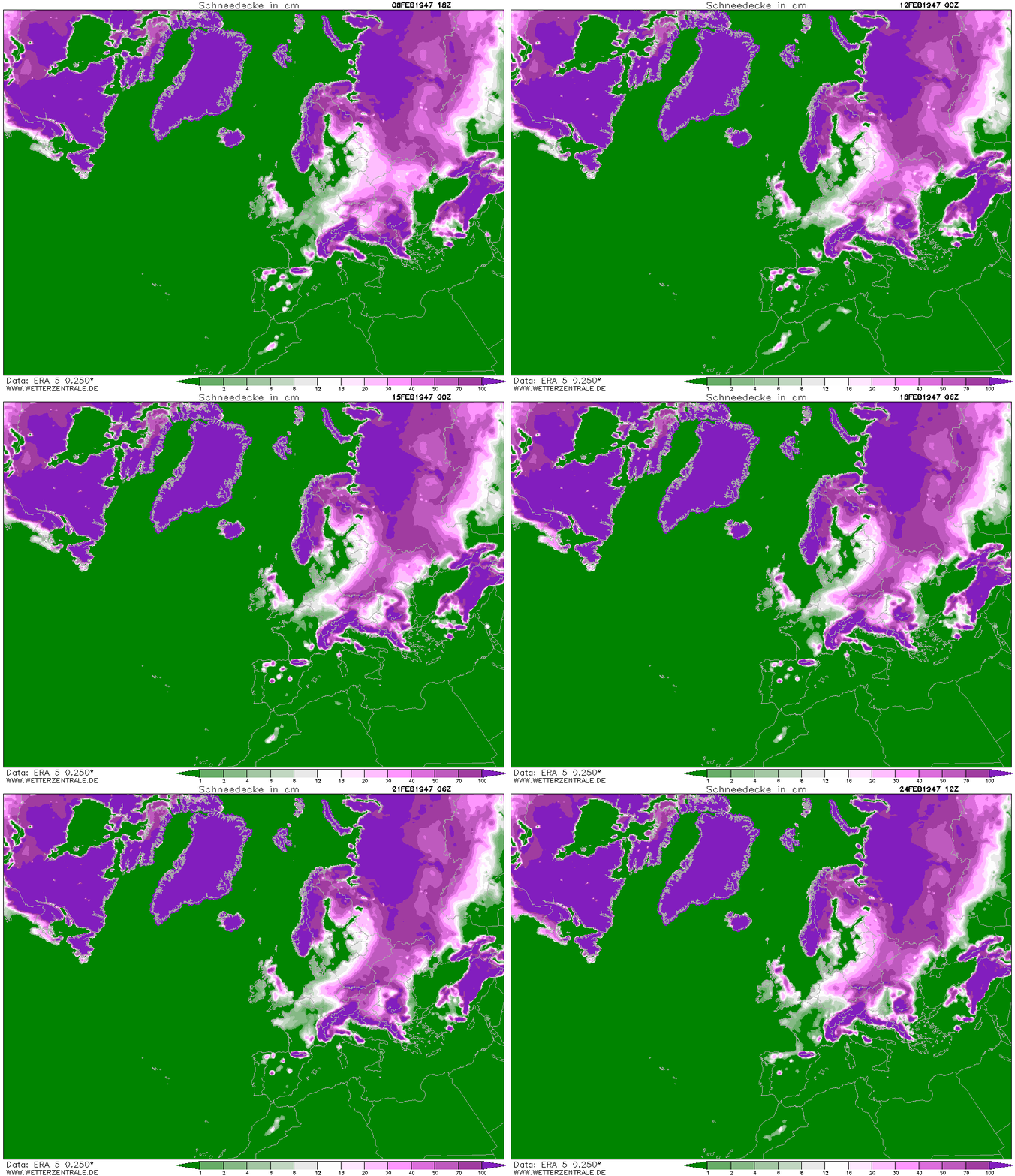
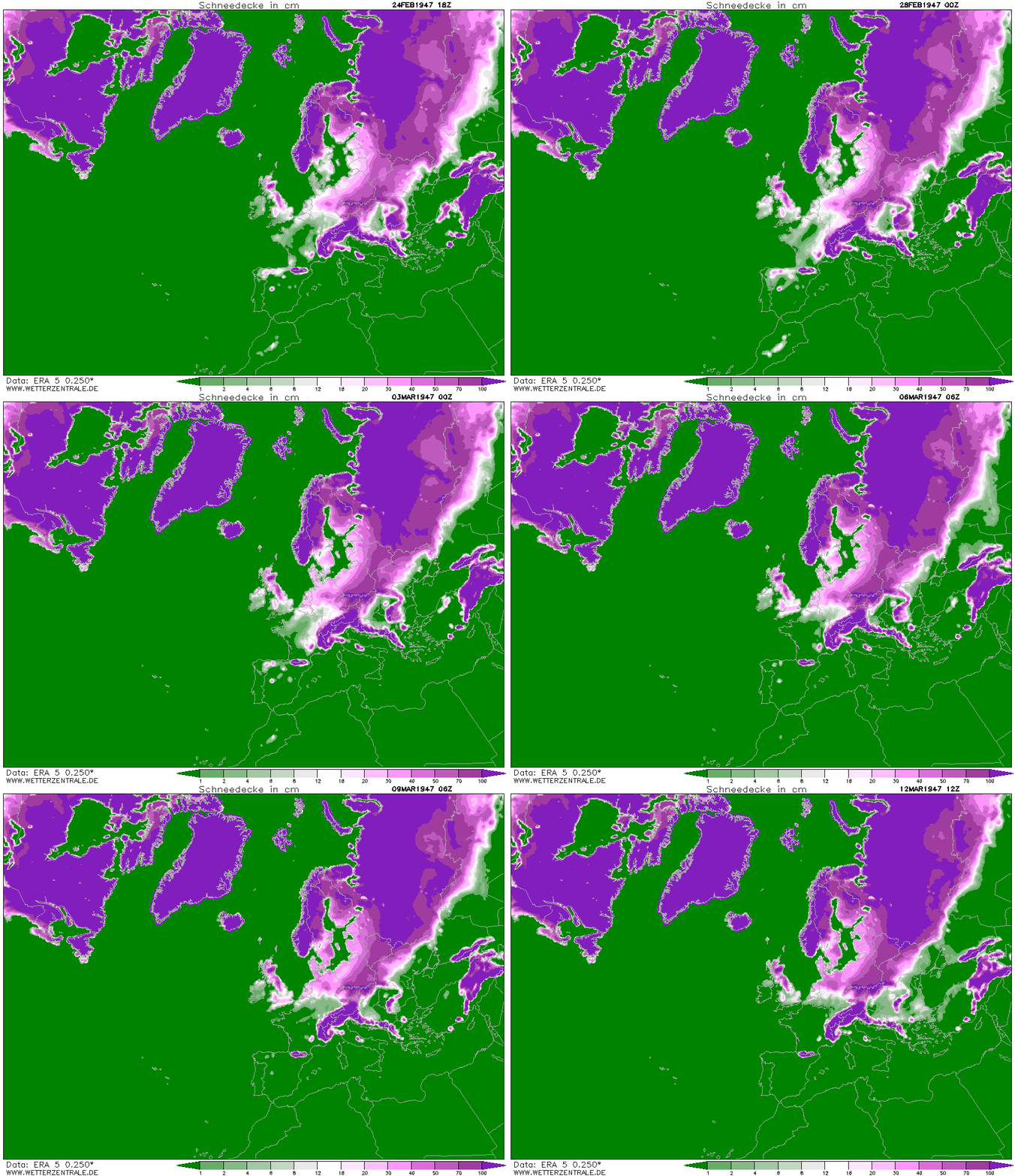
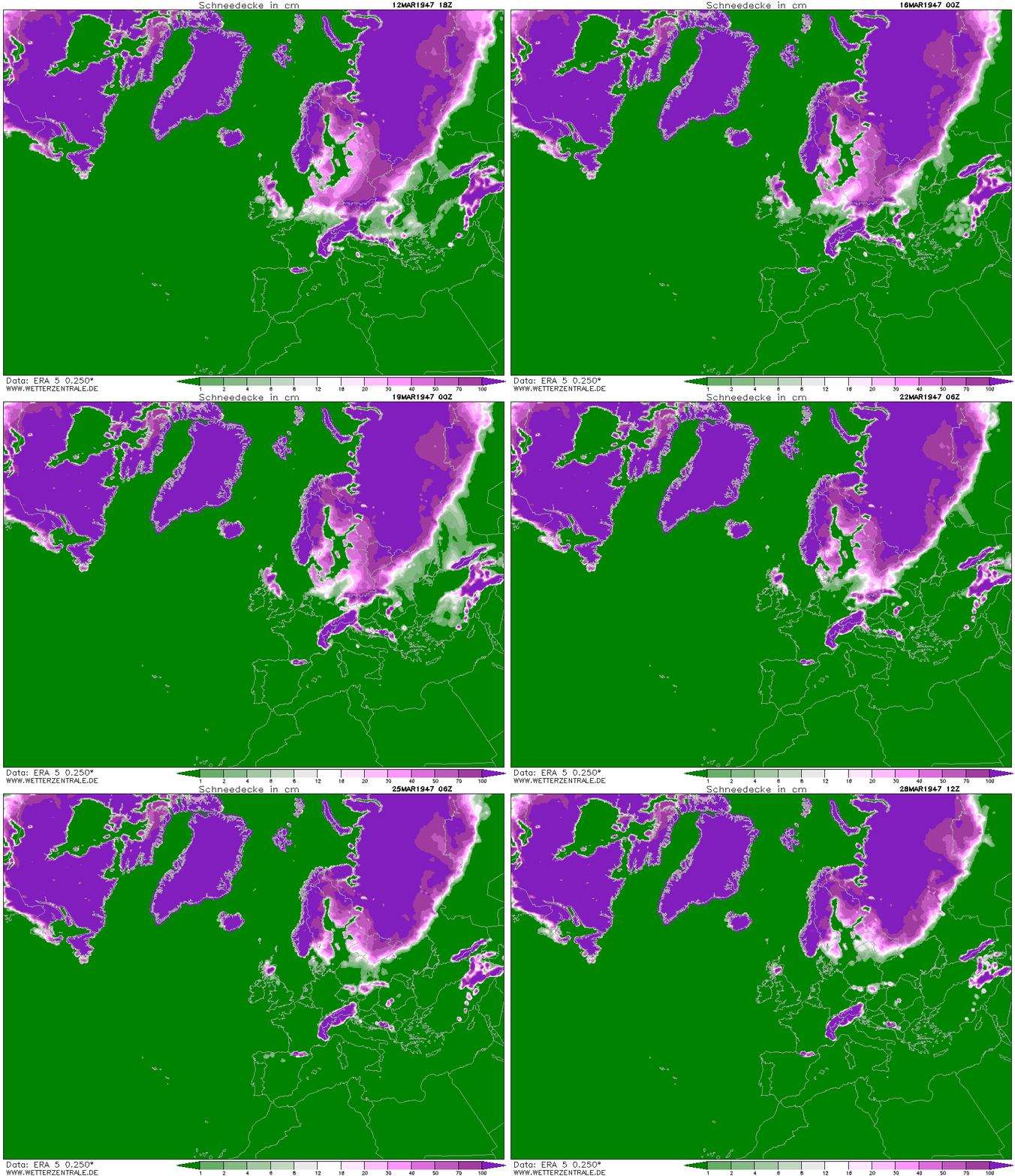
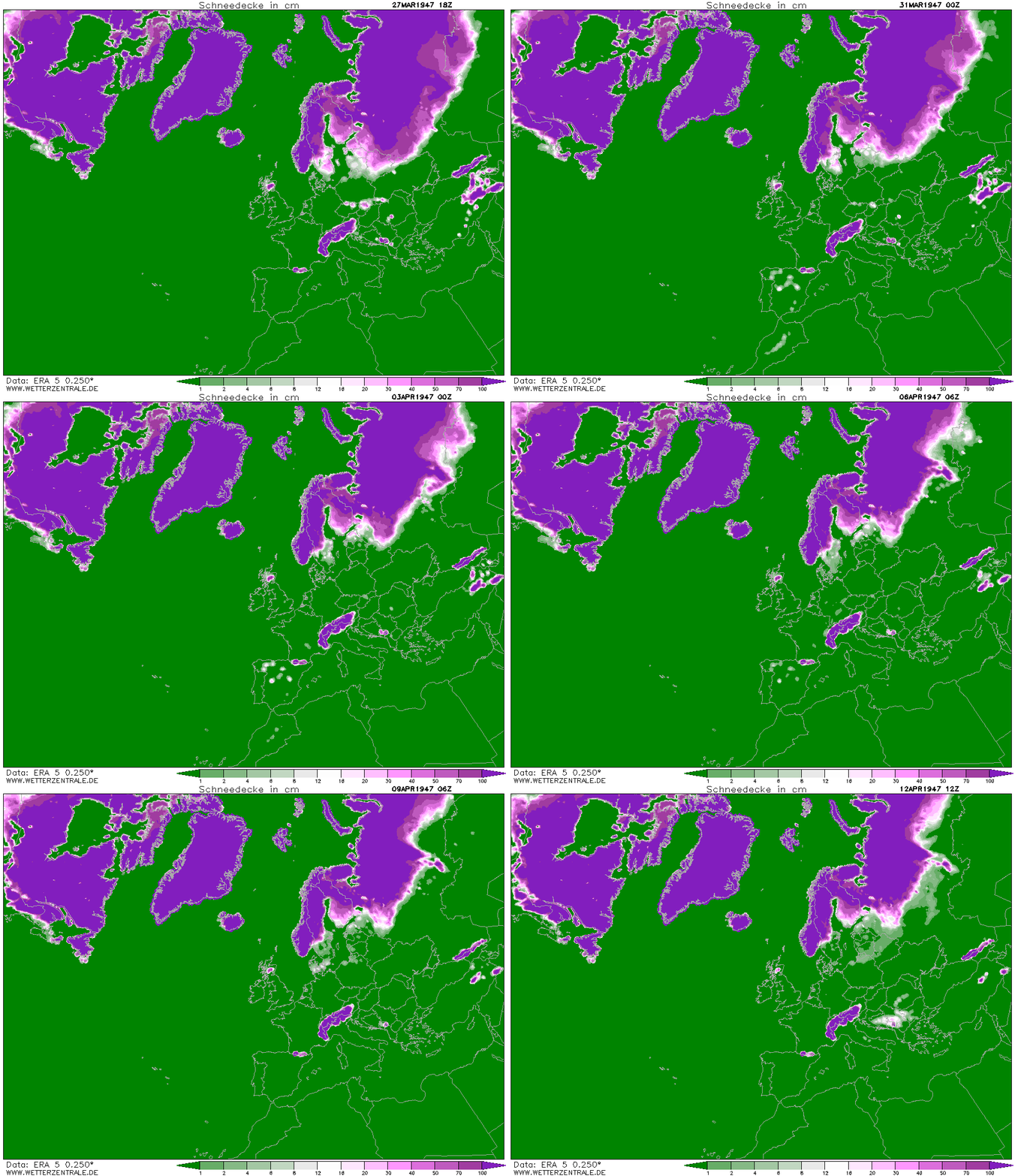
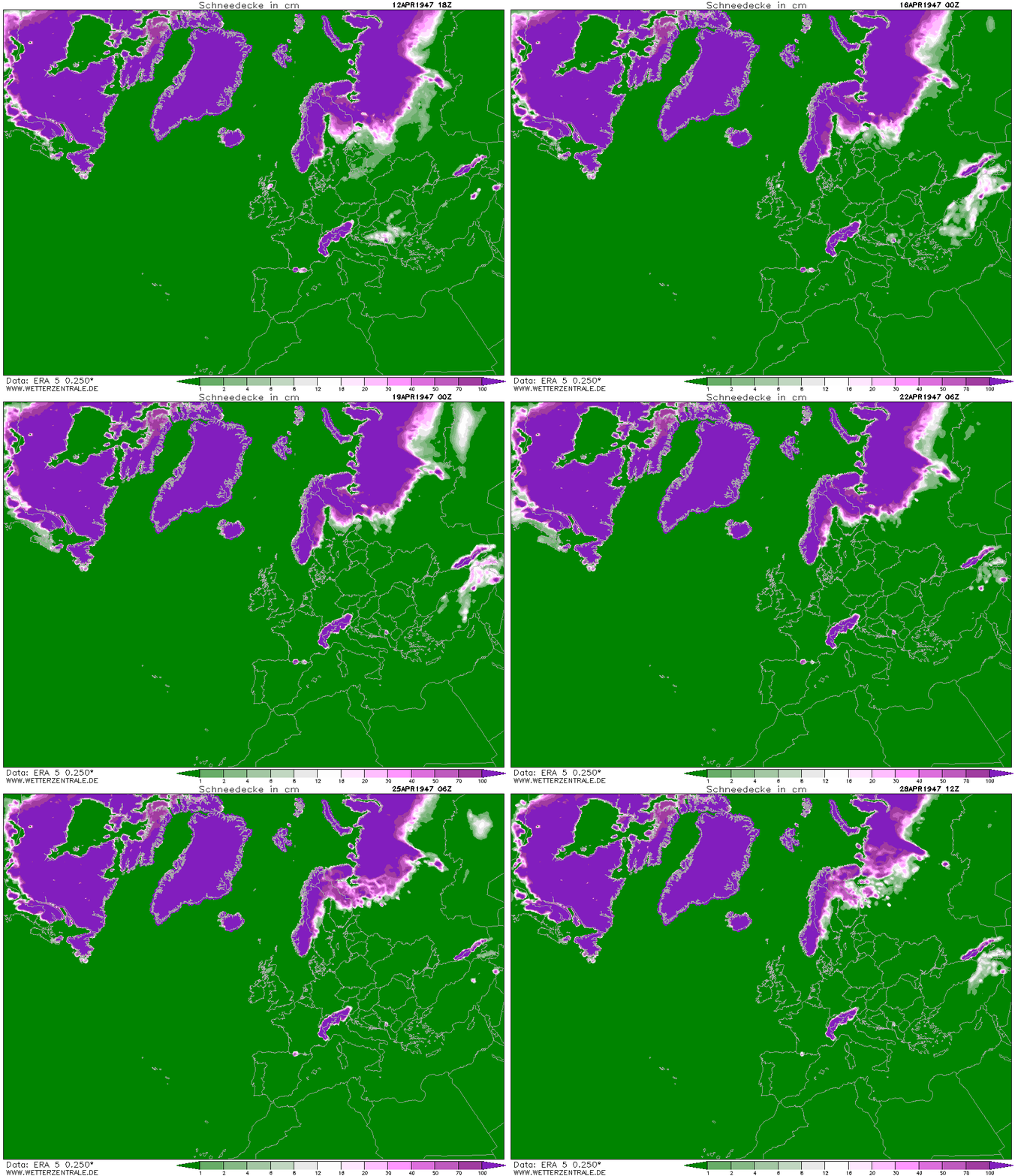
Below is a number of GIFs that illustrate snow cover across the Northern Hemisphere during the late winter of 1947.
This part of the British Isles saw snow cover from late January to mid March. The animation suggests there was snow cover in the London area for an astonishing 51 consecutive days.
A superb account of this fabled winter can be found here.
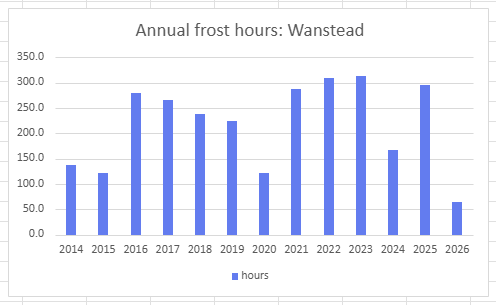
The opening week or so of 2026 has already seen 30 per cent of frost hours recorded locally in an average year.
The temperature at the site in Wanstead has been -0.1C or lower for nearly 64 hours, already more than half of what was recorded here in the whole of 2020.
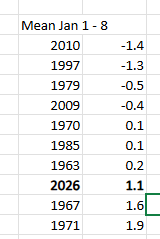
The mean for January is currently 1.1C, 4.1C below average. It’s also been a wet start with 28mm of rain, 53 per cent of the whole month average.
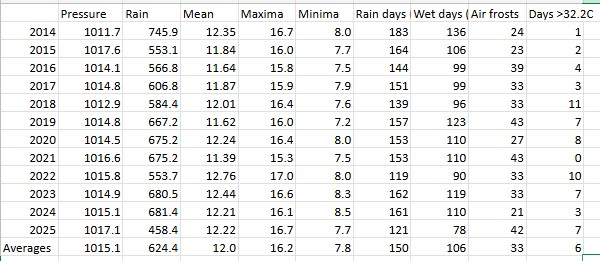
While there’s been colder starts to a year continuous data that allows this kind of analysis only stretches back to 2014 on this site.
There’s been some very interesting output on the weather models these past couple of days – not least the GFS’s dew points from Christmas Day into Boxing Day.
Very cold air from the east can be seen moving toward the SE of the UK to just across the North Sea – one run has the dew point down to -20C!
The outcome will be different but it’s been a fair while since I’ve seen this sort of solution in what is a relatively short timeframe.
This winter is looking mild or very mild overall with slightly above average rainfall.
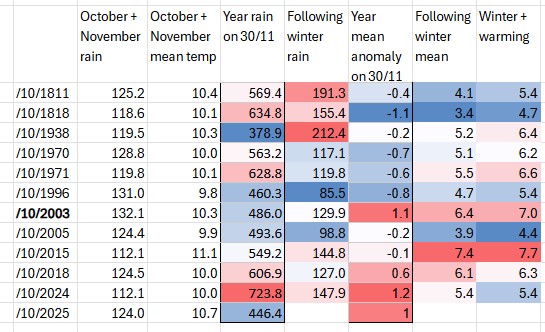
This year I’ve added to my previous method of forecasting by also considering the 12-month rolling rainfall statistics on November 30th together with the January-November mean anomalies.
This gave the following list.
Thus, in terms of chances:
Above average
>6.2
46%
Average mean (C)
5.2-6.2
36%
Below average
<5.2
18%
And for rainfall:
>125%
195
18%
Average (mm)
156.1
64%
<75%
117
18%
The ‘line of best fit’ appears to be the winter of 2003/04 which, after a cold snap in late December that delivered a maximum snow depth of 7cm on December 29th, it turned out to be yet another mild winter.
Back in the days of proper winters folk had it hard, especially those living in the Cairngorms. And probably none more so than Bob Scott who experienced more than his fair share of severe weather.
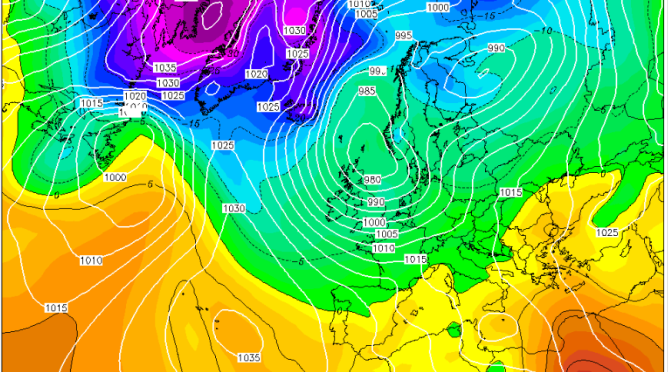
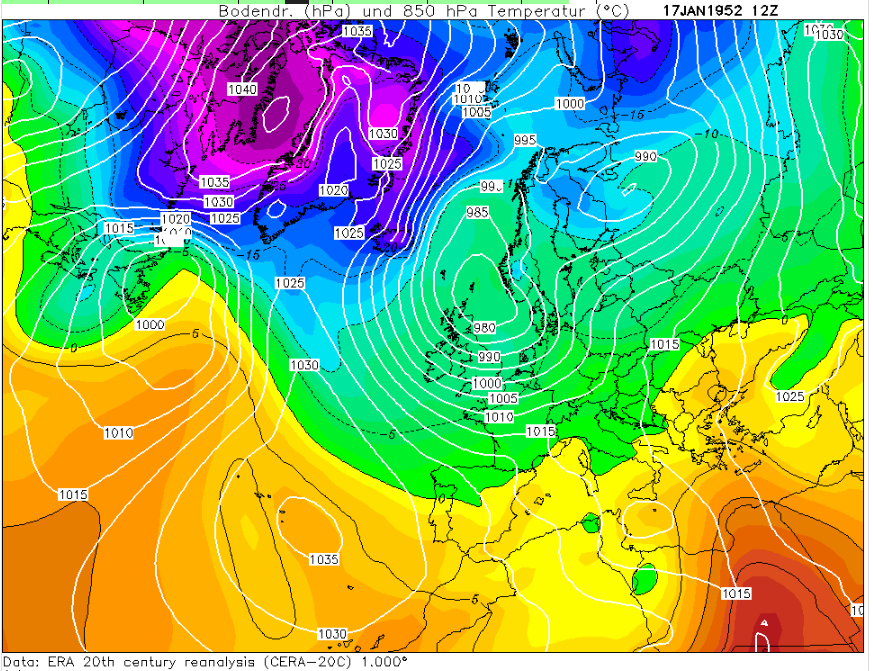
Reading Adam Watson’s fascinating memoir of his time with the legendary Bob Scott o’ the Derry I picked up this fascinating account of the time he had to hand over navigation to his horse, Punchie, to guide them home through a blizzard in January 1952.
Watson writes on his conversation with Scott: “…it was the worst storm I’ve ivver been oot in, on my wey hame fae the Linn in the aifterneen. The drift came on sae thick I couldna see the horse’s heid as I sat on the sledge. I couldna have got hame if it hadna been the horse”.
A gale battered his face with suffocating drift. He judged that he must be near the Derry wood, but the storm now became violent. He had to turn his head away and let Punchie take over. Suddenly the gale dropped and the drifting stopped as a dark wall loomed yards away, the lodge wood! Snow still fell thickly, but he had shelter and knew where he was. Punchie had come right to the narrow gap where the road entered the wood.
Watson’s book It’s a Fine Day For The Hill is a beautiful memoir packed with anecdotes of his life in and around the Highlands.
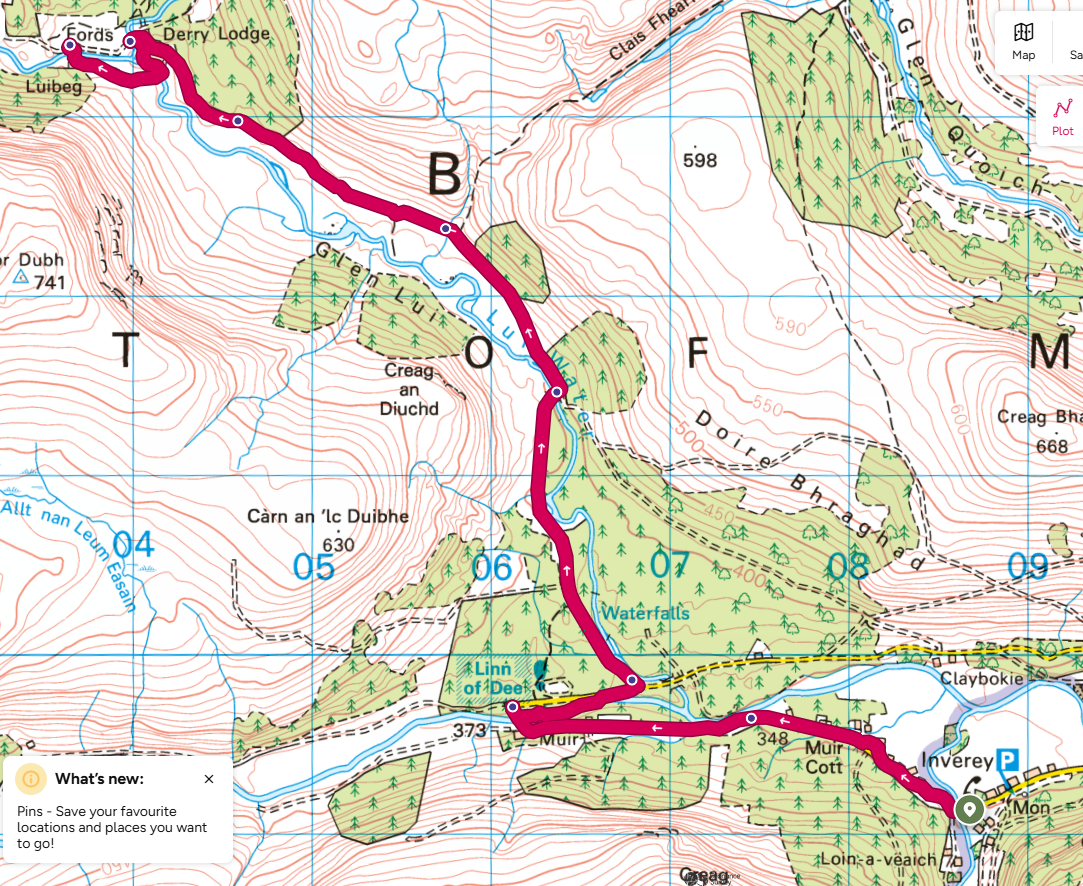
The route from Inverey to Luibeg, the ‘most beautiful part of the Cairngorms’
Gliding along on billiard table-smooth paths in the dunes of the Hollandse Duinen National Park: there can’t be many better cycling experiences in the world.
Hours earlier we’d disembarked the Stena Britannica at Hoek van Holland with only a vague timetable of getting to Amsterdam and back in time for our return ferry four days later.
We decided to head for a town called Monster that was far enough to get our cycling legs going but also close enough for that all-important first caffeine shot of the day. Rolling into the town I was struck by the number of old people on two wheels, something you don’t see that much of aound east London.
A day after cycling the potholed roads from Dedham Vale to Harwich the Dutch paths were a revelation. After mile upon mile of stunning beaches we soon arrived in The Hague bathed in warm October sunshine – the old town the perfect place to stop for lunch.
Conscious of time and that my daughter had never cycled further than three miles I figured we ought to get some accomodation booked for that evening; Stayokay Noordwijck was a good 30km further north.
The dunes of the Hollandse Duinen National Park with the contrails of Schiphol
We pedalled on, taking in the International Criminal Court, before the paths of the Dutch capital slowly emerged into the dunes of the Hollandse Duinen National Park. It was probably the nicest afternoon’s cycling I’ve ever had the joy of experiencing.
Following days provided further interest with stops in Zandvoort, Haarlem, Amsterdam and Gouda before returning through Rotterdam on our way to Hoek for the return overnight ferry.
Since my return I’ve wondered why Dutch cycling infrastructure is so much better than the UK. I thought it was bound to be paid by higher taxes in the Netherlands but, using a median income of £100k, the overall income tax rate set by The Hague would be 32% compared with Westminster’s 30%.
Yet, according to findings on the web, the amount spent on cycling infrastructure in England is just 56% what the Dutch spend, despite the area of England being three times bigger than the Netherlands.
The per capita spending on cycling, therefore, is £28.77 in the Nethlands compared with £5.10 in England. The Dutch argue that such high spending on cycling has societal benefits, including factors like public health, travel time, and reduced pollution.
I realise the above is a back of the envelope take on the economic situation of both countries but there is a good study on this published here.
Background
Every four years or so I look to do something on two wheels as a bit of challenge. The idea was first sparked in 2012 on my first work sabbatical – I’d listened with envy to a colleague’s account of cycling the C2C, a coast to coast route across England from Whitehaven to Sunderland.
The seed was sown and that autumn I completed my own C2C, raising nearly £4k for Sarcoma UK in honour of my late sister, Jane.
Four years later I completed the Dunwich Dynamo, a 120 mile ride from London Fields to the Suffolk coast.
And in 2021, just as the pandemic lockdown loosened I undertook my own version of the Scottish coast-to-coast, cycling from Aberdeen to Mallaig.
Hoek van Holland – Monster – Den Haag – Noordwijck – Haarlem – Amsterdam – Gouda – Rotterdam – Hoek
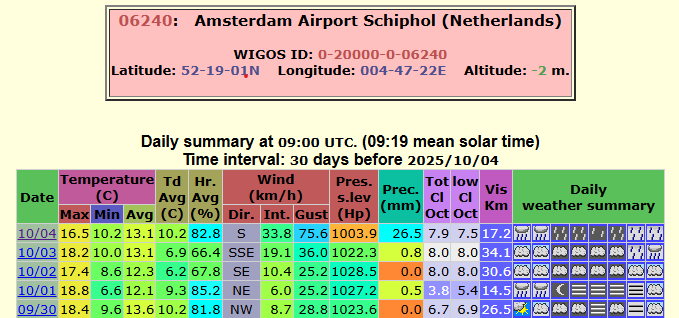
The weather was glorious all week until the last day as Storm Amy bore down
The mean for summer 2025 in Wanstead finished 19.8C, 1.8C above the 1991-2020 average and the second warmest summer in a local record going back to 1797. The figure was just 0.2C short of the warmest summer in 2022.
It was a dry season; just 84.5mm of rain was recorded, the driest for three years and 21st driest to 1797.
Taking a broader view of Greater London, using Met Office statistics for St James’s Park and Heathrow, reveals that summer, as an average of the three, finished second warmest, just 0.174 behind 2022.
In terms of rainfall it finishest 22nd driest with an average of 92.2mm.
Some 590.5 hours of sunshine were measured at Heathrow, 105% of average and the sunniest for 3 years.
The very dry spring had already taken its toll on the Ornamental Waters, Wanstead Park









 Wanstead Meteo
You must be logged in to post a comment.