Category Archives: Weather

Hours of frost

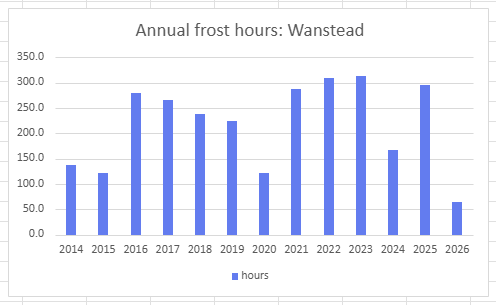
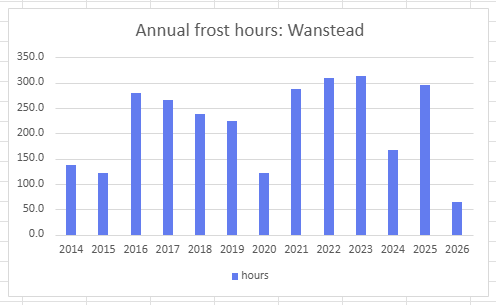
The opening week or so of 2026 has already seen 30 per cent of frost hours recorded locally in an average year.

The temperature at the site in Wanstead has been -0.1C or lower for nearly 64 hours, already more than half of what was recorded here in the whole of 2020.

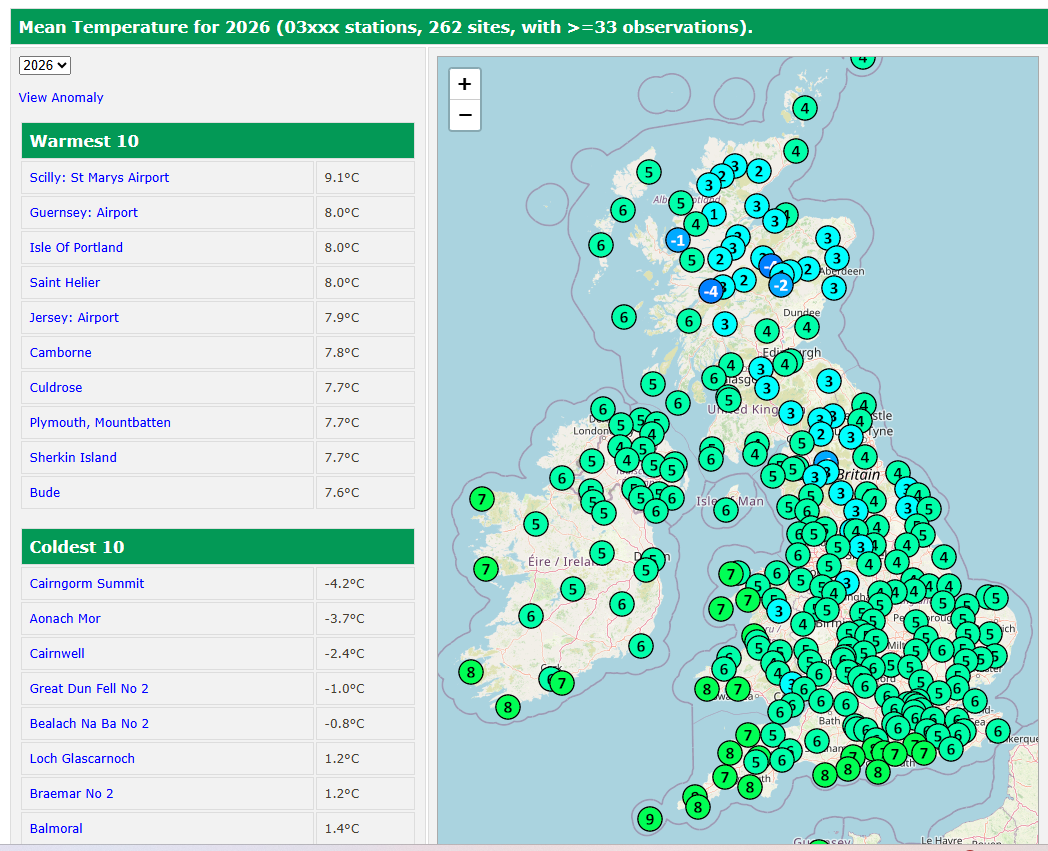
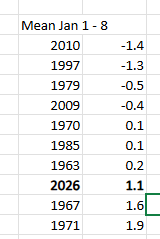
The mean for January is currently 1.1C, 4.1C below average. It’s also been a wet start with 28mm of rain, 53 per cent of the whole month average.

While there’s been colder starts to a year continuous data that allows this kind of analysis only stretches back to 2014 on this site.

Ice spear from the east

There’s been some very interesting output on the weather models these past couple of days – not least the GFS’s dew points from Christmas Day into Boxing Day.

Very cold air from the east can be seen moving toward the SE of the UK to just across the North Sea – one run has the dew point down to -20C!

The outcome will be different but it’s been a fair while since I’ve seen this sort of solution in what is a relatively short timeframe.

An evolution can be seen here. https://x.com/i/status/2002803776395325837

First frost of winter 2025/26

The first air frost of the winter has just been recorded in Wanstead, the earliest for four years, though only 9th earliest in the last 13.

It is the 31st air frost of the year which is now two short of the annual average. Here’s a look at previous years back to 1960.

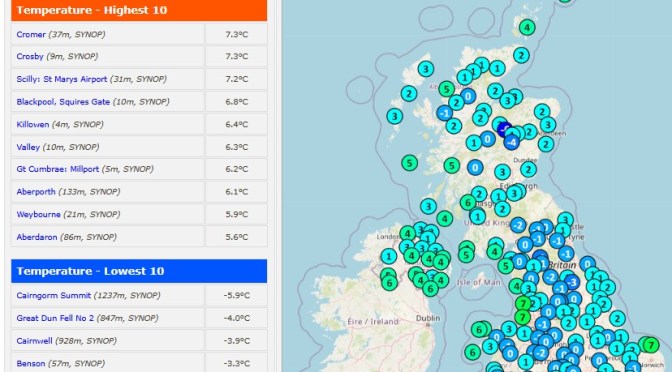
A large part of the UK, away from the coast, looks like it’s also below freezing. As of 2200 Benson is the coldest low-lying station, reporting -3.3C.

Bob Scott’s most brutal blizzard

Back in the days of proper winters folk had it hard, especially those living in the Cairngorms. And probably none more so than Bob Scott who experienced more than his fair share of severe weather.

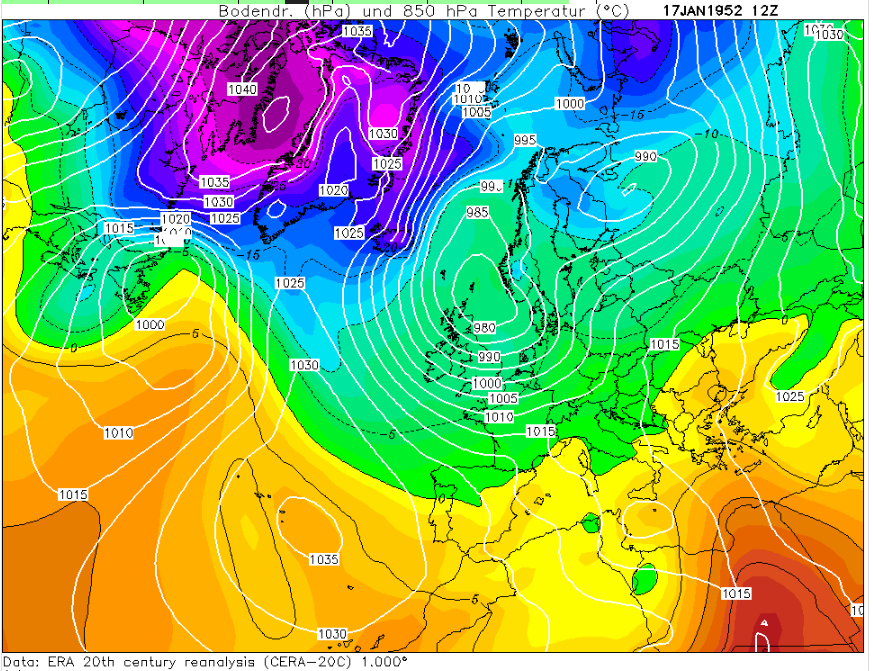
Reading Adam Watson’s fascinating memoir of his time with the legendary Bob Scott o’ the Derry I picked up this fascinating account of the time he had to hand over navigation to his horse, Punchie, to guide them home through a blizzard in January 1952.

Watson writes on his conversation with Scott:
“…it was the worst storm I’ve ivver been oot in, on my wey hame fae the Linn in the aifterneen. The drift came on sae thick I couldna see the horse’s heid as I sat on the sledge. I couldna have got hame if it hadna been the horse”.

A gale battered his face with suffocating drift. He judged that he must be near the Derry wood, but the storm now became violent. He had to turn his head away and let Punchie take over. Suddenly the gale dropped and the drifting stopped as a dark wall loomed yards away, the lodge wood! Snow still fell thickly, but he had shelter and knew where he was. Punchie had come right to the narrow gap where the road entered the wood.

Watson’s book It’s a Fine Day For The Hill is a beautiful memoir packed with anecdotes of his life in and around the Highlands.

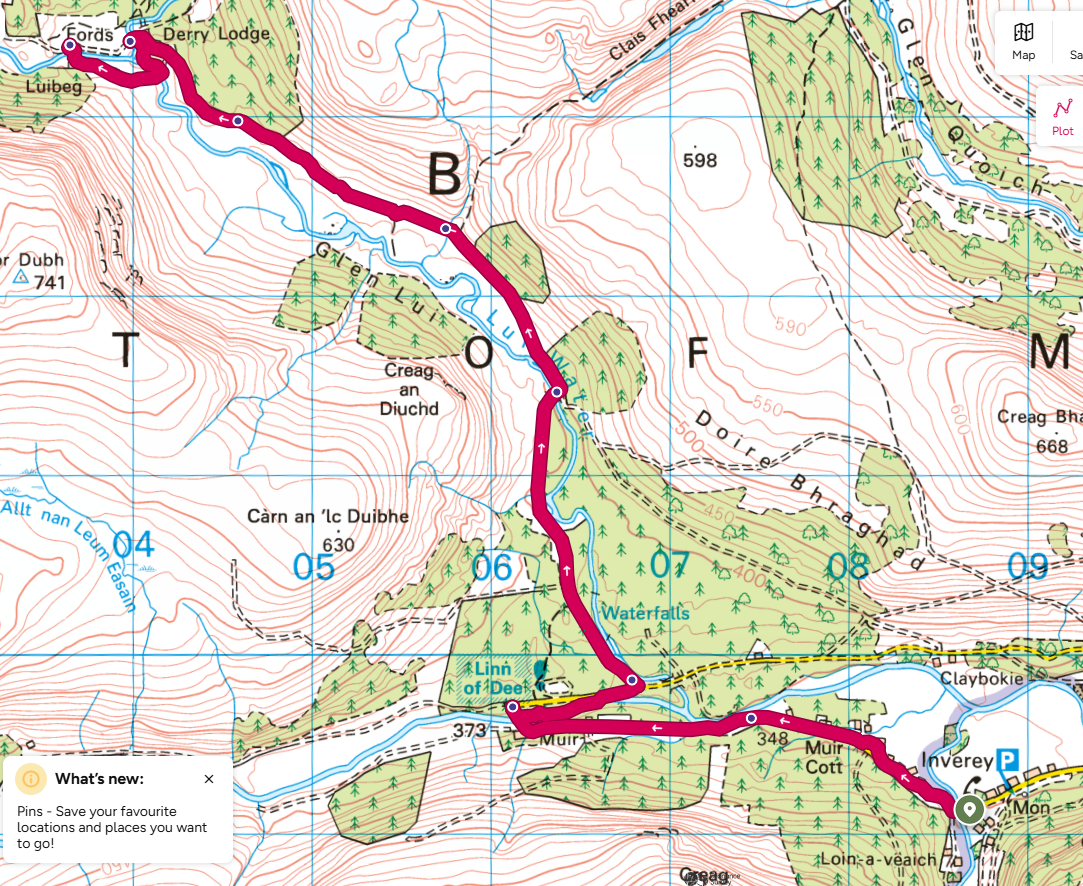
The route from Inverey to Luibeg, the ‘most beautiful part of the Cairngorms’

Summer 2025 in Wanstead and beyond

The mean for summer 2025 in Wanstead finished 19.8C, 1.8C above the 1991-2020 average and the second warmest summer in a local record going back to 1797. The figure was just 0.2C short of the warmest summer in 2022.

It was a dry season; just 84.5mm of rain was recorded, the driest for three years and 21st driest to 1797.

Taking a broader view of Greater London, using Met Office statistics for St James’s Park and Heathrow, reveals that summer, as an average of the three, finished second warmest, just 0.174 behind 2022.

In terms of rainfall it finishest 22nd driest with an average of 92.2mm.

Some 590.5 hours of sunshine were measured at Heathrow, 105% of average and the sunniest for 3 years.

The very dry spring had already taken its toll on the Ornamental Waters, Wanstead Park

A remarkable sunny spell

Sunshine of late seems to have been endless with the past 10 days being virtually cloudless from dawn to dusk.

After a very sunny March which saw over 170% of average sunshine recorded at Heathrow April has already seen over 56% of average sun hours in the first eight days.

In terms of the total percentage possible of sun hours the past 11 days are second only to a period in 1990 that stretched from April 27th until May 7th.

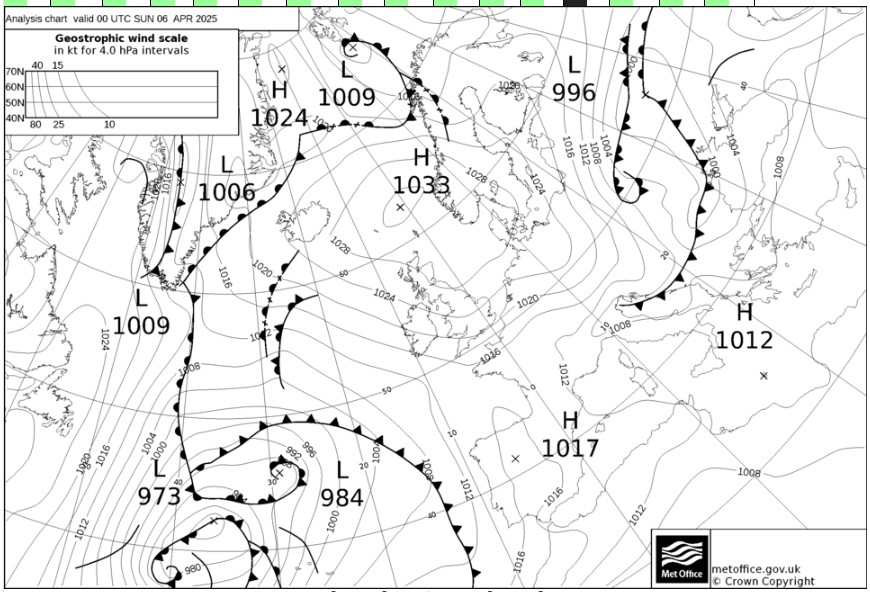
The pattern has seen an anticyclone near stationary to our north, generating a dry NE’ly feed. Some 12.2 hours of sunshine were recorded at Heathrow on the 6th.

Battleground: a precipitous rise and fall in temperature

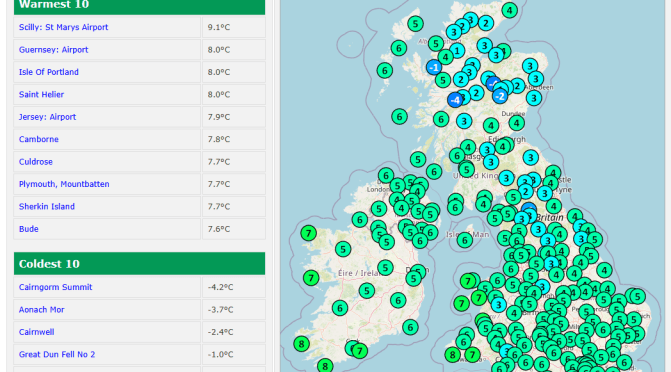
There’s been quite a few superlatives thrown at this early January cold spell, not least the recording of the coldest January night at Altnaharra in 15 years.

Snowfalls across the Highlands, Lake District and northern England have been notable in their longevity relative to recent years.

But the absence of any lying snow at 9am in this locality and fairly standard minima for January left me looking elsewhere for something notable.

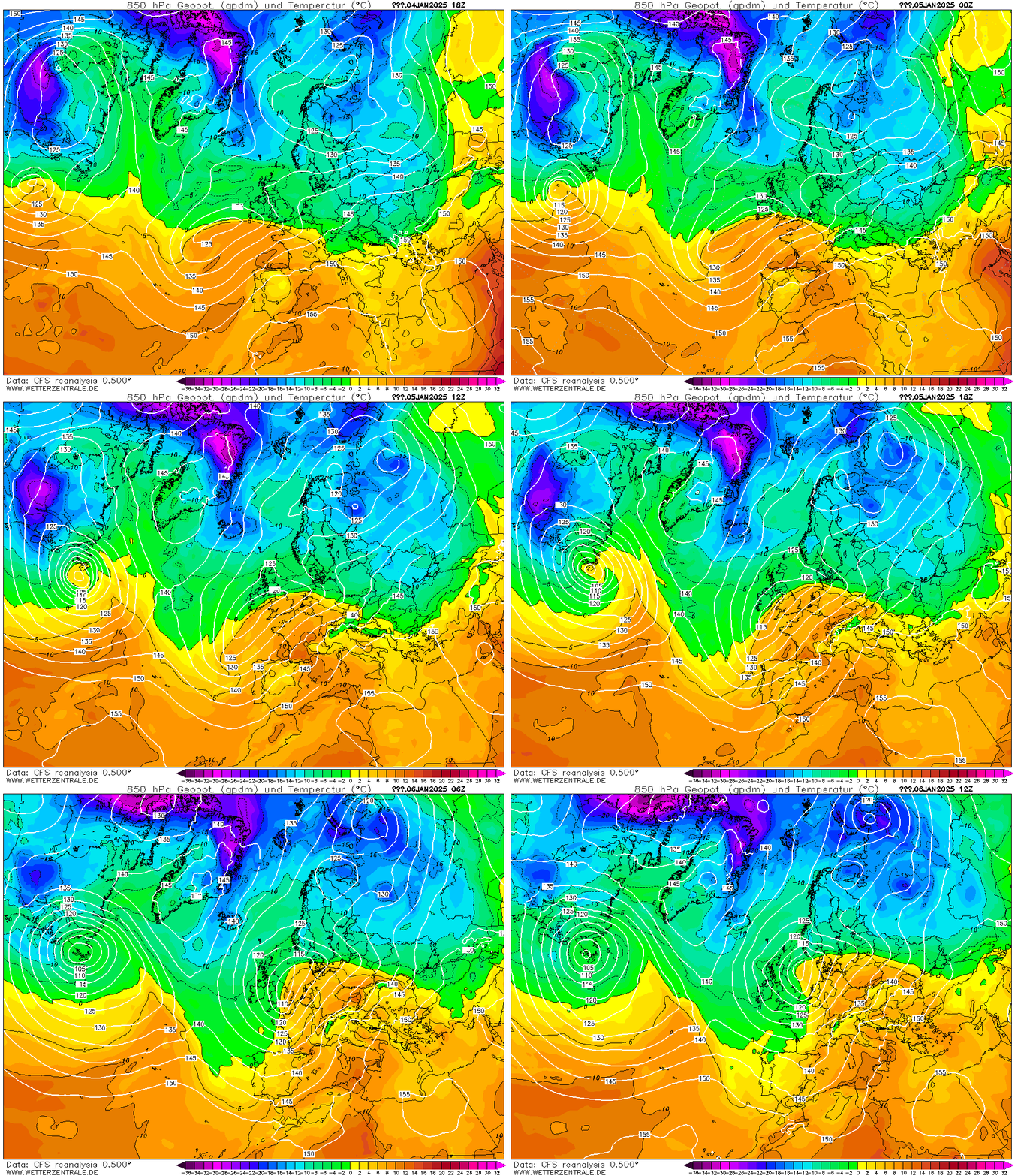
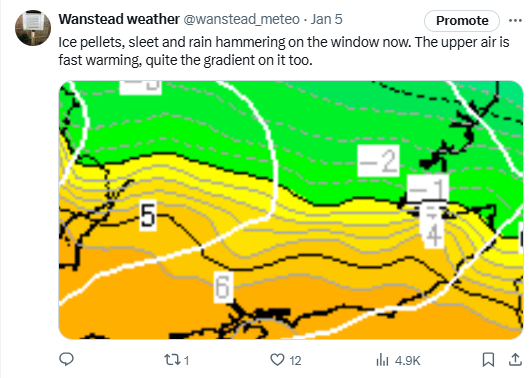
Airmass battlegrounds are a regular feature of UK winters though I can’t remember a time when this region has been right on the boundary.

The temperature on the 5th climbed from 3.2C at 0810 to 11.3C at 1050. Here it hovered until 0710 on the 6th before plunging to 3.2C again by 0910 – a period of just 2 hours.

There was some transient snowfall on the evening of the 4th but it lasted a matter of hours with the incoming warm air after midnight..

Top 10 wind gusts at Heathrow since 1973

Our largest airport is relatively sheltered compared with other exposed locations in the UK.

In terms of London it is far more exposed than areas such as Wanstead; the max gust here on January 2nd was just 50mph.

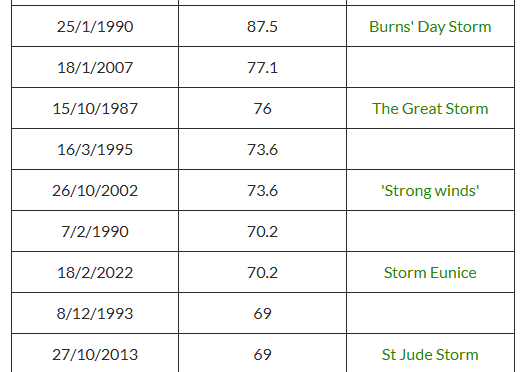
Data from the Met Office revealed the following list.

DateMax gust (mph)Event
25/1/199087.5Burns’ Day Storm
18/1/200777.1
15/10/198776The Great Storm
16/3/199573.6
26/10/200273.6‘Strong winds’
7/2/199070.2
18/2/202270.2Storm Eunice
8/12/199369
27/10/201369St Jude Storm
2/1/202469Storm Henk

Chance of a surprise white Christmas

It’s been an unusual autumn so far. A very notable lack of sun from the end of October into November was followed by an early cold snap before Storm Bert brought flooding chaos to parts of south Wales, the West Country and elsewhere.

Just before the beginning of every winter I have a crack at predicting what winter will be like; the results often being very mixed.

However, on looking at the stats so far there’s virtually no years that have been similar to this autumn; the one year being 1968.

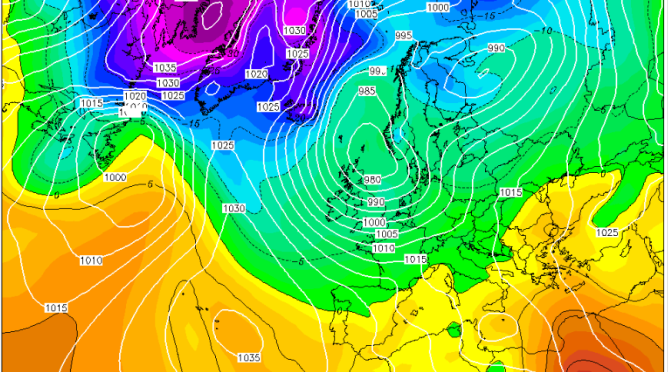
1968, looking back at reanalyis charts, swung from mild to cold with snow on Christmas Day. The Weather Outlook mentions the conditions on the 25th.

Though the odds are very long at this stage the 850mb chart for 1968 is not beyond the realms of possibilities given the recent synoptic patterns. And if not the 25th I would suggest that a cold snap between Christmas and New Year is a better chance than evens this year.

1968 was the year Bing Crosby sung an alternative intro to White Christmas while marooned in a sunny California.

The sun is shining, the grass is green;
the orange and palm trees sway.
There’s never been such a day
in Beverly Hills, LA.
But it’s December 24th ,
and I long to be up north!

Though we think of snow at Christmas in London it is very rare. And has often been rare been since Victorian times.

The endless anticyclonic gloom

Since October 28th there has been just 1.7 hours of sunshine at Heathrow.

The 12-day spell up to and including November 8th is the dullest at the airport since at least 1960.

If you look further back at other London records, including Kew – a record that includes the years 1912-1940 – there is no other period with as few hours as this year.

A look at the synoptic situation since the end of October shows an anticyclone drifting around the near continent giving us mostly dry, dull and misty weather while also perpetuating the troughs and convergence zones that have brought catastrophic flooding over parts of Iberia and the Balearics.

  • Note that sunshine data at Kew was missing for the years 1941 and 1943 to 1946.