Tag Archives: Amsterdam

Netherlands: 222km of cycling bliss

Gliding along on billiard table-smooth paths in the dunes of the Hollandse Duinen National Park: there can’t be many better cycling experiences in the world.

Hours earlier we’d disembarked the Stena Britannica at Hoek van Holland with only a vague timetable of getting to Amsterdam and back in time for our return ferry four days later.

We decided to head for a town called Monster that was far enough to get our cycling legs going but also close enough for that all-important first caffeine shot of the day. Rolling into the town I was struck by the number of old people on two wheels, something you don’t see that much of aound east London.

A day after cycling the potholed roads from Dedham Vale to Harwich the Dutch paths were a revelation. After mile upon mile of stunning beaches we soon arrived in The Hague bathed in warm October sunshine – the old town the perfect place to stop for lunch.

Conscious of time and that my daughter had never cycled further than three miles I figured we ought to get some accomodation booked for that evening; Stayokay Noordwijck was a good 30km further north.

The dunes of the Hollandse Duinen National Park with the contrails of Schiphol

We pedalled on, taking in the International Criminal Court, before the paths of the Dutch capital slowly emerged into the dunes of the Hollandse Duinen National Park. It was probably the nicest afternoon’s cycling I’ve ever had the joy of experiencing.

Following days provided further interest with stops in Zandvoort, Haarlem, Amsterdam and Gouda before returning through Rotterdam on our way to Hoek for the return overnight ferry.

Since my return I’ve wondered why Dutch cycling infrastructure is so much better than the UK. I thought it was bound to be paid by higher taxes in the Netherlands but, using a median income of £100k, the overall income tax rate set by The Hague would be 32% compared with Westminster’s 30%.

Yet, according to findings on the web, the amount spent on cycling infrastructure in England is just 56% what the Dutch spend, despite the area of England being three times bigger than the Netherlands.

The per capita spending on cycling, therefore, is £28.77 in the Nethlands compared with £5.10 in England. The Dutch argue that such high spending on cycling has societal benefits, including factors like public health, travel time, and reduced pollution. 

I realise the above is a back of the envelope take on the economic situation of both countries but there is a good study on this published here.

Background

Every four years or so I look to do something on two wheels as a bit of challenge. The idea was first sparked in 2012 on my first work sabbatical – I’d listened with envy to a colleague’s account of cycling the C2C, a coast to coast route across England from Whitehaven to Sunderland.

The seed was sown and that autumn I completed my own C2C, raising nearly £4k for Sarcoma UK in honour of my late sister, Jane.

Four years later I completed the Dunwich Dynamo, a 120 mile ride from London Fields to the Suffolk coast.

And in 2021, just as the pandemic lockdown loosened I undertook my own version of the Scottish coast-to-coast, cycling from Aberdeen to Mallaig.

Hoek van Holland – Monster – Den Haag – Noordwijck – Haarlem – Amsterdam – Gouda – Rotterdam – Hoek
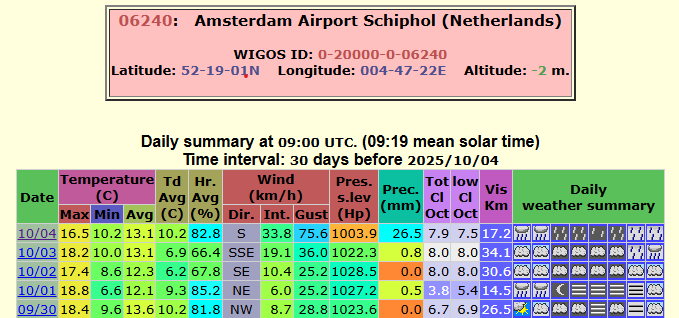
The weather was glorious all week until the last day as Storm Amy bore down

St Jude blasts through Wanstead

Much comparison has been made of Monday morning’s storm which claimed the lives of four people and 1987. The origin of both storms was down to a combination of a jet streak interacting with a pool of warm air low down. Both storms followed a similar development but clearly 1987 was more optimum. The 1987 storm was slower and further to the west when it developed. This morning’s storm was too much in the jet stream and raced on with less development.

Both the 2013 storm, left, and the 1987 storm followed a similar track as shown on these satellite pictures

From the forecasts made at the end of last week into the weekend it was about what I expected in terms of intensity – though I thought the peak of the max gusts (47.2mph at 0653) would have been shorter. Rainfall from the event was unremarkable – just 17.5mm which started falling around 9pm on Sunday and stopped around 5am. Totals north of Watford were far greater. This rainfall radar image at 0645 was taken within 10 minutes of the highest gust in Wanstead.

Rainfall radar image at 0645 - less than 10 minutes before the highest gust in Wanstead. Notice the curl of the cloud - this is where the sting jet gets its name as it looks like a scorpion's tail. Thanks to MeteoX
Rainfall radar image at 0645 – less than 10 minutes before the highest gust in Wanstead. Notice the curl of the cloud – this is where the sting jet gets its name as it looks like a scorpion’s tail. Thanks to MeteoX

Stations similar to here in Woodford Wells and Laindon all reported maximum gusts of 47-53mph, though with these being sheltered gardens the reality was probably higher – perhaps severe gale force 9 was reached at the storm’s peak here. Andrewsfield, near Braintree, North Essex, recorded 79mph. An animation of the storm’s track clearly shows the path of the sting jet. The Met Office have also released a satellite sequence of events. Of course the storm is no comparison with the Great Storm of October 1987, where a gust of 122 mph was recorded in Gorleston, Norfolk, but this morning’s storm was probably in the top 5 of storms since – and the most potent since the Burns’ Day storm of January 1990.

The tree damage in Wanstead has been worse than I would have expected with a few down on Christchurch Green. My own back yard in Aldersbrook seems to have got off lightly though a small flowering cherry on the corner of Dover Road succumbed. On closure inspection the inside of the trunk was spongy – testament to the fungus that I’d noted had been growing on it recently. Elsewhere, in Wanstead Park, some trees were sadly lost. Friends of Wanstead Park give a brief account of the damage here.

After it left Suffolk the storm raced across the North Sea, still deepening all the while, and caused havoc in Belgium and the Netherlands. Much has been said about the UK media’s obsession with the storm which chiefly affected the south east but Belgian and Dutch news outlets also focussed on the weather. In Brussels people were virtually blown along the street. Falling trees blocked canals in Amsterdam where a cyclist narrowly escaped being hit by a falling tree. There were no reports of deaths across the Channel and some watersports fanatics took full advantage of the wild conditions. The storm, which at one point developed an ‘eye‘, continued its destruction across Germany where this home was almost totally destroyed.

This car had a lucky escape

The synoptic situation at 0600z on October 29, 2013
The synoptic situation at 0600z on October 28, 2013

Top  30 windiest places for 0600 UTC, on Friday, October 16, 1987
Top 30 windiest places for 0600 UTC, on Friday, October 16, 1987

top 30 windiest places at 0600 UTC on Monday, October 28, 2013