London’s hottest heatwaves under the microscope

It is no surprise that London’s heatwaves are getting hotter but by what rate are they increasing?

Using a list of hot spells made nine years ago I set out to find how the 30-year trends have moved through the decades since 1852.
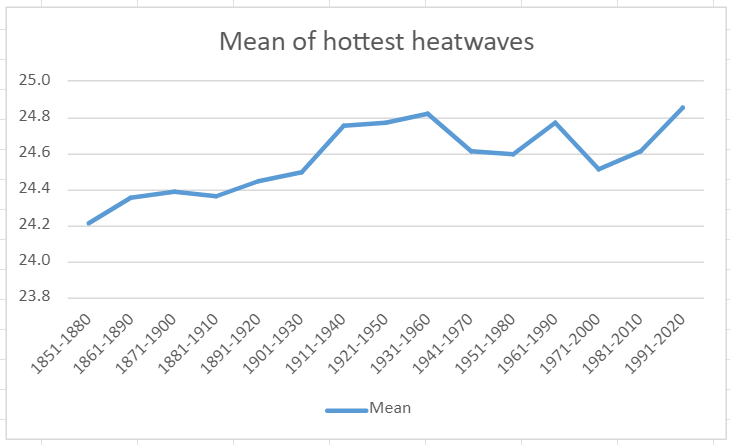
The mean of these hot spells has increased from 24.2C in 1851-1880 to 24.9 in 1991-2020, an increase of 0.7C.

Maxima during these spells, on the other hand, has decreased from 32.6C to 31.8C. It should be noted that the spell that produced this area’s hottest ever daily maximum, 40.1C on July 19th 2022, was a 2-day affair that didn’t qualify for the list.

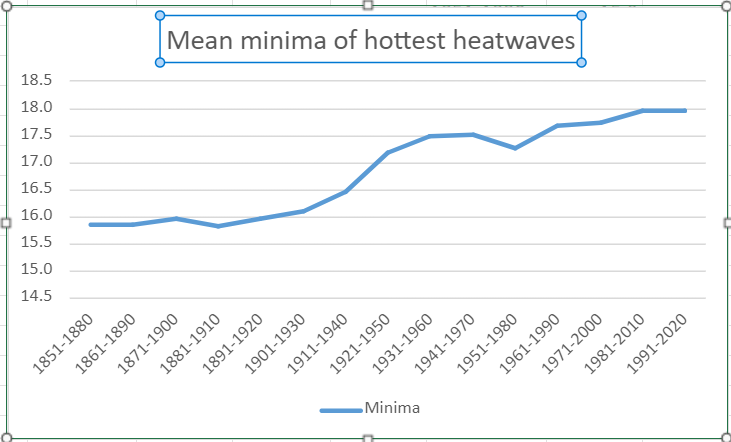
It is the minima that produces the most notable results with average low temperatures increasing over 2C from 15.9C to 18C! The urban heat island in full effect although the estate where a large proportion of these stats are gathered has changed little since it was built in the early 1900s.
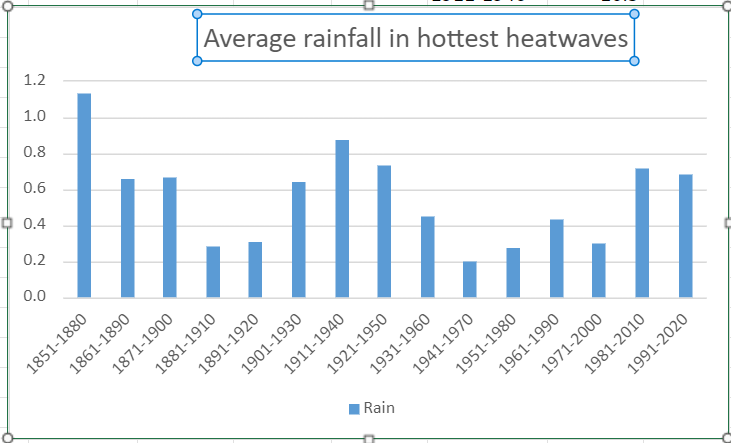
Rainfall during these hottest heatwaves is cyclical, in keeping with daily rainfall patterns observed over the same period.
Average sunshine in these heatwaves has shown a slight decline. It is no coincidence that maxima was at its highest during 1911-1950 when there was most sun. Increased cloud cover overall would take the edge off maxima while making the nights warmer.

Wanstead maxima: 1990 v 2024

The average maxima in Wanstead so far this summer is 22C, some 0.8C higher than in 1990 – the year an August heatwave saw the UK’s max record broken with 37C in Cheltenham. Media at the time said: “I wonder if the UK will ever see 100F?

The temperature in Wanstead on August 3rd reached 35.8C, my station notes for the day say: ‘dry, sunny and very, very hot’.

Will we see a similar heatwave next month? The weather models tonight suggest not, a flat westerly flow keeping any extreme heat in Iberia.

However, in keeping with summers that occur after an El Nino event, the core of any heat usually happens in late summer – August into September.

El Niño’s effect on local climate

With the El Niño–Southern Oscillation (ENSO) trending toward neutral I thought it would be interesting to see how east London’s climate has been affected over the past year.

Using the 12-month rolling mean for this station the difference is an increase of 0.24C. The increase in rainfall, using the 12-month rolling average, is more stark with an increase of 100.9mm.

I had a look at all other El Nino events back to the early 1960s. Some 5 of 7 events saw an increase in the rolling average mean.

The 12-month rolling average rainfall similarly saw an increase in 5 of the 7 events.

The most notable event was May 1997 to May 1998 which saw the temperature increase by 1.67C and a massive increase in rainfall of nearly 300mm.

June 2024 in Wanstead

The mean for June in east London was 16.2C, 0.2C warmer than average though the coolest 6th month for 11 years. So yet another warm month – it is now 18 months since we saw a below average one.

Rainfall was on the low side, just 15mm was 29% of average, the driest June for 6 years and 20th driest locally since 1797. Today also moves us into meteorological drought territory – 15 days since there was last measurable rain (>0.2mm)

Sunshine at 204.6hrs was 115% of average, the dullest for 3 years.

The most notable day was probably the 15th with thunder and lightning and a heavy shower at 1230-1300. Further moderate showers in the afternoon.

So, far from being the ‘crap summer’ some are portraying it summer 2024 so far is pretty average here.

More of the same for July. Perhaps a couple of hot days but any prolonged heat staying to our south?

As thought months ago with ENSO moving toward neutral August should be the month with the best chance of any heat records being broken?

Here’s a few extremes for the month of July across the capital.